

Share This Article
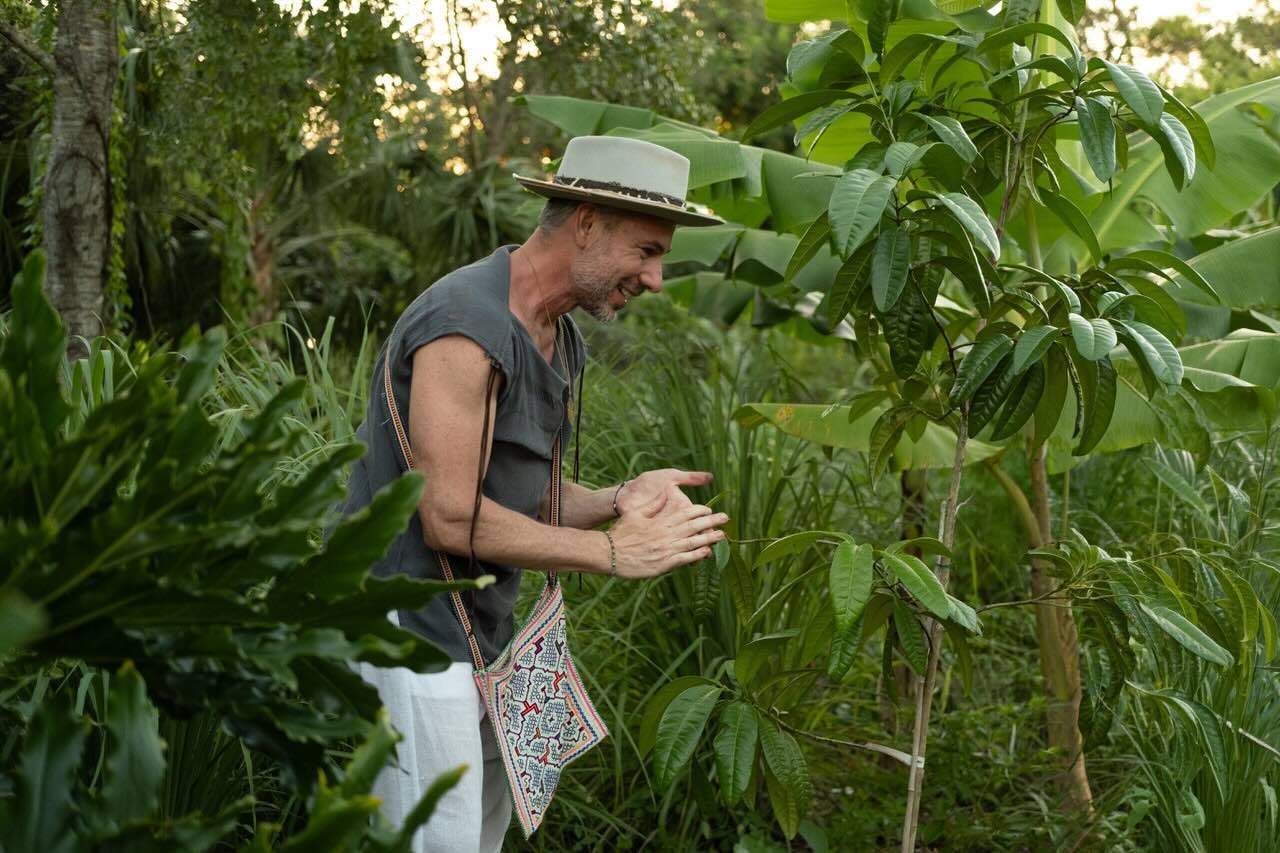
Tony Cho, a leading voice in regenerative placemaking shares how we can rebuild green cities to protect our future.
| All products featured on The Wellness Feed are independently selected by our editors. However, when you buy something through our retail links, we may earn an affiliate commission.|
Imagine- a lush network of trees cooling off heated sidewalks, vibrant plants along walking areas that reduce flooding, and downtown areas bustling with pedestrians and bikers more than gas-guzzling cars. Each seemingly small tweak, seems like an inconsequential design choice. But, together, each becomes part of a grander design plan that can protect our urban living spaces from the damage climate change can wreck on our lives- flooding, worsening air quality, and heatwaves.
Dubbed, regenerative placemaking, design choices like these are part of a holistic approach to restore, renew, and revitalize our cities into resilient, thriving spaces in harmony with nature. At the forefront of this movement is solutions-oriented ecosystems thinker, Tony Cho. As the founder and leader behind several sustainable communities throughout Florida, Tony has more than 20 years of experience in regenerative placemaking and redesigning green cities. Ahead of the launch for his debut book, “Generation Regeneration” in August, Tony shares why we urgently need to move away from concrete jungles and how nature holds the answer to protecting our cities for the future.
How is climate change impacting our cities?
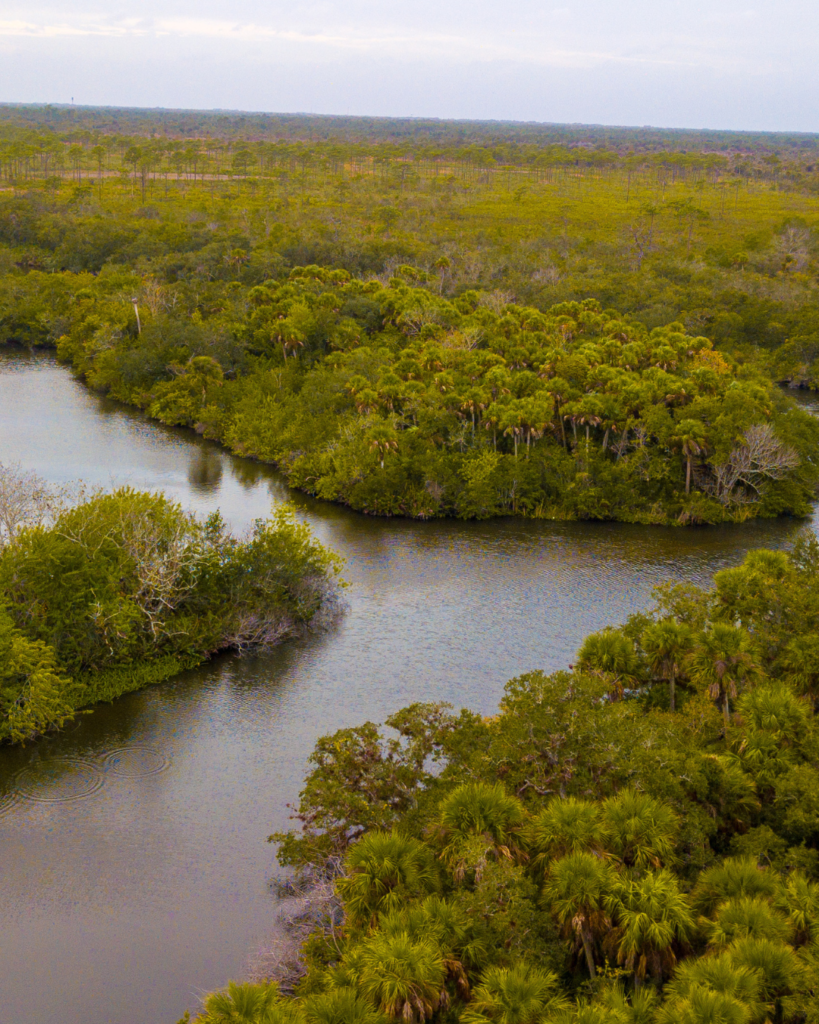
The Sebastian River, one of America’s most biodiverse lagoon systems is threatened by the impacts of climate change- rising sea levels and flooding, habitat loss, nutrient loss, water quality degradation, and rising temperatures- that in turn pose a threat to the diverse wildlife and local communities it supports.
The impacts are not coming — they’re already here. In Miami, sea level rise is our most visible existential challenge. We’re seeing sunny day flooding, saltwater intrusion into our freshwater supply, intensifying hurricanes, and the displacement of communities who have called this place home for generations. Combine that with air pollution, urban heat islands, and biodiversity loss, and you begin to understand the full scope of what we’re facing.
What troubles me most isn’t the scale of the problem — it’s the gap between the urgency of the need and the pace of our response. We have more research, more awareness, and more conversation than ever before. But I still don’t see the innovation or investment necessary to rapidly prototype solutions at the speed the crisis demands. That’s exactly why I created the Future of Cities Climate + Innovation HUB — to have real conversations about climate tech, clean energy, and the role the built environment must play. Miami has the opportunity to be the poster child for climate solutions, not just the victim of climate change.
What is regenerative placemaking?
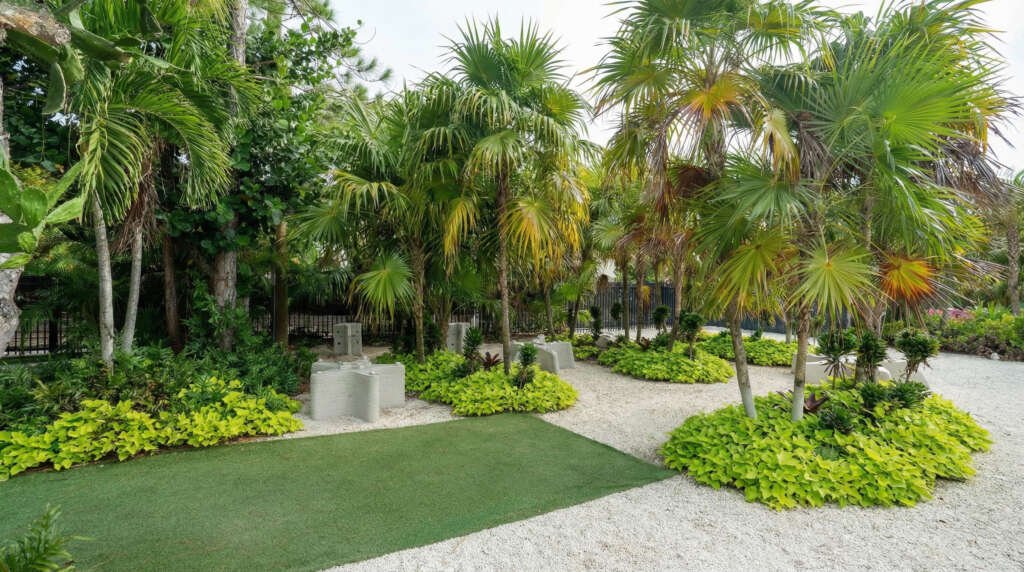
Regenerative placemaking is about working in harmony with nature to recreate green spaces to restore, revitalize, and protect our urban areas.
Regenerative placemaking is the practice of co-creating places that don’t just sustain — they restore. It goes beyond green building or sustainability metrics. It’s a holistic, place-based philosophy that asks: how does this space serve the ecology, the culture, and the human beings who inhabit it? How does it give back more than it takes?
I think about it as ecosystems thinking applied to the built environment. Every project is a living system — with roots in the land, the people, and the history of a place. When you honor all of those layers, something dynamic and lasting can emerge.
How can regenerative placemaking help build climate change resilient cities?
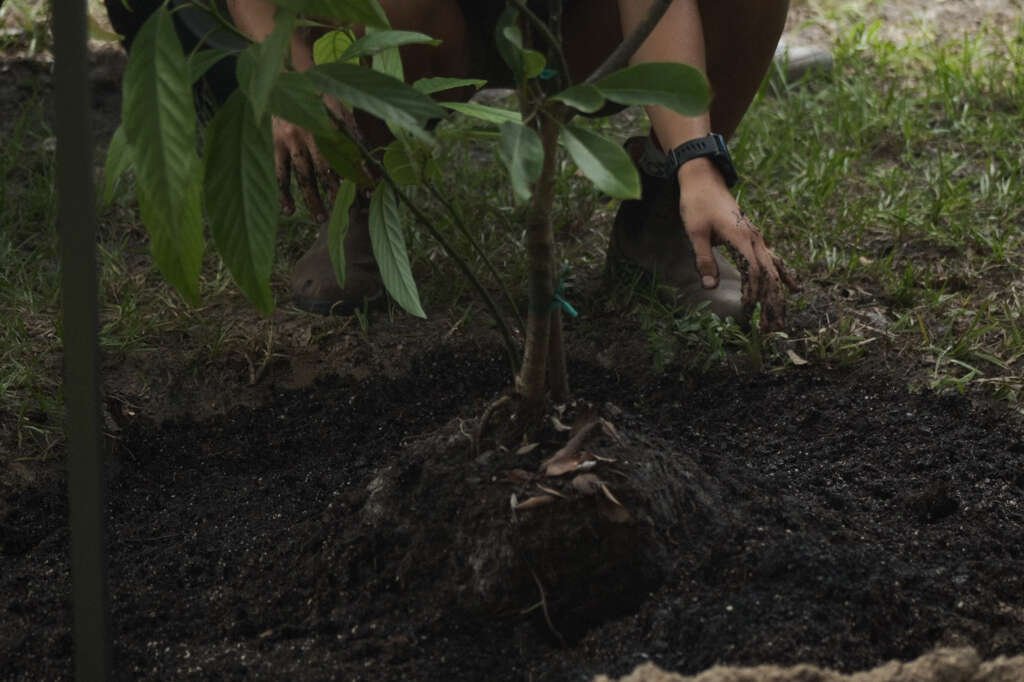
Planting more trees in cities can lower surface temperatures, reduce the energy use of nearby buildings by 10%, sequester CO2 emissions, improve air quality, and reduce stormwater runoff.
The answer lives at the intersection of community, nature, and culture — and the built environment is where those three things can either collide or harmonize.
Regenerative placemaking addresses climate resilience not through singular technological fixes, but through layered, living systems. It means designing neighborhoods that integrate green infrastructure — urban forests, bioswales, permeable surfaces — that naturally absorb stormwater and cool temperatures. It means mixed-use districts that reduce car dependency and carbon output. It means honoring local ecology in every decision, so that nature becomes a partner in the design rather than something we build over.
But perhaps most importantly, it means community. Resilient cities are communities that know each other, that have deep roots in place, that have the social infrastructure to respond collectively when crisis comes. Culture is the connective tissue of resilience. When you invest in the cultural vitality of a neighborhood — in its artists, its makers, its gathering spaces — you’re building something that no storm surge can wash away.
Have you seen this in action?
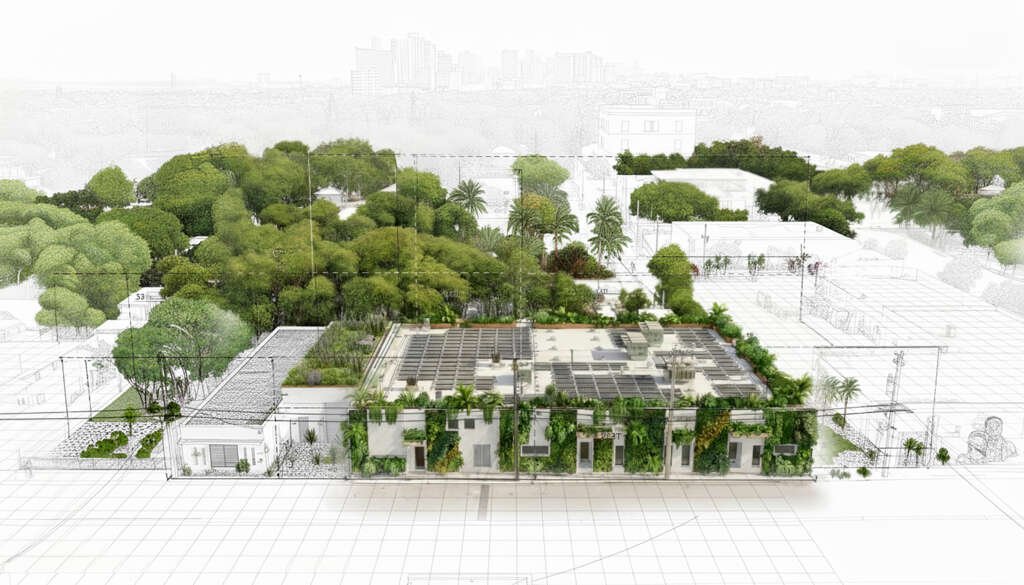
Climate HUB Miami Biophilic Facade Concept was repurposed from 3 abandoned warehouses and features an urban garden, renewable energy, and communities events.
We’re actively demonstrating this across Florida which I talk about in my forthcoming book “Generation Regeneration: Codesigining the Future of Cities Through Regenerative Placemaking” coming out this August.
At the Future of Cities Climate + Innovation Hub in Little Haiti, Miami, we took an old warehouse and transformed it into the city’s first aspiring net-zero office building — solar powered, adaptive reuse, and a gathering space for Miami innovators, creators and conservationists.
At the Phoenix Arts & Innovation District (PHXJAX) in Jacksonville, we’re building an 8.3-acre creative and cultural hub that weaves art, innovation, ecology, and community engagement together.
And at ChoZen, our center for regenerative living in Sebastian, Florida we’re creating a sanctuary grounded in nature and wellness. Each of these projects is a demonstration — proof that a different way of building is not only possible, but necessary.
How can we blend the ancient wisdom with modernity to help protect and preserve our cities?
I believe deeply in what I call “wise cities” — places that don’t choose between indigenous wisdom and modern innovation, but draw from both. The two are not opposites. They’re complementary intelligences.
Ancient traditions understood something we’ve largely forgotten in modern urban planning: that we are not separate from the natural world. We are part of it. Seven-generation thinking — the Indigenous framework that asks us to consider the impact of every decision on the next seven generations — is one of the most sophisticated design philosophies that exists. It brings time back into the equation in a way that quarterly earnings cycles simply cannot.
Modern technology gives us extraordinary tools — carbon capture, geothermal energy, 3D-printed sustainable materials, biophilic design systems. But technology without wisdom can accelerate harm as easily as it can prevent it. When we root our innovations in reverence for the earth, in deep listening to the communities who have stewarded land across generations, we build something that endures. The future city isn’t just smart. It’s wise.
How can we best advocate for sustainable design in our cities?
Civic engagement is the answer — and it’s more accessible than most people think. Show up to city commission meetings. Participate in neighborhood planning processes. Support local organizations that are fighting for green infrastructure, affordable housing, and equitable development. Advocate for building codes that incentivize — rather than penalize — sustainable innovation.
One of the real barriers I’ve encountered in our own projects is that the systems meant to protect us haven’t caught up. Permitting processes for rainwater catchment systems, community gardens, and net-zero buildings are often more difficult than they should be. Change that. Demand that your local government modernize its codes and create clear pathways for regenerative development. The most important thing to remember is that these decisions are made by people you can elect, influence, and speak to directly. Your voice in local governance shapes the physical world around you.
What suggestions do you have for people to live more sustainably?
Start close to home. Support your local small businesses, your makers, your farmers markets, your independent artists. Every dollar you spend is a vote for the kind of economy and community you want to live in. The butcher, the baker, the barber, have always been the heart and soul of Main St.
Get to know your local ecology — the native plants, the waterways, the wildlife corridors. When you understand the living system you’re part of, you begin to make choices in relationship with it rather than in spite of it. Seek out your local indigenous communities and listen. There is profound knowledge there.
Find a garden group. Grow something. There is something transformative about putting your hands in soil — it reconnects you to cycles that modern life has made invisible.
Volunteer with organizations building the world you believe in. Give your time and your energy to projects that are rooted in place and community.
And finally — align your financial and energetic investments with your values. Where you put your money, your attention, and your presence matters. Regeneration isn’t just a design philosophy. It’s a way of living.
