


Share This Article
A nutritionist goes beyond the viral fluff to answer our most vital health questions about superfoods powders.
| All products featured on The Wellness Feed are independently selected by our editors for its environmental and ethical impact. However, we may earn an affiliate commission when you buy something through our retail links. |
I’ll be the first to admit it, I’ve tried a superfood powder (or 12) in my lifetime- leafy green powders I’ve blended with bananas, berries from the Amazon I’ve stirred into water, and various other scoops of powders I’ve chugged down. As a lifelong runner, the allure of boosting my health with a quick drink has always appealed to me. I’ll also be the first to admit that the appeal has also waned over time, too- call it a healthy dose of skepticism about the validity of marketing claims surrounding heavily processed supplements. Especially as someone who focuses on a clean and sustainable lifestyle, I try to get the majority of my nutrients from whole foods grown locally.
As someone always digging for the truth, I jumped at the opportunity to connect with a certified nutritionist to learn whether or not my skepticism about superfood powders is actually healthy or fueled by conspiracy theories. The nutritionist (and a certified nutritionist specialist-scholar) is Lina Begdache, Associate Professor of Health and Wellness Studies at Binghamton University, State University of New York. And, her insight comes with research experience about nutrition on a cellular level. So, what she was able to tell me about superfood powders goes beyond the viral fluff on TikTok to eye-opening information about the right ways to boost our health.
What makes a food a “superfood”?
Generally, a food is labeled as such when it offers high levels of high-quality nutrients, is linked to disease prevention, or is believed to provide multiple health benefits beyond its basic nutritional value.
The term has no scientific validation; it originated largely as a marketing tool. What distinguishes these foods is that they contain nutrients in a more bioavailable form, meaning the body absorbs and utilizes them more efficiently. However, no single food holds the key to good health or disease prevention. Balance, variety, and moderation remain the key considerations.
What superfoods are readily available and easy to add every day?

Get Raspberries delivered to your door from Misfits Market for $4.99
Berries like blueberries and raspberries are superfoods rich in vitamins and minerals.
Many accessible everyday foods qualify, which include berries (high in fiber, vitamins, and minerals), wild-caught fatty fish like salmon or tuna (rich in omega-3s), leafy greens like kale and spinach, avocados, nuts and seeds, yogurt and kefir (for protein and probiotics), and spices like turmeric and cinnamon. Practical ways to incorporate them include snacking on nuts and seeds, adding berries to oatmeal or salads, using turmeric, ginger, and cinnamon as go-to spices, and swapping some meat for salmon or tofu.
Are superfood powders good for you?
They can offer some benefit, but with important caveats. Superfood powders are concentrated, nutrient-rich products from fruits, vegetables, and herbs that can help boost energy, improve digestion, support the immune system, and protect cells. However, they don’t provide all the nutrients you need from a balanced diet of whole fruits and vegetables. Experts say there is little evidence to suggest these powders will meaningfully improve your health on their own.
Who benefits most from superfood powders?
They can particularly benefit busy individuals, athletes, and those with dietary restrictions. They’re best viewed as a gap-filler rather than a foundation. Most registered dietitians are cautious about making broad recommendations for them. The recommendation is that a quality multivitamin or, ideally, a personalized supplement plan developed after blood work to identify actual deficiencies, is a more reliable option than a greens powder.
Are there benefits even if you already eat plenty of fresh produce?
Possibly, but the gains are likely modest. Even the best greens powders can’t replace the consumption of a wide variety of whole fruits and vegetables. Vegetables in their whole form provide fiber, which has broad health benefits and helps with satiety, something powders simply can’t replicate. The body is designed to derive nutrition from whole foods in complex ways; it’s not just about a single active ingredient. A powder alone, without a well-rounded plate, won’t fill in the gaps.
What should we look for when choosing a superfood powder?
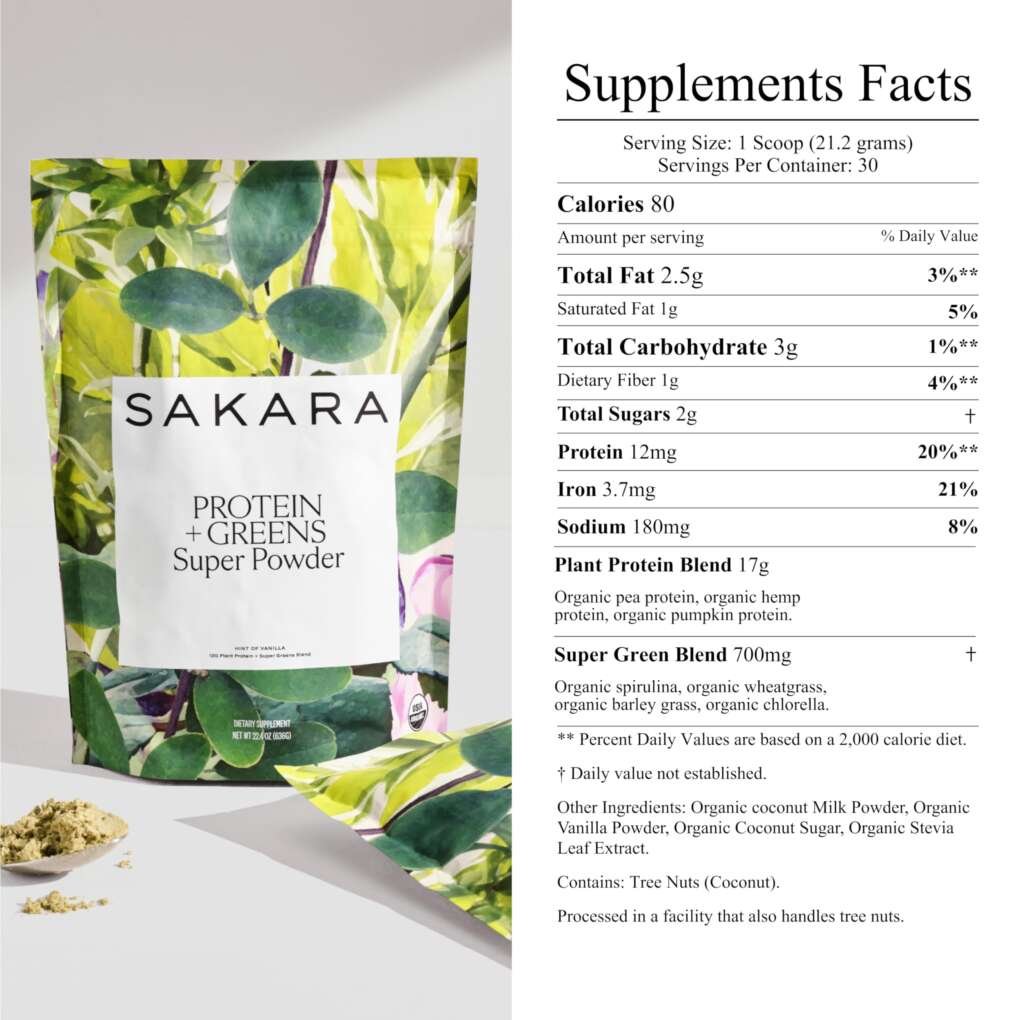
Sakara Protein and Greens Super Powder $76 is a superfood powder loaded with pea, hemp, and pumpkin protein, along with wheat and barley grass. No artificial colors, sugars, or GMOs.
Superfood powders may contain high concentrations of certain ingredients, potential contaminants, and “hidden” additives that may pose risks to the liver and kidneys. While often marketed as natural, these powders may stress or damage organs. Some studies have linked these supplements to 20% of liver toxicity cases in the U.S.
Key things to look for: a real-food base made from recognizable fruits and vegetables (not just extracts), transparent dosing that discloses specific ingredient amounts rather than hiding them in proprietary blends, a clean label with minimal fillers and no artificial colors or flavors, and third-party verification confirming quality and safety. Trustworthy certification seals include NSF International, USP Verified, Informed Sport, and ConsumerLab.
Also, prioritize minimal added sugars or artificial sweeteners, and if you take blood-thinning medications, check with your doctor before starting, as some powders contain high levels of vitamin K.
Common misconceptions about superfood powders
Several myths are worth addressing:
“They replace fruits and vegetables.” Superfood powders are a supplement to an already healthy diet, not a replacement for it.
“They detox your body.” Claims like “detox your organs” exceed what science and regulatory standards actually support.
“More ingredients = better product.” With products that pack 80+ ingredients into one scoop, it’s unlikely you’re getting an effective dose of any single ingredient.
“Health claims are verified.” Health claims from most superfood powder brands have not been evaluated by the FDA, and federal rules bar supplement makers from claiming their products treat or cure diseases without FDA approval.
“They’ll fix gut issues, skin, and fatigue.” Social media claims about powders curing gut problems, skin issues, and bloating largely lack scientific backing.
The bottom line: superfood powders can be a useful, low-risk addition for certain people, but whole foods remain the gold standard. They work best as a complement to a varied diet, not a shortcut around one.
