

Share This Article
Shopping locally can be more sustainable. But grocery stores and delivery services are oh, so convenient. I’m sharing my likes and dislikes and what I’ve learned from buying seasonal veggies for a decade at a farmers’ market near me.
| All products featured on The Wellness Feed are independently selected by our editors for their environmental and ethical impact. However, we may earn an affiliate commission when you buy something through our retail links. |
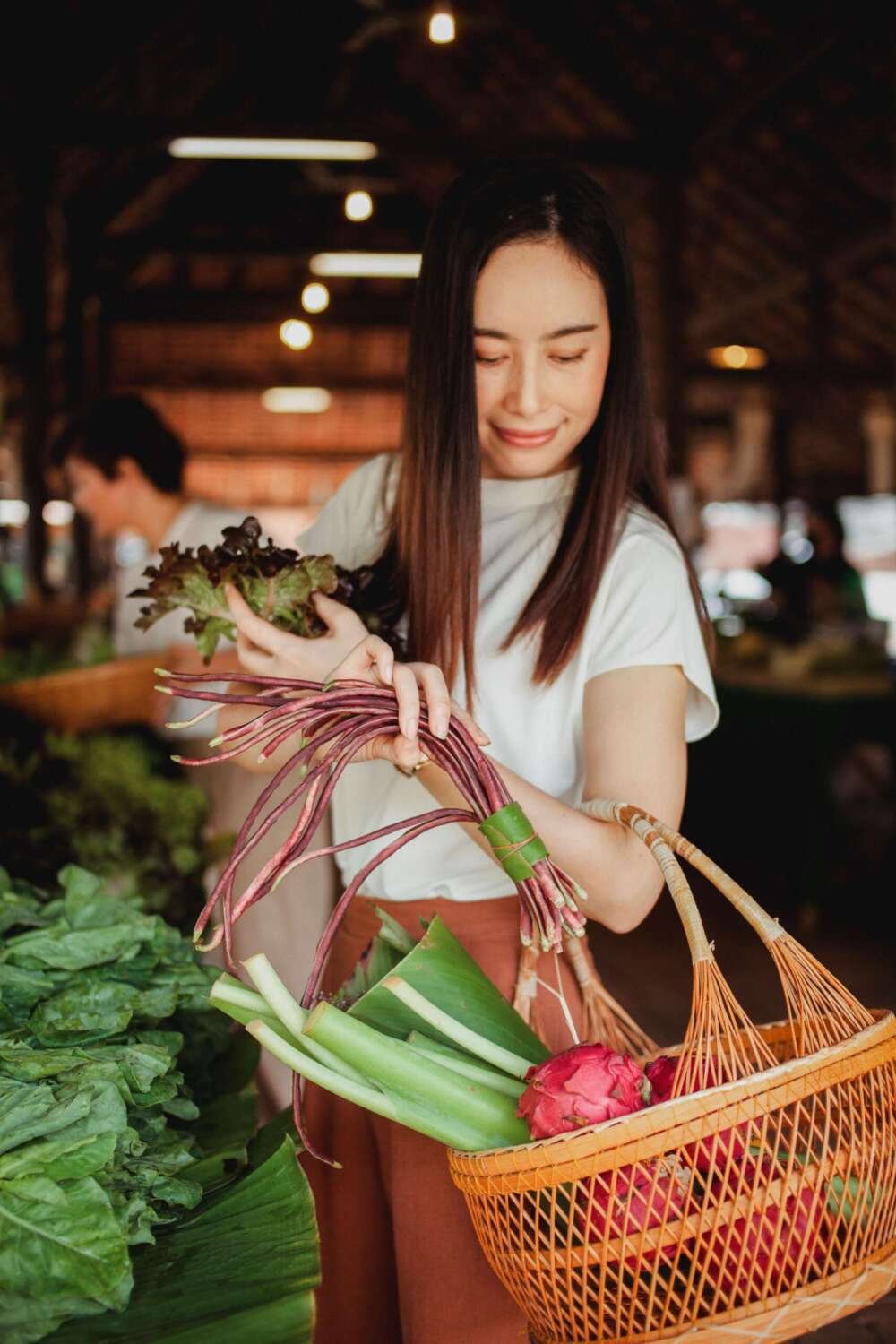
This time of year, I’m committed to the vibrant array of fresh, flavor-bursting produce in abundance at my farmers’ market. There’s something rewarding about going for a stroll, basket in hand, before the temperature rises in the morning. And the reward- sweet cherry tomatoes, crisp lettuces, sweet corn, and the best cherries you’ve ever tasted in your life- is worth it.
Now, I’ll be the first to admit- the charm of a Sunday stroll through a farmers’ market near me is lost when temperatures do dip. I’ll still go, mostly for ingredients for my Sunday roast and because they’re the one place where I can reliably find Japanese sweet potatoes and Adirondack blue potatoes; two of my favorites. And there’s coffee; hot, delicious, keep-my-hands-warm coffee.
I’ll also admit that I’m drawn by the environmental and nutritional benefits. It turns out that eating locally and seasonally is one pillar of a sustainable and healthy diet. According to organizations such as the United Nations, reducing emissions from farm to fork by buying more locally produced foods can reduce up to 1.1 tons of CO2 emissions per person. Taking that a step further, reducing food waste and eating more plant-based meals can reduce emissions by 1.3 and 1.5 tons, respectively. So, even if I don’t get everything in my kitchen from a farmers market near me, by shopping there when I can, reducing my food waste (in my household that means composting), and eating more plant-based meals, means that altogether my diet is fairly sustainable.
If you’ve never shopped at a farmers’ market or would like to shop at one near you more often, there are resources you can use to find the ones near you. And whether you’re simply indulging in a few in-season fruits or grabbing your weekly groceries, there are numerous health benefits to eating locally.
You’ll Eat More Plant-Based Meals
Switching to a plant-based diet can reduce an individual’s annual carbon footprint by up to 2.1 tons with a vegan diet or up to 1.5 tons for vegetarians.
“Plants give your body what it needs to help fight off infection,” says Andrea Murray, MD Anderson health education specialist. “A plant-based diet strengthens your immune system to protect you.”
Adding more plants– whole foods, vegetables, fruits, beans, nuts, and seeds to your diet is good for you. They reduce inflammation, support your immune system, help to maintain a healthy body weight, and reduce your risk of certain diseases.
I’m lucky to live close to an array of farmers’ markets happening throughout the week. I also support a small outdoor market that sources produce from the same warehouse that major grocery stores in my area do. This allows me to have an abundance of raw fruit and veggies at my disposal. One thing I’ve noticed over the years is that when I have fresh produce available, I primarily eat fresh produce for my snacks. (Great tip if you’ve ever tried to kick a sugar habit). Shopping at a farmers market near me means that produce is primarily what I’ll see, buy, and eat. And if you have the time, you can freeze produce like grapes, peaches, and berries to have as nutritious snacks later on.
There are also minimally processed foods other than produce to source from local farmers’ markets. The farmers’ market near me has several bakeries, cheese, and condiment stalls offering fresh homemade items.
Farm-To-Table Tastes Better & Is More Nutritious

Local food has a shorter time between harvest and your table, and it is less likely that the nutrient value has decreased. Food imported from far-away states and countries is often older, has traveled and sits in distribution centers before it gets to your store.
Local produce ripens naturally and often has a higher concentration of vitamins and nutrients. Studies have shown local farm-grown broccoli has a higher vitamin C content than store-bought broccoli shipped from across the country. And the flavors you get from local produce don’t lie. I firmly believe you’ve never had a peach until you’ve had a donut peach in late spring. Or a tomato until you’ve bitten into one from mid-summer’s harvest. Try cooking with fresh onions and garlic that are still purple with long stems. Food tastes better.
“Produce from local farmers has spent more time on the vine, on the tree or in the ground, so you get better taste and more nutrients,” Melinda Cater, a dietitian at Johns Hopkins, penned in a recent essay. Whereas the reverse is true for grocery stores. Produce is picked when it is unripe and treated with chemicals to ripen, or picked and shipped to a controlled storage facility where it is treated with fertilizers to be stored for up to 10 months. “When it comes to fresh fruit and vegetables, the shorter the time and distance from farm to sale, the higher the levels of vitamins and minerals,” Melinda explains.
There’s Less Packaging

According to the US Environmental Protection Agency (EPA), food and food packaging materials make up almost half of all municipal solid waste.
Worldwide, we produce 141 million tonnes of plastic packaging a year. When visiting the farmers’ market near me, I have to be more adamant about bringing my reusable cotton totes and produce bags. Even though items like berries or cherry tomatoes are in paper baskets, I have to return them once I reach the register. When picking out a loaf of bread, I’m handed a thin paper bag, or sometimes I’ll even bring my own bag to put the bread in. It’s a nice reminder to bring my bags and reduce the number of plastic shopping bags I have in my home.
When food shopping at grocery stores, I also look for packaging that can be recycled- glass jars, paper boxes, or tin cans. If I find these items at a farmers’ market, they’re often packaged in glass jars that I will reuse when I make my own condiments or soups.
Supporting Small Businesses Supports Our Health

When we buy food from local farmers, we support their livelihoods and reduce the carbon footprint of our food.
On average, food travels over 1,000 miles from the point of production to the retail store. In contrast, many farmers markets only allow vendors to sell food produced within 200 miles. Some markets only have food grown within 50 miles.
If you consciously strive to support small businesses, your local farmers are some of the most important. Farmers are stewards of our land and they grow our food. When you support small, local, and organic farms, you’re supporting an industry that is better for our planet than processed, chemical-heavy foods.
The Best Sustainable Restaurants For One Day In Philadelphia
The farmers market near me is ripe with family-owned farms. I’ll have conversations with a father and his son. I’ve laughed with a fellow mom who saved donut peaches for me because she knows how much I like them. These are families I’ve grown to know over the years and hear their stories. One story I hear (mostly because I ask) is how to support them. So, previously I signed up for a CSA where the week’s harvest is packed and shipped to a pickup spot. I’ve learned it’s okay to buy ugly produce and that simply showing up to buy from them weekly is a great way to show my support.
How To Find A Farmers Market Near You

Eating locally can be a means of supporting farms that use more environmentally friendly production practices, such as minimizing their use of pesticides.
If you want to indulge in seasonal veggies and other local foods, there are several ways to find a local farmers’ market near you.
- Visit your local farms. Google ‘farms near me’ and take a road trip through the countryside and stop off at small produce stalls set up by farmers in your area.
- Visit your state government’s website. Did you know there are over 400 farmers’ markets in California? You can find one in your county using this list.
- Use the USDA Farmers’ Market Finder to find local farms and markets near you.
- Join a CSA. These are a great way to support local farms in your area and prevent food waste. The way it works is you subscribe to receive a weekly box of produce and food items. Depending on your CSA, one or several farms will pack boxes with weekly produce and food items including bread, jams, and milk. The boxes are then shipped to your home or a pick up location. This allows farmers to sell their produce rather than wasting what is looked over at farmers markets.
- Meat eater? The Good Meat Project offers resources to help you shop for meat from your local butcher, rancher, or grocery store that is organically and humanely grown and processed.
