


Share This Article
From new to vintage to certified to vegan, we’re taking a deep dive into whether or not a suede jacket is sustainable.
| All products featured on The Wellness Feed are independently selected by our editors for its environmental and ethical impact. However, when you buy something through our retail links, we may earn an affiliate commission. |
Suede is eye catching. It’s softer, and with its velvety texture, some might even say, more elegant than its counterpart. And with a little care, it’s just as durable. No wonder it’s a stylish choice for jackets, bags, shoes, and home goods. Yet, a big question hangs over this desirable fabric. What are its negative impacts?
As brands and customers alike shift towards desiring beautiful things that minimize their impact on the planet, we’re also taking more time to care about their source. At first glance, it’s obvious that suede comes from animals. Yet, there are certifications that lay claim to humane animal treatment and plenty of vintage options that can relieve fears of animal harm. And, vegans can rest assured that no animals were involved in their look-a-like vegan suede jackets. But, questions loom around the production standards of what will more often than not be plastic-based materials.
The bottom line: There’s a lot to consider when it comes to considering the environmental impacts of a suede jacket. So, when it comes to making your next purchase, we’ve broken down what to consider when shopping for the most eco-friendly jacket that fits your ethics and closet.
What is Suede?
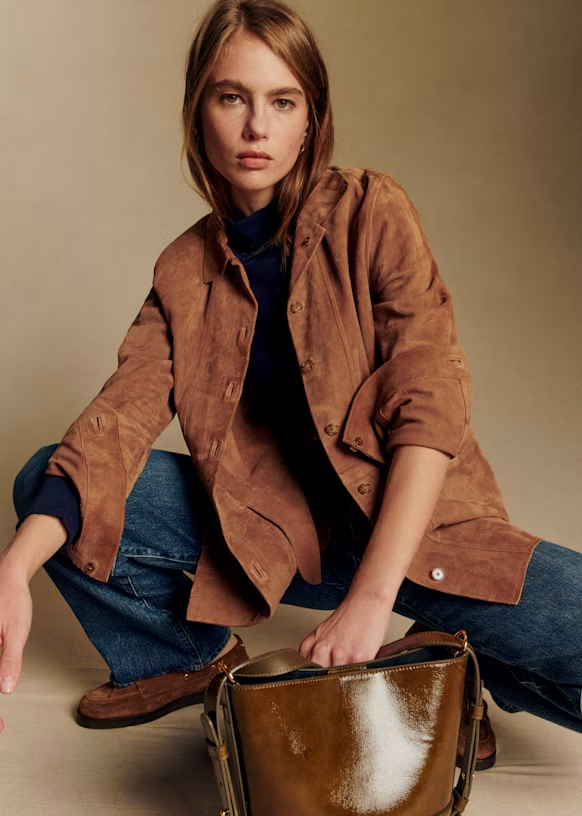
Sézane Will Suede Jacket is made from vegetable-tanned, chrome-free suede. $315
Shipped in recycled packaging by a B-Corp company.
Suede is a special kind of leather that comes from animal skin. Regular, full-grain leather uses the skin’s tough outer layer. Suede skips that layer, focusing on the inner, softer part. To achieve its signature velvety soft finish, workers sand the underside of animal hides. The outcome is a fuzzier, softer version of leather.
Most suede comes from common farm animals- sheep, goats, and cattle. These animals are mainly raised for food, and suede production uses skins left over from the meat industry. This makes suede a byproduct from an industry that would otherwise consider it waste. Some argue that this means that leather products, including suede, are a sustainable choice since these hides are given a second life.
Making suede involves several steps. First, hides go through tanning, a process that prevents the skin from rotting. After tanning, the suede is dyed. Both processes can use chemicals that pose a risk to the environment and workers’ health. An example is chromium, a common chemical used for tanning that pollutes local water resources. Organizations such as the Leather Working Group monitor these processes and encourage safer alternatives, such as vegetable tanning and water recycling, to make tanning more sustainable.
Environmental Impacts of Suede
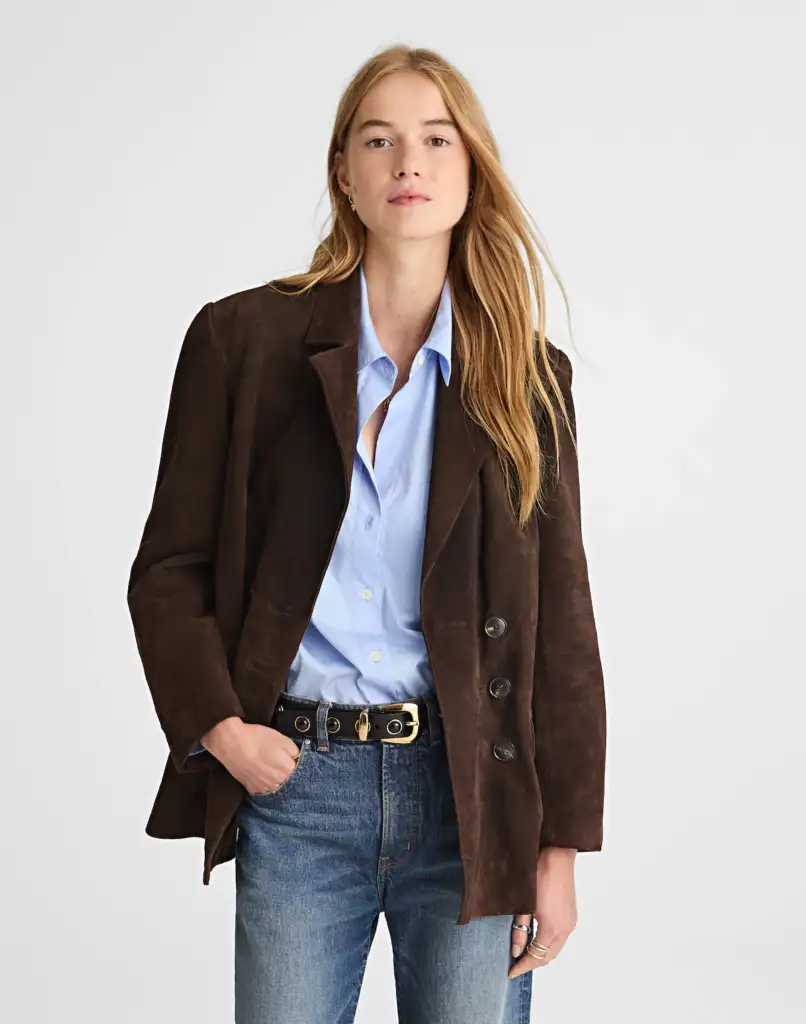
Madewell Double-Breasted Suede Blazer is made from leather sourced from a tannery that was certified by the Leather Working Group $548
A key part of the sustainability discussion is the animals themselves. While there are organizations that help farmers transition to better farming conditions to improve animal welfare, the fact remains that large-scale factory farms carry a huge environmental footprint. Because of the large scale of livestock agriculture, it’s estimated that globally, the industry emits hundreds of billions of pounds of methane into the environment.
Many experts warn that the fashion industry is the second most water-intensive industry in the world. This can be seen throughout the leather-making process, because turning hides into suede consumes a lot of water. Factories need water for cleaning and tanning, and as previously mentioned, this is oftentimes mixed with chemicals.
At its worst, wastewater from the tanning process is dumped back into local rivers and streams. This runoff pollutes local water sources, harming wildlife and local communities. Dyes are another problem. Many contain heavy metals that can further pollute water and soil resources.
Then comes the energy to make suede. Factories use a lot of power to process hides. Shipping raw materials and finished goods also uses fossil fuels. All of these steps contribute to carbon emissions and air pollution.
Can Suede be Sustainable?

Reformation Veda Kendall Suede Jacket is made from lamb suede sourced from a Leather Working Group Gold-certified tannery. $568
Going back to the argument around waste, suede and other leathers are considered sustainable by some because it reduces waste when animal hides are leftovers from the meat industry. However, using animal products alone raises ethical questions from animal rights activists. Even if suede is a byproduct, animals are still involved. Some people believe that the use of all animal products is wrong. These conflicting viewpoints make the discussion complex, and the answer becomes tied to personal ethics.
For this reason, some will purchase a suede jacket and look for certifications verifying that farms were vetted for meeting animal welfare standards and that tanning was chrome-free and dyes were vegetable-based or natural. These certifications are important steps to help verify brands’ claims that leathers are byproducts, toxic chemicals weren’t used throughout the tanning process, and each step of production was monitored to reduce its waste and pollution output.
Other times, shoppers look for an upcycled, deadstock, vintage, or preloved suede jacket to still indulge in the luxurious wardrobe staple, but in a way that alleviates some of the ethical concerns. Shopping for items that are already around, it helps to prevent landfill waste, especially considering that materials like suede are durable and oftentimes made to last a lifetime.
Bottom Line: Certifications can guarantee that the ethical and environmental concerns have been addressed and prevented. While shopping, preloved can prevent waste.
Alternatives to Suede

Free People We The Free Hera Vegan Suede Jacket is made from 100% viscose, a fabric made from wood pulp. $168
For those against wearing animal products, there are plenty of faux suede alternatives. However, they too come with environmental and health concerns.
Traditionally, faux leathers have been made from polyester or similar materials. Oftentimes plastic-based, these materials have raised a lot of concern about the impacts of their production and their waste. At a glance, polyester is derived from nonrenewable resources- fossil fuels. It’s been estimated that globally, polyester production uses 70 million barrels of oil yearly. Once made into clothing, these plastic-based materials shed into smaller fragments (called microplastics) that have been found in every part of our planet- from icebergs in Antarctica to human placentas and linked to cancers and reproductive problems. Additionally, once discarded, materials like polyester can cause further harm to our environment by leaching toxins and chemicals into the soil, water, and air while slowly decomposing, with some estimates stating it can take hundreds of years.
More advanced innovations utilize plants to craft new materials that mimic suede, but aren’t plastic-based. Piñatex comes from pineapple leaves. Mushroom leather grows from fungi. Cork-based fabrics also offer a soft, suede-like touch. These are exciting options that offer a lot of benefits, such as being biodegradable. However, the downside is that they haven’t been adopted by the mass market and aren’t readily available.
Choosing A Suede Jacket Responsibly
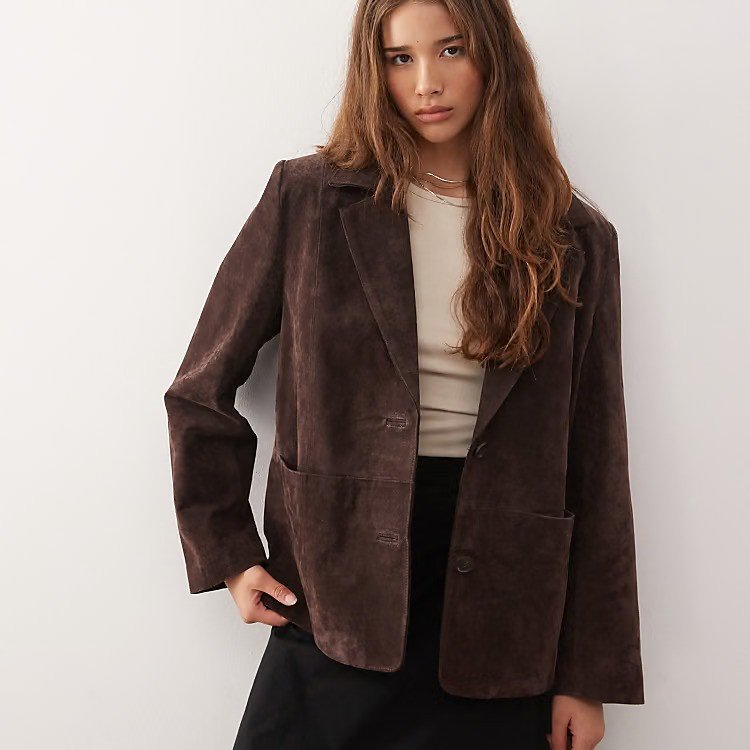
Asos Reclaimed Vintage Suede Blazer is a gently worn, pre-loved jacket. $259
Traditional suede production carries a heavy load- lots of water, chemicals, and waste. To offset this, consider a product’s impact and look for trusted sustainable brands and certifications when you buy. The Leather Working Group (LWG) and Oeko-Tex audit and certify tanneries for following the best sustainable practices. Their rating shows if a factory has good environmental practices. Elsewhere, research a brand to see if they can verify humane treatment of animals on farms or whether or not the leather used is a byproduct of the meat industry.
If you’re shopping for a faux suede leather jacket, support companies that are transparent. Find brands that share with customers where their materials come from and how their products are made.
Whichever material you choose, consider how long your suede jacket will last. Buy fewer pieces of clothing, but ensure that they’re quality, durable items that stand the test of time. Be sure to follow instructions to properly clean and care for your item and mend small seam breaks. All in all, avoiding overconsumption and waste is the greenest choice of all.