


Share This Article
Reading sustainability reports isn’t the fun part of shopping. So, we’ve done the heavy lifting for you to learn how your favorite Reformation dresses are and aren’t sustainable.
| All products featured on The Wellness Feed are independently selected by our editors for its environmental and ethical impact. However, when you buy something through our retail links, we may earn an affiliate commission. |
Romantic. Fresh. Timeless. Reformation carved a niche in women’s fashion by blending vintage-inspired looks with modern fits and sustainable initiatives for the cool girl next door with a conscience. Shoppers flock to the brand for pieces that feel fresh yet timeless, all while the brand touts lower environmental hits. Its Instagram feed bursts with influencers in flowy midi dresses, drawing in those who want style without the guilt you’d feel from fast fashion.
Yet, does its eco-friendly vibe hold up, or is it just clever marketing? We’ll look at their 2025 Q1 and Q2 Impact Report to learn more about how Reformation positions itself as a leader in conscious clothing.
Defining True Fashion Sustainability
Sustainability in fashion means more than just buzzwords. It refers to closed-loop systems where waste doesn’t exist thanks to initiatives such as biodegradable fabrics and packaging, or textile reuse and recycling. Its key pillars include ethically sourcing materials by partnering with regenerative farms or third-party organizations to ensure that fair labor standards are met. And, resources like water and energy are conserved, recycled, and responsibly used, too.
For Reformation, these standards are the foundation of their sustainability initiatives, with yearly reports detailing their progress. Let’s dive in.
A Deep Dive into Reformation’s Sustainability Report

Lisa Linen Dress is made from 100% linen. Sustainably made in Vietnam. $298
Linen is made from flax. It’s renewable, grows quickly, and has a much lower water footprint than conventional cotton.
Love Reformation dresses? Check out the brand’s Q1 and Q2 reports to see the tools used and initiatives taken to make it as sustainable as possible. And, check out the ways the beloved LA-based label could do better for the environment.
The report highlights three main areas: its “Circular by 2030” goals, “Climate Positive by 2025”, and “Social Responsibility”. The goals put forth in these sections are defined by a sustainability framework and quarterly tracking process.
Lower-Impact Fabrics
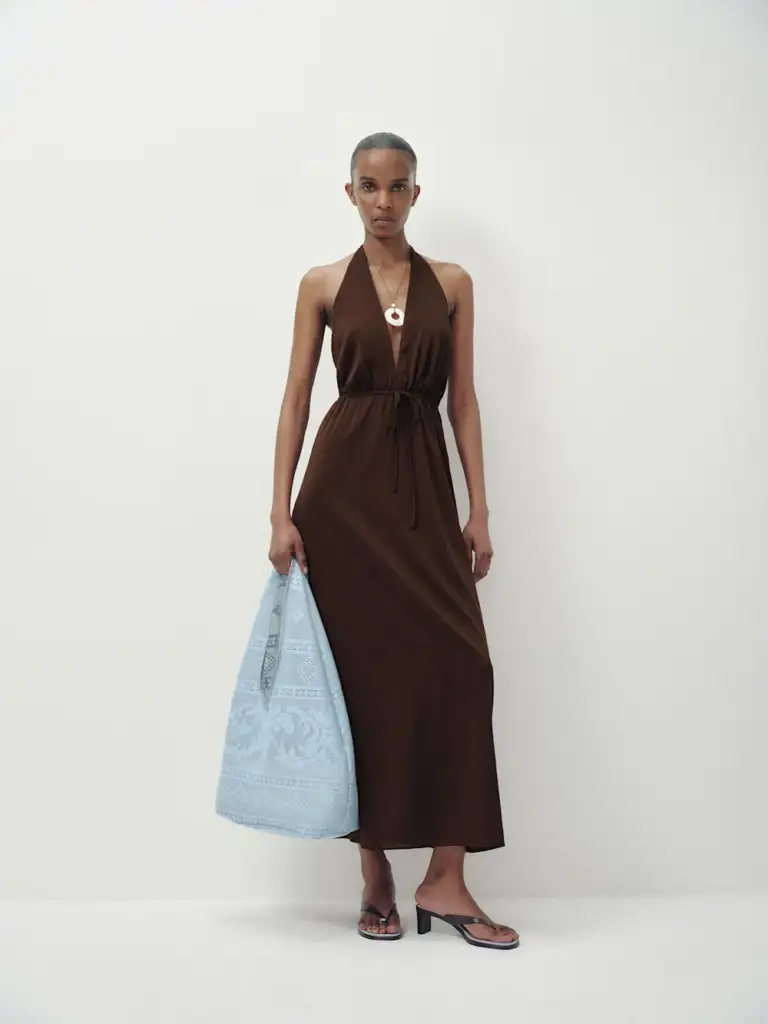
Kiran Dress is made with 50% Organically Grown Cotton, 50% LENZING™ ECOVERO™ REFIBRA™ Viscose. Sustainably made in China. $278
Made with responsibly sourced wood and recycled cotton scraps, LENZING™ ECOVERO™ REFIBRA™ reduces the need for virgin materials.
A core sustainable initiative at Reformation is improving materials, based on the idea that fabric choices are the largest driver of environmental impact. Reformation has implemented its own system to track metrics like a fabric’s carbon footprint in grams per meter. This system guides choices to move away from high-impact fibers like silk, viscose, and leather to fibers with a lower energy input, land use, eco-toxicity, and microfiber shedding. These include: regeneratively grown cotton, cashmere, and wool, recycled wool, and TENCEL™.
TENCEL™ Lyocell leads their lineup, made from wood pulp in a closed-loop process. It saves up to 50% less water than cotton, per their data. Reformation used it in over 60% of spring collections, cutting carbon by 20% compared to past lines.
Recycled fibers shine too. Deadstock fabrics, leftovers from other makers, fill gaps, reducing waste. The report notes 15% of materials came from deadstock in Q1 2025, sparing landfills. These picks lower the brand’s overall footprint, making outfits greener without sacrificing that silky feel.
Despite the turn towards lower-impact fabrics, synthetics still linger in Reformation dresses and other items. Even recycled fabrics like ECONYL® are sourced from ocean plastics. This brand of recycled nylon cuts virgin material use by 90%, but it sheds microplastics in washes. The report admits that 25% of fabrics are recycled polyesters, which still release tiny fibers that pollute the environment.
At a glance, the brand hit these goals in 2025:
- 98% of materials used are recycled, regenerative, or renewable.
- 19% of materials used are deadstock, recycled, or next-gen (AKA not virgin).
- 46% of materials are textile-to-textile recyclable.
Traceability and Transparency
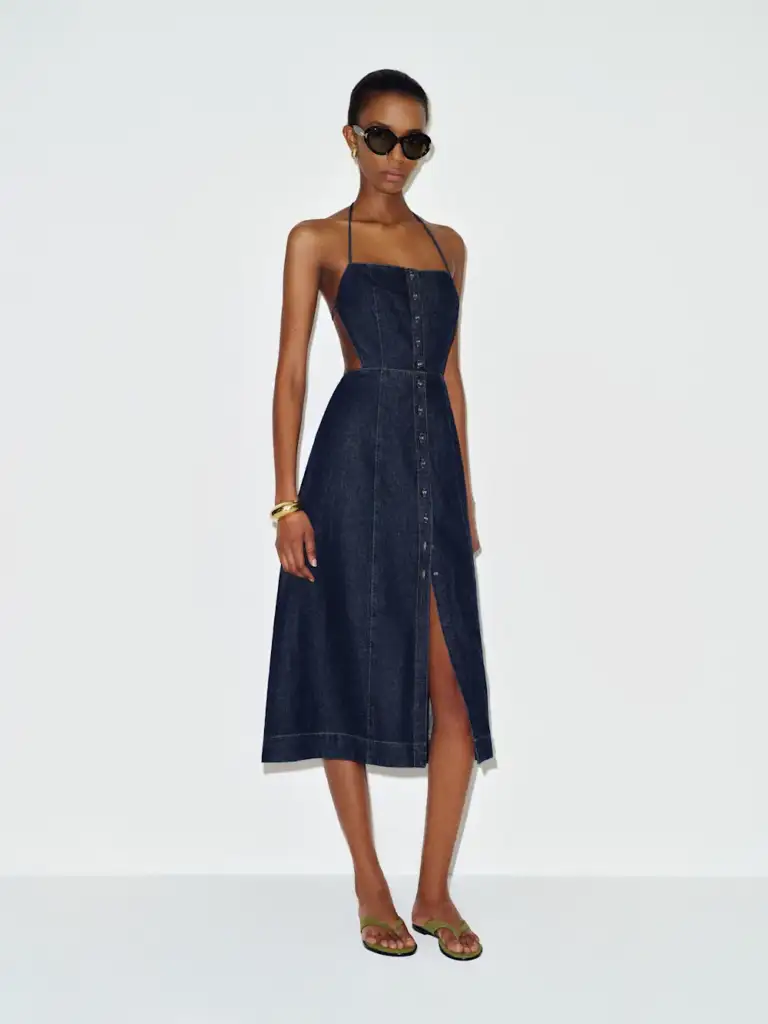
Manon Denim Midi Dress is made from 80% Regeneratively Grown Cotton and 20% Recycled Cotton. The cotton is sourced from the first climate-positive farm in Australia. $218
Where does your favorite Reformation dress come from? In the bi-annual report, Reformation shares supplier lists to flesh out details about the fabrics and design process for their chic pieces. However, the brand has identified one key area for improvement.
The report shows 100% traceability for Tier 1 (finished goods) and Tier 2 (finishers, weavers, and knitters), and 98% traceability for Tier 3 (fibers, recycled materials processors). However, tracking yarns back to their raw sources proves tough. Tier 4 (raw materials from farms, ranches, or forests) has a traceability score of just 16%.
That’s not to say that there isn’t some farm visibility when it comes to materials. Partnerships with artisanal mills support cotton farmers’ use of regenerative farming practices, and 23% of the brand’s denim styles were made with cotton sourced from the world’s first carbon-positive farm in Australia.
A partnership with a farm-level audit covers cotton, but Lyocell’s wood sources need more proof. Third-party certs like OEKO-TEX help, covering 40% of materials. Still, full visibility demands blockchain tech, which they pilot but do not scale.
Ethical Labor Practices
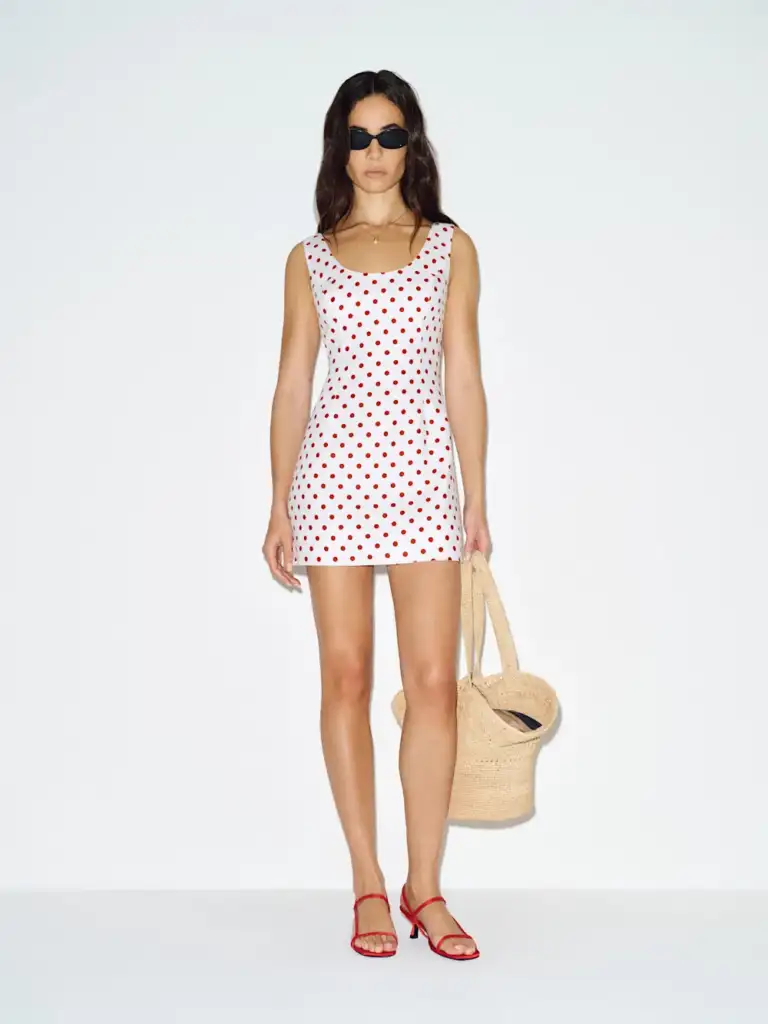
Franceska Linen Dress is made from 100% linen and sustainably made in Los Angeles. $178
“Who made our clothes?” is an ethical campaign that Reformation is actively a part of by sharing every step of its supply chain and the guidelines they use to ensure fair labor practices are upheld. You can view the full list of their partner factories here.
Each factory is audited for safe conditions, fair pay, and standards that meet their Code of Conduct by third parties. The report covers 100% of Tier 1 suppliers, mostly in China, Vietnam, and Portugal. Tools like the Higg Index are used for audits to spot issues early, from overtime to ventilation.
Over 90% of Reformation’s partner factories undergo yearly checks against Fair Labor Association standards. These audits cover health, safety, and rights, yet unannounced visits make up just 30%, leaving room for polish.
*If you wanna see where your favorite Reformation dress is made and you’re in Los Angeles, email them at love@thereformation.com to book a factory tour.
Circularity & “RefReccycle”
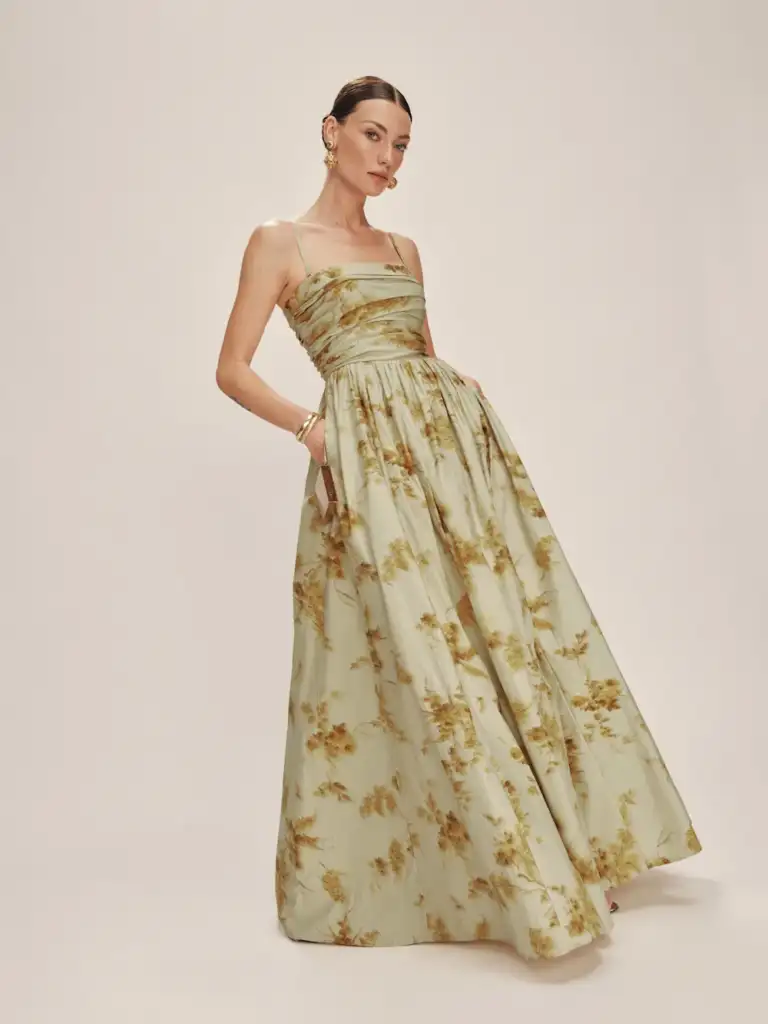
Kastoria Dress is made from 98% organic cotton and 2% spandex and sustainably made in China. Wear the dress for a special occasion and resale through partner apps- Poshmark and ThredUp. $398
The most sustainable item is the one you already own. Yet, Americans throw out 13 million tons of clothing and footwear yearly. To combat this trend, Reformation designs its clothes to last longer, offers tips on garment care, and provides simple alterations and repairs to extend the life of its garments. Since launching its repair program they’ve repaired 35,000 items.
To further keep their clothes out of landfills, Reformation has partnered with platforms Poshmark and Thred Up to make resale easier. For clothing beyond wear, customers can send their garments in to be recycled by the brand as part of its RefRecycling program to offer textile-to-textile recycling solutions.
Another part of its circular framework is the use of compostable mailers, which cut plastic use by 80%, per the report. In stores, zero-waste policies ensure that hangers and paper products are recycled.
Conclusion: Grading Reformation’s Sustainable Performance
Reformation has clear goals, strong transparency, and consistent reporting practices – such as the factory audits- to measure progress. However, the report also reflects that many initiatives are still in progress, particularly in deeper supply chain transparency, the use of plastic-based and conventional materials, and (while not addressed) their total production value, with hundreds of new styles.
Yet, despite these dents in its environmental claims, Reformation is far better than the average fashion brand. And, with clear goals and systems in place to improve its sustainable performance, it has the potential to be an industry leader in the sustainable fashion space.
