


Share This Article
Sardines are trending. But are these tiny, tinned fish good for you? We asked a nutritionist to share her insights.
| All products featured on The Wellness Feed are independently selected by our editors. However, when you buy something through our retail links, we may earn an affiliate commission.|
Sometimes, all you need on a warm spring day is a vibrant rosé and a warm crust of bread served with a plate of olive oil to dip it into. Call it my “I’ve made it through a dreary winter” comfort food. Yet, as I pass by my favorite tapas spots for a warm breeze and a light snack, I’ve noticed that many plates of olive oil come with a healthy serving of tinned fish. After a little sleuthing on the internet, I’ve found out why- it turns out sardines are trending.
Considering that most trending foods- kale, watermelon, legumes- have some health benefits, I had to wonder, “Are sardines good for you?” And because I spend my days minimizing my plastic use, composting, and writing about it, I also wondered whether the tiny fish served in tin cans come with sustainability credentials too. After all, they are plastic-free, and that has to count for something.
To gain a deeper understanding of sardines’ nutritional qualities, Kezia Joy, a Registered Dietitian Nutritionist and Medical Advisor at Welzo, shared her answers about whether or not sardines are good for you. With a focus on evidence-based nutrition that supports long-term health, her insights are the practical science-backed answers we need to understand how to choose the best foods- from sea to plate.
Key Nutritional Benefits of Sardines & Comparison to Other Seafood
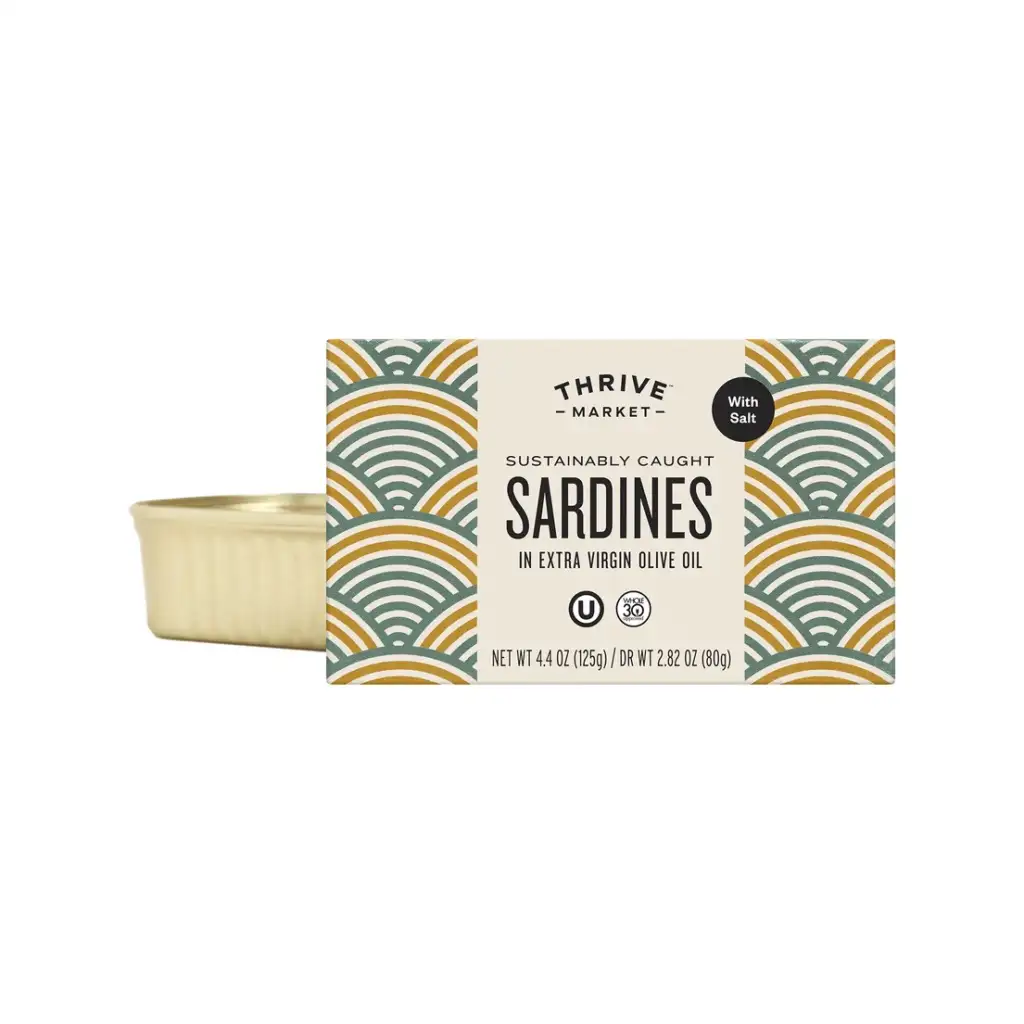
Thrive Market Sardines $4.98 are served in extra virgin olive oil and salt. Non-GMO.
Thrive Market is a brand that prioritizes organic and regenerative pantry staples.
“Sardines contain high-quality protein that is very dense (in terms of quantity) and therefore high in quality. In addition to containing high-quality protein, sardines are also an excellent food source of several important vitamins and minerals, such as Vitamin B12, Selenium, Calcium, and Vitamin D.
When eating sardines whole, you consume all of the bones included. Therefore, when consuming sardines whole, you receive much more calcium than most other types of fish.
In addition to being high in Calcium and Vitamin D, sardines are extremely high in Omega-3 fatty acids. Because Omega-3 fatty acids help improve the overall health of an individual and do so without requiring large portions of food, sardines can be considered a superior choice for individuals seeking to increase their nutrient intake efficiently.
Additionally, because sardines generally have lower mercury levels than larger fish such as Tuna and Swordfish, sardines can be consumed regularly by an individual while receiving similar benefits of the same amount of Omega-3’s. Lastly, one of the advantages of consuming sardines is that they are readily available in a variety of shelf-stable products.
Role in Supporting Heart, Brain, and Bone Health

Portugalia Marketplace Nazarena Sardines $8.99 are skinless and boneless, served in olive oil, and packaged in a vintage paper and tin packaging inspired by a 1950’s Portuguese poster.
The omega-3s present in sardines have been shown to support a healthy heart through maintenance of normal levels of good and bad cholesterol, and reducing systemic inflammation.Long-term inclusion of sardines in one’s diet may provide ongoing support to overall cardiac function.
In addition to maintaining healthy bones and joints, the same omega-3 fatty acids that support heart health will also positively affect cognitive function and performance. While many factors can impact how we age cognitively, nutrition plays an important part in our future thinking ability.
In terms of promoting bone health through diet, sardines contain high amounts of both calcium and vitamin D. Both of these nutrients work together to promote strong bones and prevent loss of bone mass (bone density) in adult populations.
Why Sardines Are Considered a Sustainable Seafood Choice
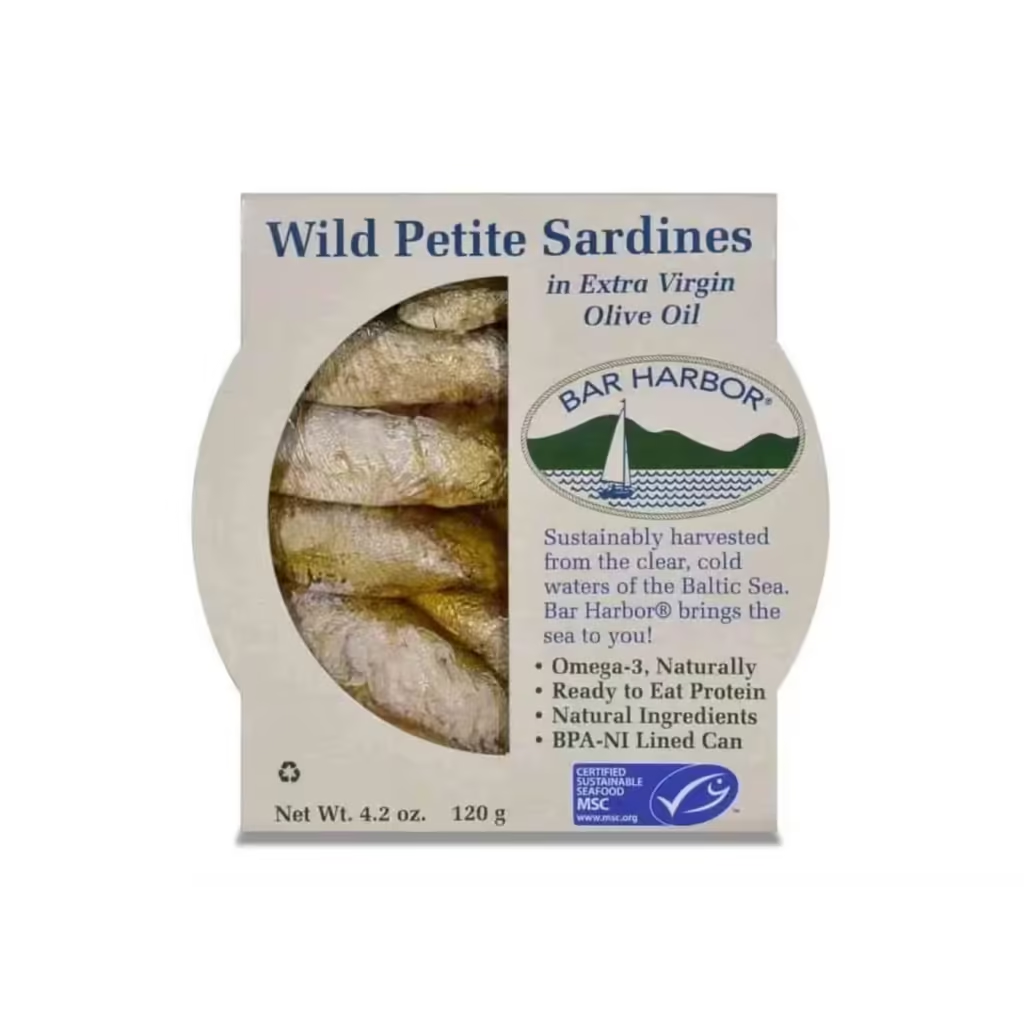
Misfits Market Bar Harbor Foods Wild Petite Sardines $4.99 are blanched, salted, and served in olive oil.
Sardines are classified as sustainable due to having a rapid reproduction rate and relatively short lifespan; both of these factors contribute to sardine populations recovering rapidly if they are properly managed. Additionally, since sardines are lower in the marine food web, there is significantly less demand on an area’s ecological resources (e.g., food, space) from each sardine harvested relative to a larger predatory fish. As such, their overall “ecological footprint” is reduced.
How Consumer Perception of Sardines Is Evolving
Sardines were primarily looked at as a low-cost or an old-fashioned pantry staple. Now, sardines are becoming recognised for their healthful and affordable nature.
A greater number of consumers are now seeking out foods that provide both nutrition and affordability. As a result of increasing prices on all types of foods, sardines will likely be one of those choices.
Consumers are increasingly interested in the least-processed, whole foods possible. With regards to sardines, they have very few ingredients and are extremely nutritious.
With increased knowledge about sardines, there seems to be a large trend emerging where consumers see sardines as a viable everyday protein source. The way we eat is becoming much wiser and more deliberate.”
