


Share This Article
Why answer “Why is polyester bad?” and share the best sustainable fabrics that will keep you cool all summer.
| All products featured on The Wellness Feed are independently selected by our editors for its environmental and ethical impact. However, when you buy something through our retail links, we may earn an affiliate commission. |
Wearing the right fabrics in summer can feel like a miracle when you step outside in July and are welcomed with humidity that breezes off your skin thanks to linen shorts or a breezy cotton dress. But the most popular fabric today isn’t a natural fiber like cotton or linen. It’s plastic-based polyester, and within minutes, it becomes heavy, damp, and uncomfortable in the summer heat. Polyester may have become the standard for fast fashion and everyday brands, but it is a poor choice if you want to stay cool and dry in summer.
Why else is polyester bad? For one, it has a huge negative environmental footprint. It’s sourced from fossil fuels, and its production process uses a lot of land and water, while also polluting our freshwater resources. And polyester clothing sheds tiny plastic particles every time we wash it, that end up in our water and food.
There are easy-to-find alternatives like linen and organic cotton that, for one, do a better job of keeping you cool in the summer heat and are better for the environment. We’ll share exactly why they’re better than wearing plastic.
The Downside of Polyester
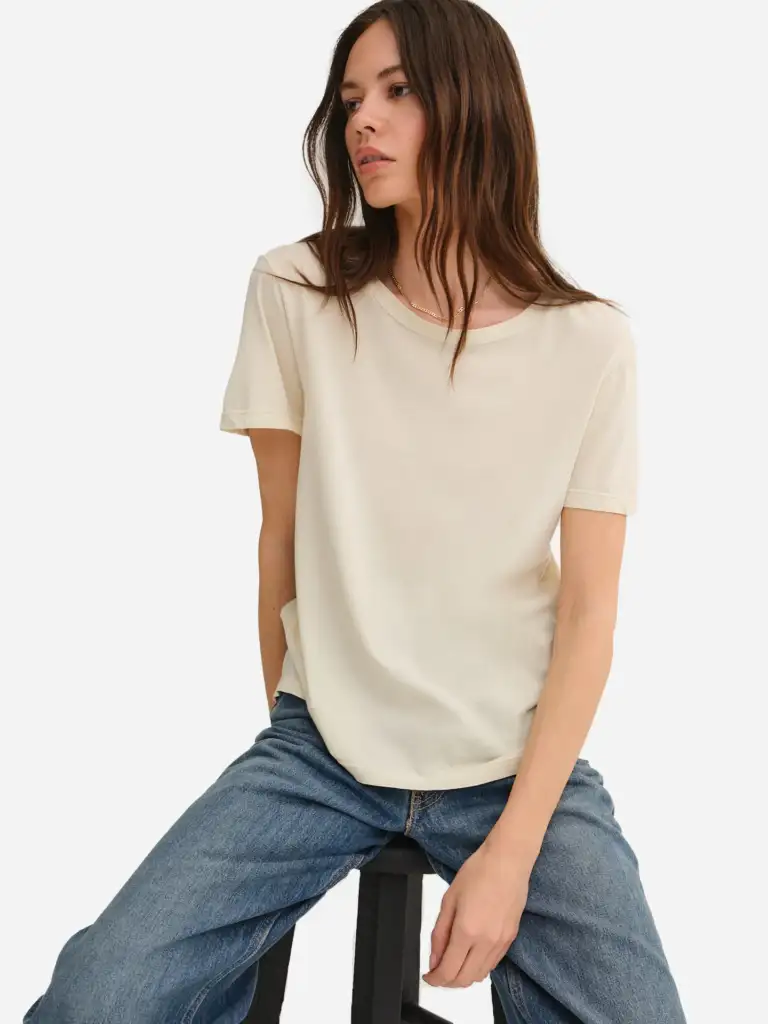
Mate the Label Organic Cotton Classic Tee $48 (Sale $31)
This 100% organic cotton jersey tee (grown without pesticides and not treated with formaldehyde or other chemicals) is from a B Corp brand.
We often reach for polyester because it’s accessible. Fast fashion’s meteoric rise has made it almost unavoidable, as it’s used for everything from dresses to shorts to faux silk and even cotton-blend fabrics. However, this synthetic material works against your body rather than with it in warm climates.
Poor Breathability and Heat Trapping
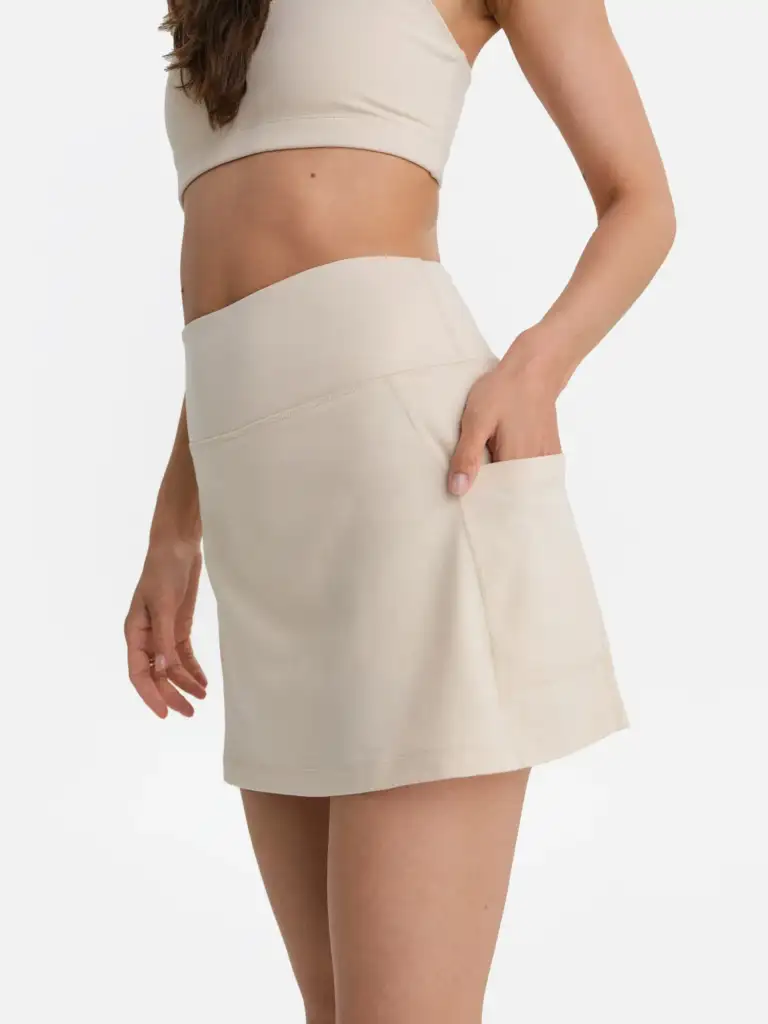
Mate the Label Organic Stretch Skort $78
Made from GOTS-certified organic cotton and 8% spandex. Made in India by a certified B-Corp brand.
Polyester is insulating and retains warmth and your natural body heat. Unlike natural fibers that tend to be looser weaves with gaps to let air pass through, polyester is denser and more tightly woven, which prevents heat from escaping your body. Its limited breathability means that when you wear polyester, you essentially trap your body heat against your skin. This, in turn, can cause you to sweat more because your body can’t cool itself as quickly when compared to fabrics that allow natural airflow.
Moisture Retention and Bacteria Growth
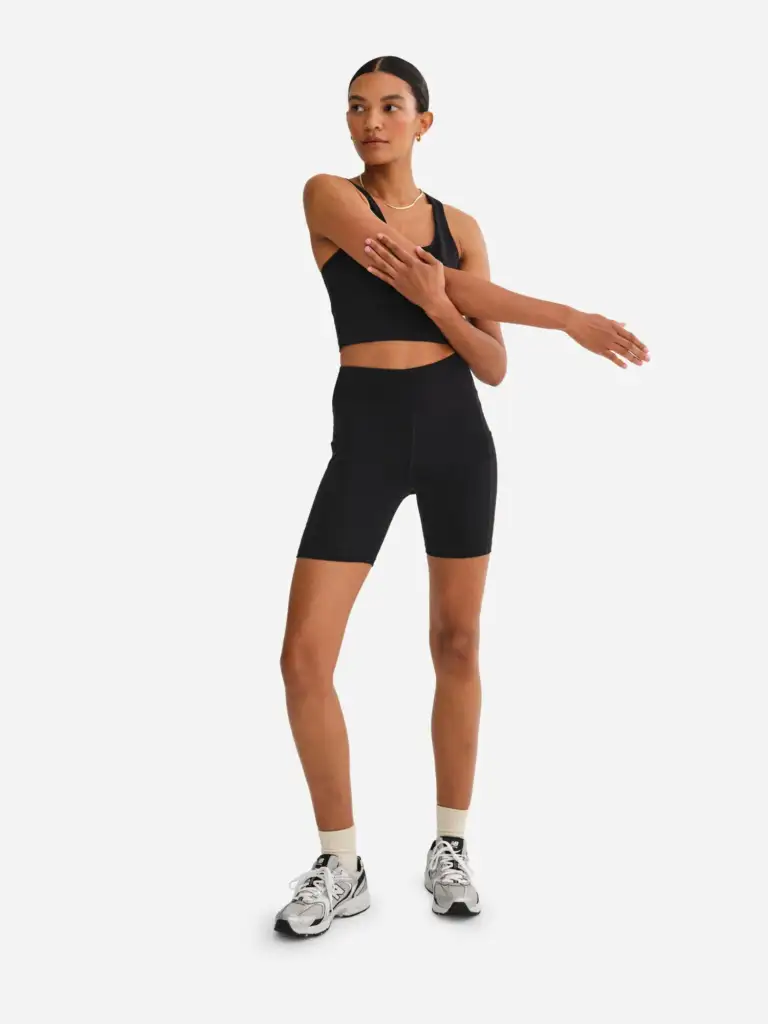
Mate the Label Organic Stretch Pocket Short $68
Made from GOTS-certified organic cotton and 8% spandex. Made in India by a certified B-Corp brand.
“The moisture vapor transport rate for linen is much greater than that for cotton or polyester,” states Sundaresan Jayaraman, a professor in Georgia Tech’s School of Materials Science and Engineering.
Many people believe polyester is good for moisture because some athletic shirts are labeled as “moisture-wicking.” While those specific high-tech fabrics exist, standard polyester clothing is different. It does not absorb sweat. Instead, it lets sweat sit on your skin or stay stuck in the fabric’s weave. If you’ve ever experienced that clammy, sticky feeling in summer, check the fabric label. With polyester, moisture and heat stay trapped, giving bacteria the perfect environment to grow. This is why polyester garments often develop a sour odor after just one wear.
Environmental Concerns of Polyester Production
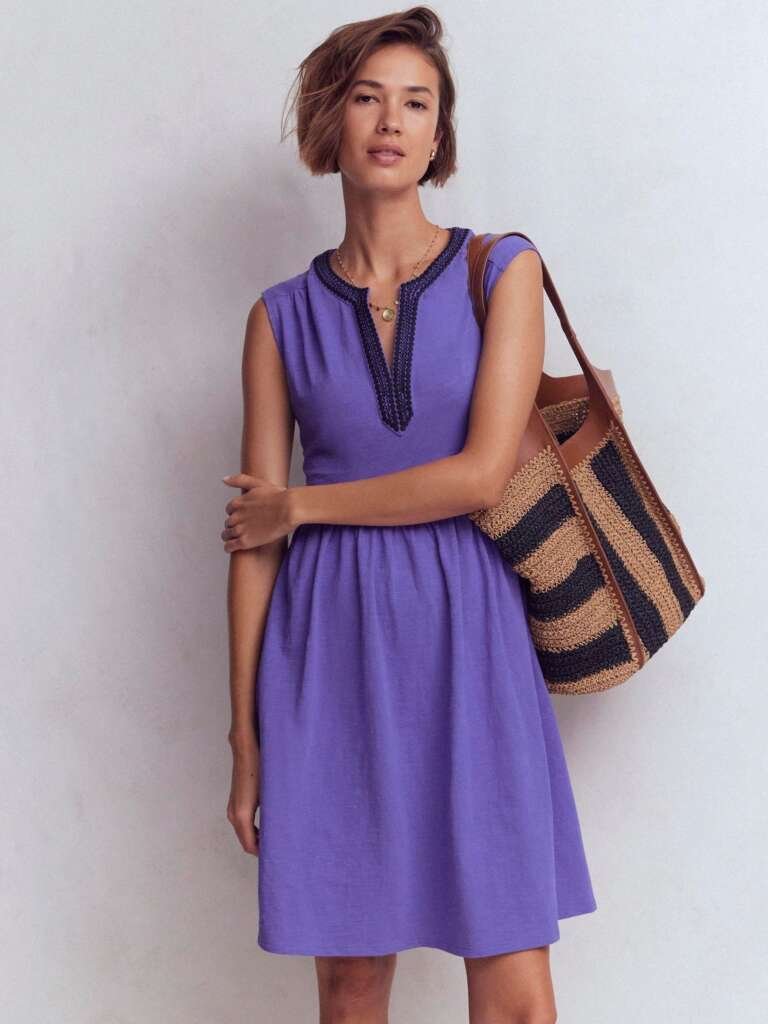
Boden May Jersey Short Dress $110
Made from 100% cotton
Beyond your personal comfort, polyester is a major environmental issue. It’s made from petroleum, a non-renewable fossil fuel. By some estimates, polyester production uses roughly 70 to 342 million barrels of oil yearly. Turning these non-renewable resources into fabrics further drains and pollutes our freshwater resources, releasing heavy dyes, metals, and toxins into our rivers and other waterways. And the manufacturing process uses high amounts of energy and produces 2 to 3 times more carbon emissions than cotton production.
Then, there’s the microplastic issue. Every time you wash polyester clothing, it sheds tiny plastic fibers. These microplastics travel from your washing machine into the water system, into the ocean, and eventually into our food and drinking water.
The Natural Alternatives
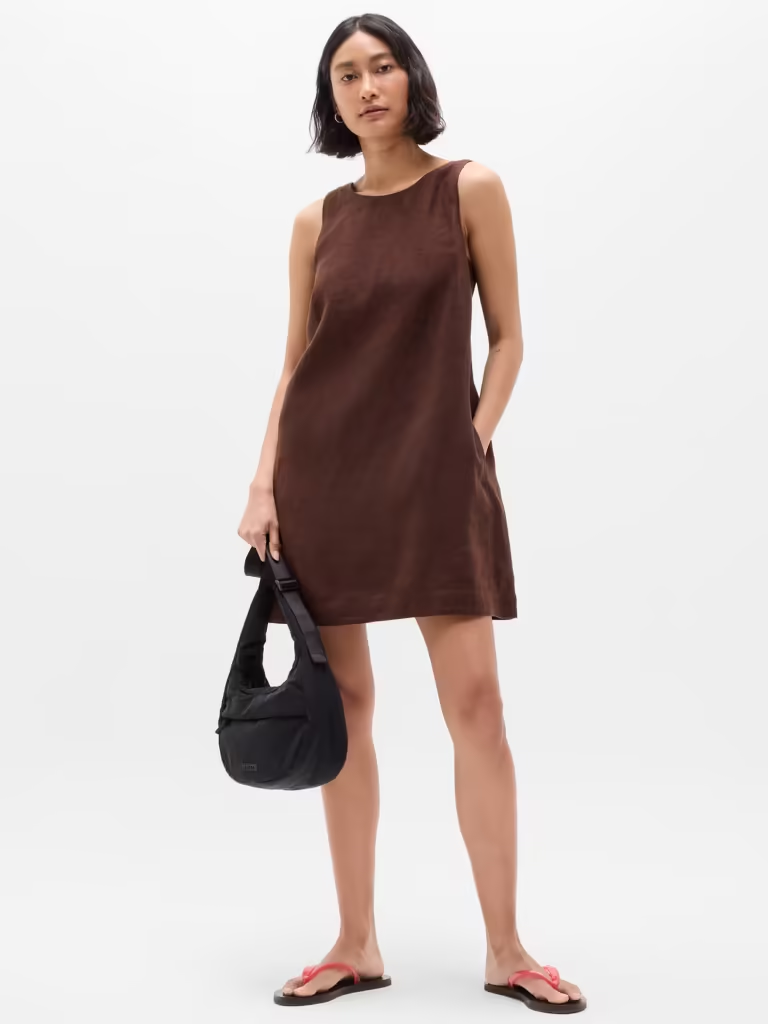
Athleta Retreat Linen Dress $105 (Sale $63)
Made from 100% certified European Flax. The plant fibres were produced through Integrated Crop Management farming without GMOs and—barring exceptional circumstances—without irrigation.
Natural fibers offer a way to stay comfortable without relying on plastic-based materials. These fabrics work with your body’s natural cooling systems and have a smaller environmental footprint.
Organic & Regenerative Cotton: The Breathable Classic
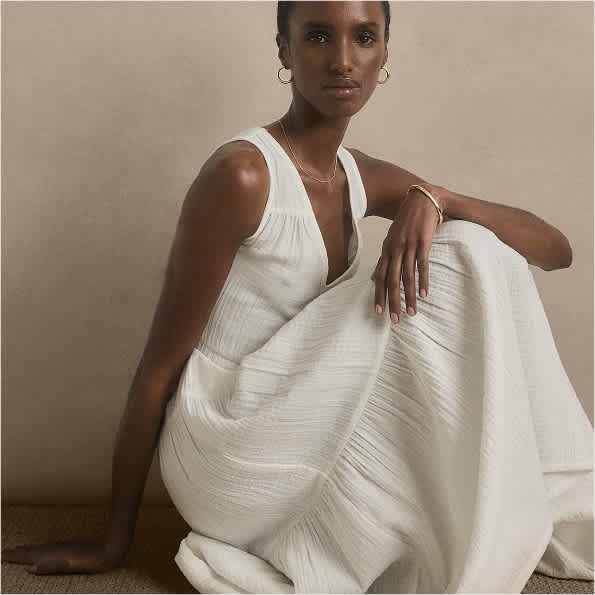
Quince 100% Organic Cotton Gauze Tiered Maxi Dress $59.90
Made from 100% organic cotton fabric certified by OEKO-TEX Standard 100 (Certificate Number: 21.HIN.92598 ), which ensures that no hazardous substances are present.
Cotton is the most popular choice for summer for a good reason. It is a natural fiber that is soft, durable, and highly breathable. The structure of the fiber allows air to move freely, which helps heat escape from your skin. Cotton is also naturally absorbent. It pulls sweat away from the body and allows it to evaporate into the air.
When you choose organic or regeneratively grown cotton, you gain extra benefits. Both are grown without harsh chemicals or pesticides, which makes it safer for the soil and the farmers. Regenerative farming takes an extra step by using farming methods that enhance soil health and biodiversity.
Linen: The Ultimate Cool-Down Fabric
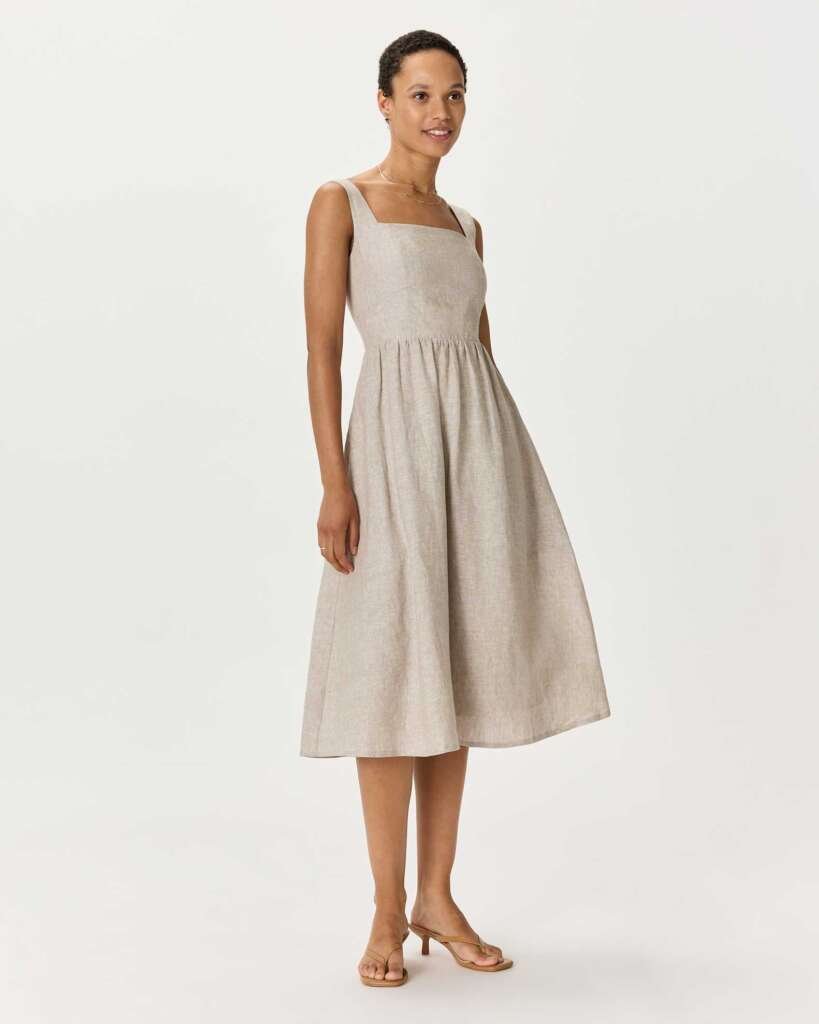
Quince 100% European Linen Fit & Flare Midi Dress $84
Made from 100% linen fabric certified by OEKO-TEX Standard 100 (Certificate Number: BJ015 226317), which ensures that no hazardous substances are present.
Linen is often called the king of summer fabrics. It is made from the flax plant and has a unique structure that makes it perfect for hot weather. The fibers are hollow and thick, which allows for maximum airflow. Linen is also extremely absorbent. It can hold a lot of moisture while still feeling dry to the touch. This means that even on the hottest, most humid days, linen pulls moisture away from your body and dries quickly.
Linen also has a natural texture that stays away from the skin, promoting even more airflow. It feels cool to the touch immediately, which provides a refreshing sensation. While it does wrinkle easily, that is part of its charm. It is a durable fabric that gets softer with every wash, making it a great long-term investment for your closet.
Its environmental credentials are equally impressive. Linen is a pest-resistant plant that can be grown without fertilizers and pesticides. It’s also a zero-waste plant, with its seeds and roots used for other items. And the fabric is biodegradable.
Other Breathable Options

Afends Tully Seersucker Maxi Dress $129.99
Made from 55% Hemp, 45% Tencel Seersucker.
If you’re looking for other options for your summer wardrobe, consider hemp or Tencel. Hemp is very similar to linen. It is highly breathable, wicks moisture, and is durable. It is often considered one of the most sustainable fabrics available. Tencel, or lyocell, is a wood-based fiber. It is famous for being incredibly soft, even softer than cotton. It manages moisture well and has a smooth texture that keeps you cool during a heatwave. However, its downside is that it requires a chemically intensive production process.
Making Smart Summer Wardrobe Choices
Changing your habits takes a bit of planning. You do not need to throw away everything you own, but you can be more intentional about what you buy next.
Decoding Fabric Labels
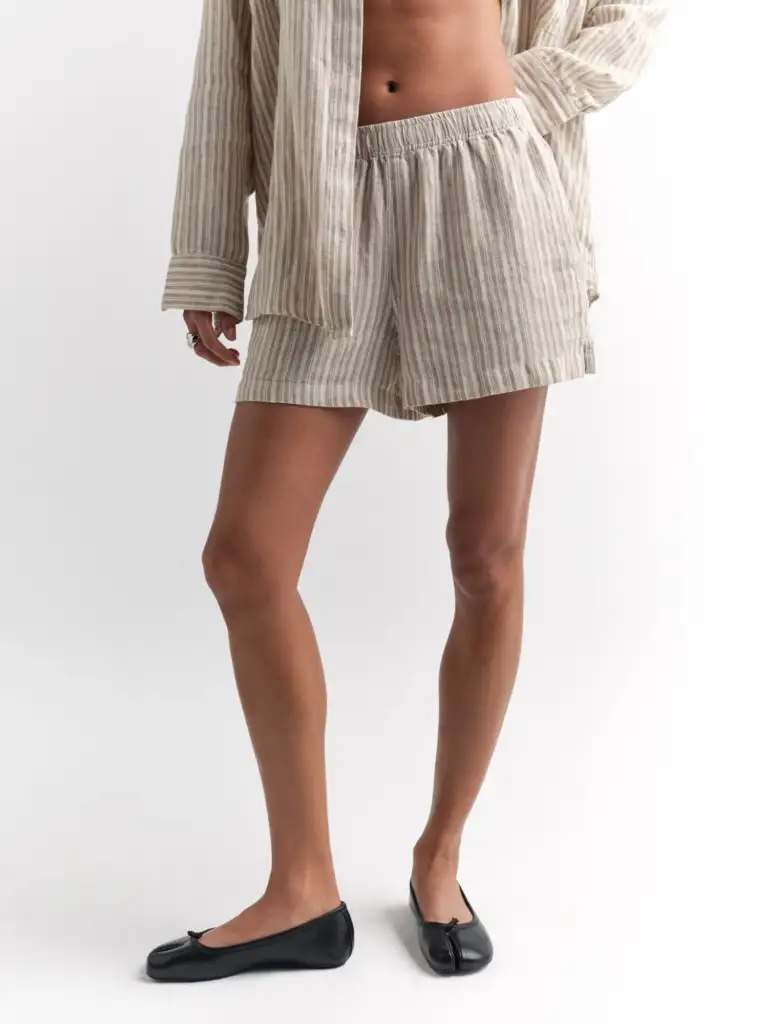
Mate the Label Organic Linen Striped Short $98
Made from GOTS-certified 100% organic linen without any harmful chemicals.
Before you pay for a new shirt or dress, check the tag inside. Avoid labels that say “100% Polyester”. Ideally, look for labels that say “100% Cotton,” “100% Linen,” or “Hemp Blend.” Sometimes you will find blends. A mix of cotton and linen is excellent for summer because you get the softness of cotton with the cooling power of linen. Avoid items that are mostly synthetic, as even a small amount of polyester can reduce the breathability of the garment and contribute to microplastics.
Building a Summer Capsule Wardrobe
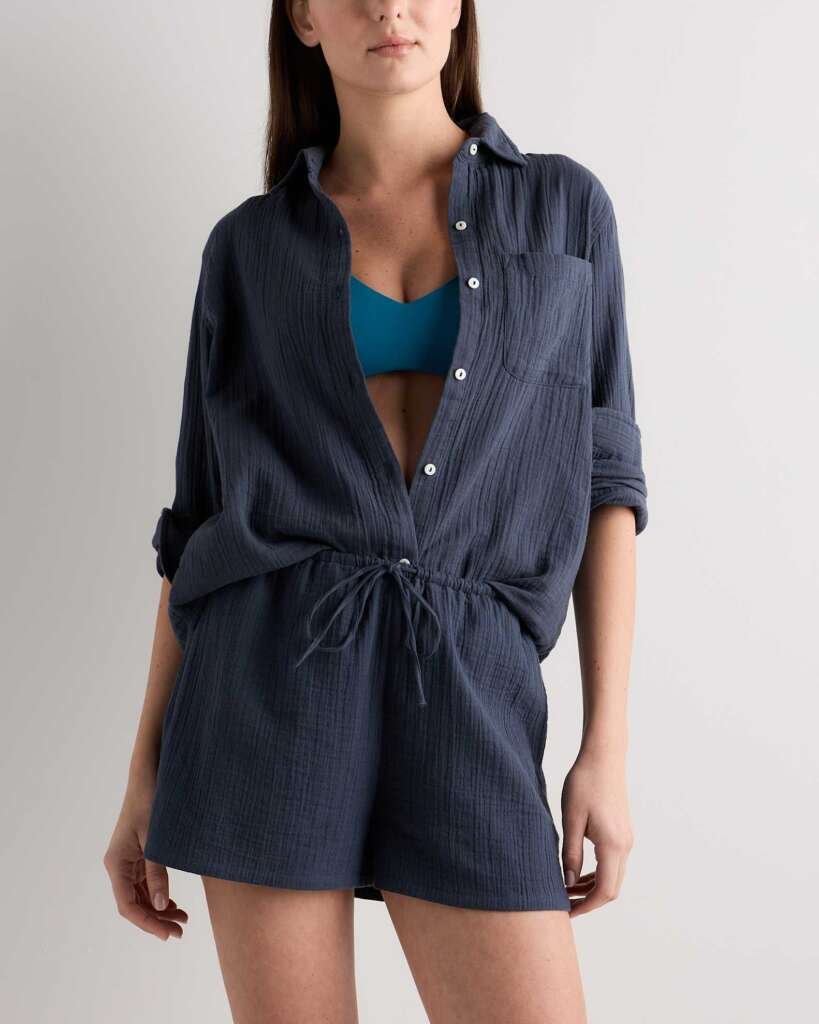
Quince 100% Organic Cotton Gauze Shorts $29.90
Made from 100% organic cotton in a Fair Trade-certified factory.
You do not need a lot of clothes to have a comfortable summer. Focus on a few high-quality, breathable pieces that you can mix and match.
- Cotton T-shirts: Stock up on basic, lightweight cotton tees in white or light colors.
- Linen Shirts: A button-down linen shirt works for the office or a casual dinner.
- Breathable Dresses: Choose loose-fitting cotton or linen dresses that allow air to flow around your legs.
- Linen Trousers: These are a great alternative to jeans, which are too heavy for summer.
Caring for Natural Fabrics
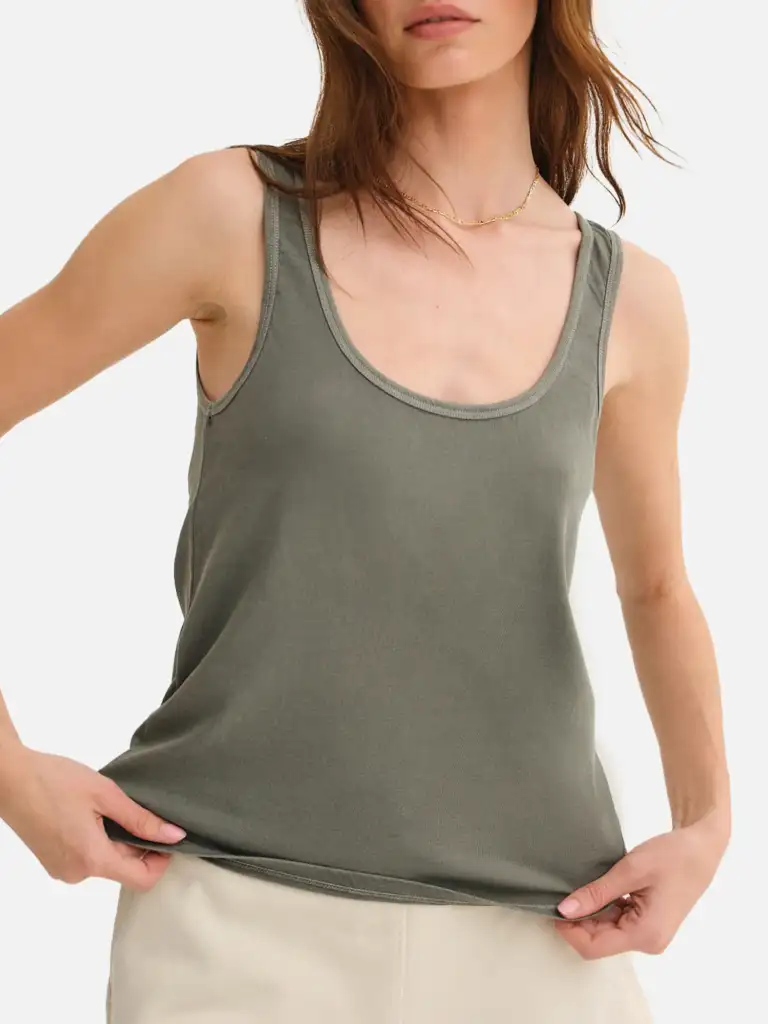
Mate the Label Organic Cotton Layering Tank $46 (Sale $29)
Made from 100% GOTS-certified organic cotton.
Natural fabrics like cotton and linen are easy to care for if you know the basics. Always wash them in cool or lukewarm water. Hot water can cause fibers to shrink or weaken. Use a gentle detergent, as harsh soaps can break down the natural fibers over time.
Air drying is the best way to handle your summer clothes. It saves energy and prevents the heat damage that comes from high-temperature dryers. If your linen clothing comes out of the wash looking wrinkled, do not worry. You can steam the wrinkles out, or simply embrace the relaxed, lived-in look that defines linen.
Choosing the right fabric is one of the easiest ways to improve your summer. Once you get used to the feeling of cool linen against your skin or the soft touch of organic cotton, you will never want to go back to synthetic options. Prioritize your comfort and your health by filling your wardrobe with materials that let you breathe, move, and stay cool all summer long.