

Share This Article
A nutritionist answers a reader’s questions about the health benefits of chia seeds, and TWF breaks down what makes them so good for the environment.
| All products featured on The Wellness Feed are independently selected by our editors for its environmental and ethical impact. However, when you buy something through our retail links, we may earn an affiliate commission. |
I love an easy breakfast, especially during the summer months- the yogurts you can grab on the go, throw-it-together smoothies, and chia seed puddings you can easily put together the night before. I especially love that all of these align with my ethos of eating healthy and sustainably. I try as often as possible to buy yogurts in glass containers and seasonal fruits from my local farmers’ market or package-free. These small conscious steps help me to avoid unrecyclable plastic, reduce the mileage my food travels to my plate, and maximize nutrients (seasonal produce retains more nutrients). But, to be honest, when it comes to chia seeds, I know little about their environmental or health benefits outside of being a good source of protein.
It turns out chia seeds are so much more than simply being a good source of protein. They’re a protein powerhouse, containing all 18 essential and non-essential amino acids to make them a complete protein. For those on a vegetarian or vegan diet, this is especially important as fewer than 15 plant-based foods are considered a complete protein.
Now, I don’t know of any chia seed farms close to me, or in my region, for that matter. So, I know they won’t have the same environmental credentials as local foods. But they are a low-maintenance crop– one that can be grown without pesticides or fertilizers and with minimal water. This makes it ideal to grow in dry regions as a food for both humans and livestock. In fact, research suggests that substituting or rotating alfalfa, corn, and hay, which are widely used for animal feed, with chia plants by the Colorado River basin could save nearly 355,100 liters of water yearly per hectare of each. And, the plant, a visual stunner with vibrant purple flowers (sometimes they’re white), attracts pollinators such as bees and hummingbirds.
Facts like these make me even more confident about my breakfast choice. And, sound nutritional advice from nutritionists helps me to decipher the truth from viral TikTok challenges, such as drinking chia seed water. Jennie Miremadi is the licensed dietician and nutritionist I reached out to learn more about the health benefits of chia seeds and how to best give my body the nutrition it deserves.
What are the health benefits of chia seeds?
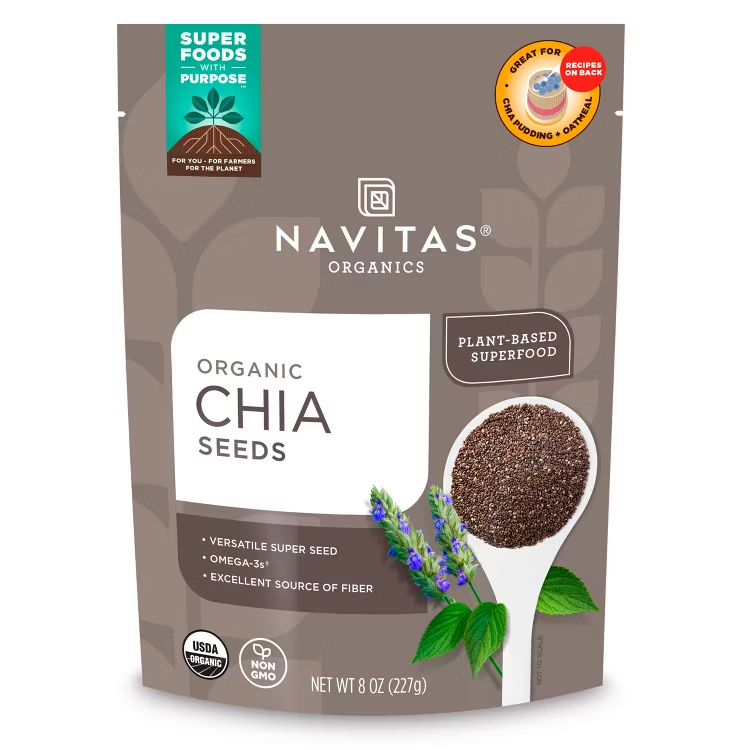
Navitas Organic Chia Seeds $9.99
There’s a reason chia seeds are dubbed a superfood. They’re a complete protein and a good source of fiber, omega-3 fatty acids, calcium, and phosphorus.
As a crop, they can easily grow without pesticides or fertilizers and require less water than similar crops.
Chia seeds are packed with plant-based omega-3 fatty acid alpha-linolenic acid or ALA, which supports cardiovascular health, reduces inflammation, and promotes skin health. They’re also rich in polyphenols (which combat oxidative stress and support the brain and gut health) and are an excellent source of fiber. One ounce of chia seeds contains almost 10g of fiber! They’re also a decent source of protein, with one ounce containing almost 5 grams of protein. They’re also a good source of manganese, magnesium, and phosphorus.
Do you recommend chia seeds to your clients?
Chia seeds work great for many of my clients. However, for my clients with small intestinal bacterial overgrowth or SIBO, chia seeds can sometimes trigger gastrointestinal symptoms. So, for those clients, we will typically remove chia seeds for a period of time and then slowly reintroduce them later once symptoms improve.
How can people incorporate them into their diet?
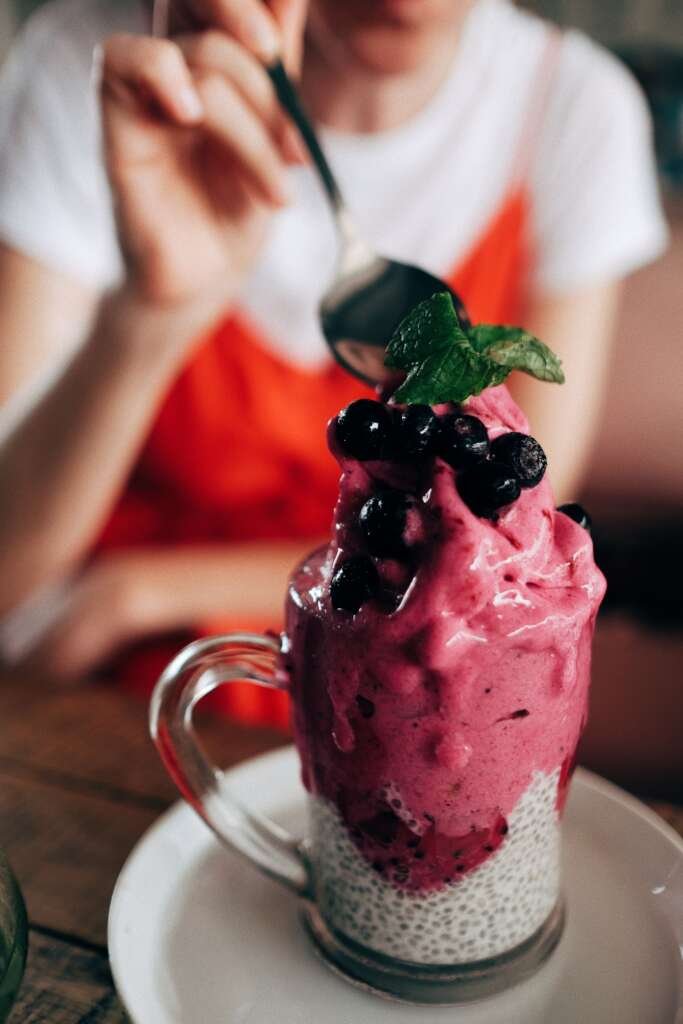
Indulge in your own pudding breakfast. Mix your choice of milk (1/2 cup) with 2 Tbsp of chia seeds. Store overnight in the fridge. In the morning, stir in your favorite fruits and enjoy!
It doesn’t matter what time of day you eat chia seeds to reap the health benefits. Many of my clients enjoy them with breakfast.
I love chia seed pudding! Mix 2 tbsp of chia seeds in 1/2 cup of your favorite liquid (I like coconut milk with chia seeds) and add an optional sweetener. Make sure to stir it well so that there are no chia clumps. Put a lid on top and refrigerate overnight to thicken, and then add your favorite toppings (such as blueberries or cacao nibs, for example) and enjoy!
Are chia seeds safe to eat daily?
You can consume chia seeds every day if you like. However, like with all high-fiber foods, start with a small amount and slowly increase the amount you’re consuming to help prevent digestive issues.
