


Share This Article
With recent PETA reports showing animal suffering, here are tips on how to spot and shop for an ethical mohair sweater.
| All products featured on The Wellness Feed are independently selected for their environmental and ethical impact. However, we may earn an affiliate commission when you buy something through our retail links. |
Mohair feels like a soft cloud against your skin. Its warmth and smooth drape make it a favorite for cozy sweaters and elegant scarves. But that luxury comes with a dark side. And we are in a time when more people want clear details on how their clothes are made, especially when it comes to animal fibers. Traditional mohair production often hides problems for the goats that provide it.
In an effort to help you build an ethical wardrobe, we’re sharing tips on how you can spot and buy an ethical mohair sweater. You’ll learn the tough truths behind its creation and steps to make smart choices and draw from key reports, like the PETA investigation on mohair farms, which exposed harsh conditions. By the end, you’ll feel ready to shop with confidence to choose the best mohair sweater to keep you cozy and warm all winter long.
Understanding Mohair Production
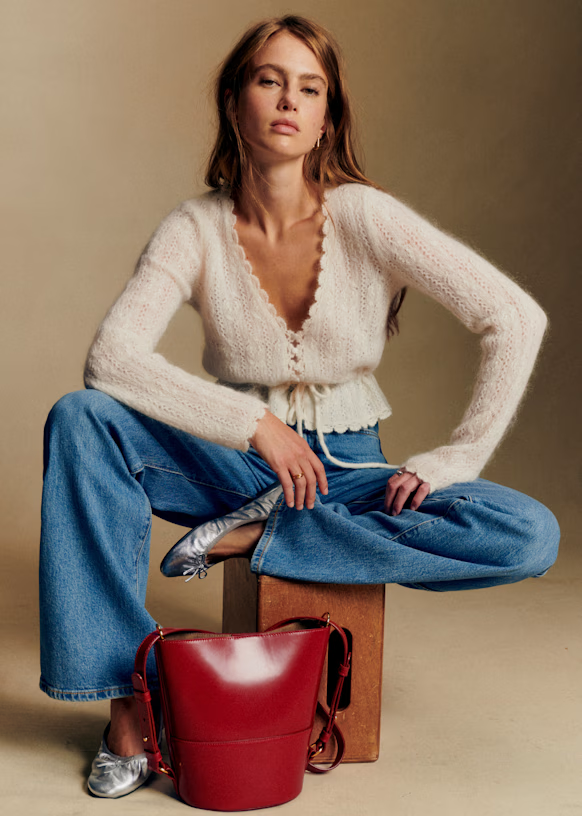
Sézane Elise Sweater is a mohair and wool blend sweater made from RWS and RMS-certified wool and mohair. $165
Mohair starts with Angora goats. These animals grow long, shiny hair that turns into the fiber we love. Angora goats thrive in open, natural settings with room to roam. Unfortunately, a standard in the livestock industry is that farms raise them in tight, crowded pens, which can lead to stress and poor health. This setup spreads sickness fast and limits their movement.
At the other end is ethical farming, which mimics their wild habitats, where they roam free. This minimizes the wild spread of diseases and ensures goats have a natural diet and a healthier lifestyle from spending most of their time outdoors.
Once per year, the goats’ coats are sheared. Done right, it keeps goats cool and healthy. But rushed workers often cut skin, causing cuts and infections. Humane shearing ensures that goats are treated gently by skilled experts. Look for brands that mention trained shearers and post-shearing checks for wounds to prevent contributing to animal suffering.
Mulesing, another common part of goat farming, cuts skin from a goat’s rear to stop flystrike, a parasitic infection. It’s rare for goats, but it ties into broader welfare talks. Reports from groups like PETA highlight how these acts cause long-term pain. Ethical producers avoid these cuts altogether, letting nature handle parasite control through clean barns and vet care.
A recent PETA report shook the industry when it showed hidden camera footage from South African farms supplying big brands. Over 12,000 animals suffered in filthy conditions, and many died from neglect or painful procedures. These farms fed global markets, tainting “luxury” lines.
Identifying Truly Ethical Mohair
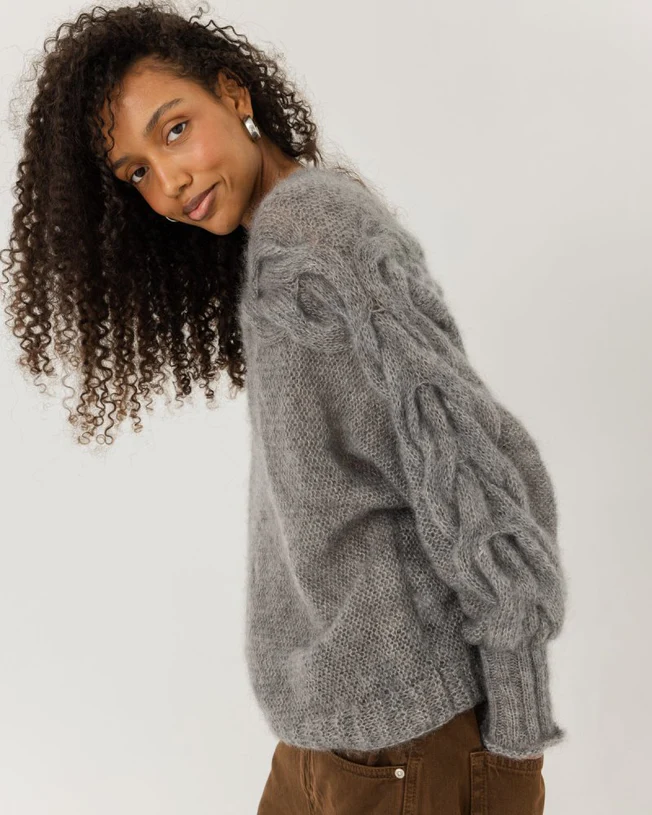
Ivalo Jūra Silk & Mohair Sweater is a RMS and RWS-certified mohair silk blend sweater hand-knit in Lithuania. $613
Labels promise a lot, but they don’t always deliver. Sometimes it’s necessary to dig deeper into where the fiber comes from. Words like “natural” or “premium” sound nice but mean little without proof. Ethical mohair requires full visibility from goat to your closet. Many ethical companies will also work with third parties to verify farms and obtain a certification for their mohair sweater.
The Responsible Wool Standard (RWS) sets rules for sheep, stressing welfare and land care. Mohair lacks a direct match, but some farms adapt these ideas. Also, look for Global Organic Textile Standard (GOTS) seals, which cover fibers and touch on animal rules.
“No-kill” is another popular ethical label that means shearing before natural shedding, so no forced cuts. It sounds ideal, but it’s hard to prove without farm visits, because supply chains can hide weak spots.
How to Shop for an Ethical Mohair Sweater

Ivalo Melody Mohair Polo Top is made from a blend of RWS-certified mohair and nylon. $200 (Sale $140)
Check tags for fiber sources and the brand’s site for welfare pledges. Specifically, look for animal welfare guarantees, like “no mulesing” or “humane shearing.” Also, seek out brands that source from small, audited farms. Sometimes, brands will share stories of these farms and their practices on their website or social media pages.
It should be noted that ethical mohair will most likely cost more because farms pay fair wages and build better homes for goats. Small batches also mean less waste but higher effort. Cheaper options likely cut corners on the care and health of the goats.
Mohair offers luxurious softness and warmth. But, unfortunately, it’s riddled with inhumane treatment. As consumers, we can make the conscious choice to align ourselves with ethical brands and rebuild an industry that aims to do right. Your next buy could spark real shifts in animal care. Let’s make compassion the new standard.
