


Share This Article
Vivobarefoot, the barefoot shoe brand, is rethinking sustainability with its sneaker repair and take-back programs.
| All products featured on The Wellness Feed are independently selected by our editors for their environmental and ethical impact. However, we may earn an affiliate commission when you buy something through our retail links. |
What if the most sustainable shoe is the one you already own?
It’s a simple question—and one that sits at the heart of Vivobarefoot’s sneaker repair program. In the brand’s Unfinished Business Report 2025– a candid, data-rich look at what it takes to build a regenerative business- the debate around how to reduce waste in one of the world’s most waste-heavy industries is called attention to again and again. Each year, more than 20 billion pairs of shoes are produced globally, with over 90% destined for landfill. Vivobarefoot’s response is to completely rethink how shoes are designed, sold, repaired, and reused.
Repair. Retake. Revive.
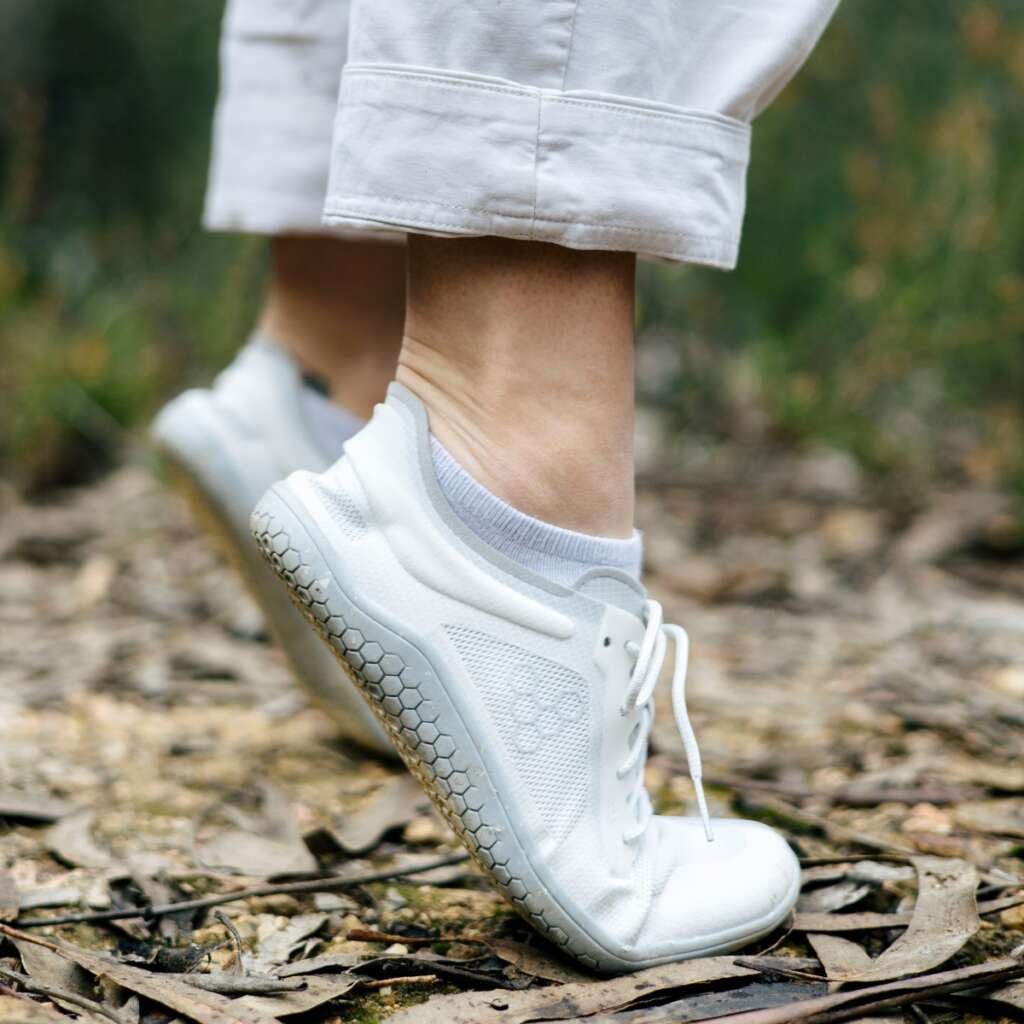
At the center of this mission is ReVivo, the brand’s resale and repair platform that’s quietly reshaping the economics of footwear. Customers send back worn Vivobarefoot shoes, which are inspected, resoled, repaired, and returned to the market. Pairs that can’t be revived are dismantled and their materials recycled. In the 2024/2025 financial year alone, around 63,000 sneaker repairs were completed, meaning they were reintroduced into circulation instead of landfills. Today, ReVivo accounts for 10 to 15% of the company’s total sales. This number matters. Not just because it’s impressive, but because it proves something bigger: circular business models don’t have to live on the margins. They can be commercially viable, scalable, and, most importantly, normal.
“Our products should give back more than they take from the environment,” says Galahad Clark, co-founder and CEO of Vivobarefoot. It’s a philosophy that runs counter to the fast-fashion logic of constant replacement. Instead, Vivobarefoot is designing shoes to be durable, repairable, and ultimately recyclable, while encouraging customers to see footwear not as disposable, but as something worth maintaining.
The company has also relaunched its Take-Back program, which accepts shoes from any brand, free of charge, in exchange for a discount code. Vivobarefoot covers the recycling costs, creating what it describes as a closed-loop system where shoes aren’t discarded at the end of their life cycle but re-enter the material stream.
An Honest Year In Review

Unlike many sustainability reports that focus solely on wins, Vivobarefoot publishes its shortcomings alongside its progress in its Unfinished Business Report. Supply bottlenecks. Delayed launches. Inventory challenges. All laid out with the same openness as its growth metrics.
And the growth is real. In 2024 and 2025, the company sold over one million pairs of shoes worldwide. It’s a 12% increase year over year, with revenue reaching approximately £91.4 million. But Clark is clear that success, in this context, isn’t the end goal. “Economic growth and responsibility have to remain inseparable,” he says.
For co-founder and design director Asher Clark, the work begins with the foot itself. Vivobarefoot’s barefoot design philosophy (wide, thin, flexible soles that allow the foot to move naturally) has always been about reconnecting people to their bodies. Now, that reconnection extends outward, toward materials, supply chains, and planetary health. “We’re trying to create products and experiences that literally reconnect people and planet,” he says.
The Unfinished Business Report 2025 doesn’t pretend the system is fixed. But it does offer a compelling blueprint for what comes next: a fashion economy that values longevity over novelty, accountability over marketing gloss, and repair over replacement. In a world saturated with “sustainable” claims, Vivobarefoot is making the quieter, harder choice—to show its work.
Founded by the Clark cousins (seventh-generation shoemakers with deep roots in craftsmanship and design), Vivobarefoot has grown into something more than a footwear brand. As a certified B Corp, the company positions itself as a natural health lifestyle business, with initiatives like the Livebarefoot Foundation (a fund that supports environmental regeneration initiatives) and ReVivo serving as extensions of its broader mission: to regenerate human and planetary health from the ground up.
