


Share This Article
What is AI’s water use? And how can we incentivize our government and big companies to save water and use it better?
Artificial intelligence is changing the world fast. But with this progress comes a hidden problem: water. As more AI applications grow, so does their need for water. It’s easy to forget that data centers—powerhouses behind AI—drink up a lot of water to stay cool. Knowing how much water AI uses and finding ways to save it is now more urgent than ever.
Recent reports highlight this growing issue, warn us that unless we take action, AI could strain local water supplies and harm the environment. Protecting our water sources while building smarter AI requires urgent attention and smarter solutions.
The Mechanics of AI Water Consumption: Where the Gallons Go
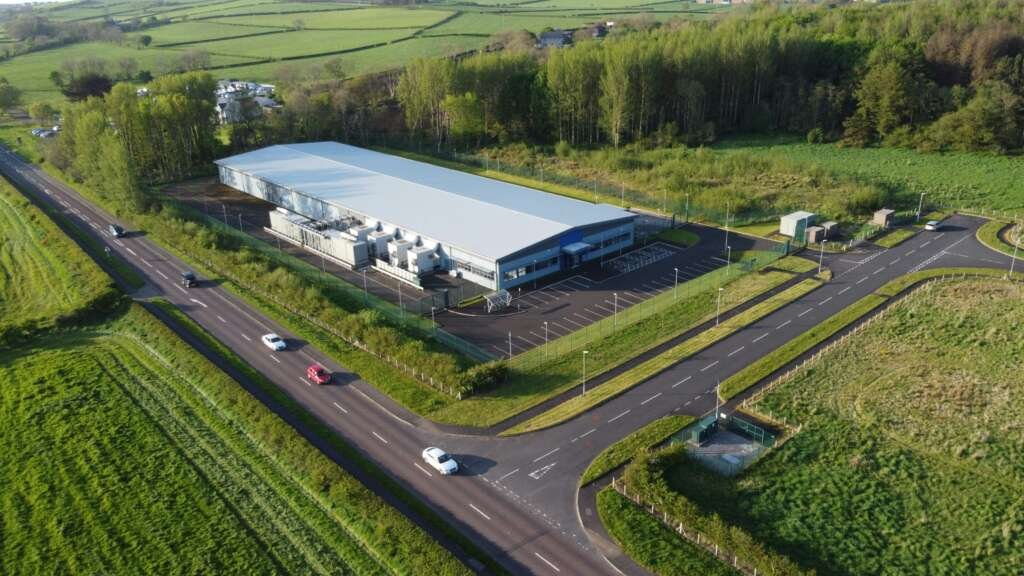
A data center in Coleraine, Northern Ireland.
AI doesn’t just sip water like a morning coffee. It gulps it down in ways most people never see. From cooling hot servers to making the chips inside them, water powers the whole chain. Here’s a breakdown.
Data Center Cooling: The Primary Water Sink
Data centers are like giant brains for AI, housing thousands of Graphics Processing Units (GPUs) that crunch numbers at lightning speed. This work creates a lot of heat- think of a summer barbecue gone wild. To keep things cool, many data centers use evaporative systems that spray water over hot coils, turning it to steam and carrying away warmth. Some reports show that medium-sized data centers use up to 110 million gallons of water per year. As AI grows, so too does the water demand, putting drier regions at risk for water scarcity.
Model Training and Queries
Training an AI model is like running a marathon for computers. It takes weeks or months of non-stop calculations on supercomputers. This requires a lot of power, which often comes from plants that need water to make steam for turbines.
Inference is another side. When you ask ChatGPT a question and get an answer that also requires energy and water. One study estimates that training a single large model can use 700,000 liters of water.
The Water Footprint of Chip Manufacturing
To make AI, chips are required. Making GPUs or Tensor Processing Units (TPUs) needs water to rinse and cool tools. A single factory can use billions of gallons of water yearly.
Take, for instance, the Taiwan Semiconductor Manufacturing Company’s (TSMC) plants in Arizona. Currently, one plant uses 4.75 million gallons of water daily. Knowing the strain this puts on local communities already prone to water scarcity, there are plans to reduce the water usage to 1.2 million gallons daily. However, as a company with 3 plants in the region that use a combined 17.2 million gallons of water daily, it remains to be seen what the result will be on their water usage.
Regional Hotspots: Where AI Meets Water Stress
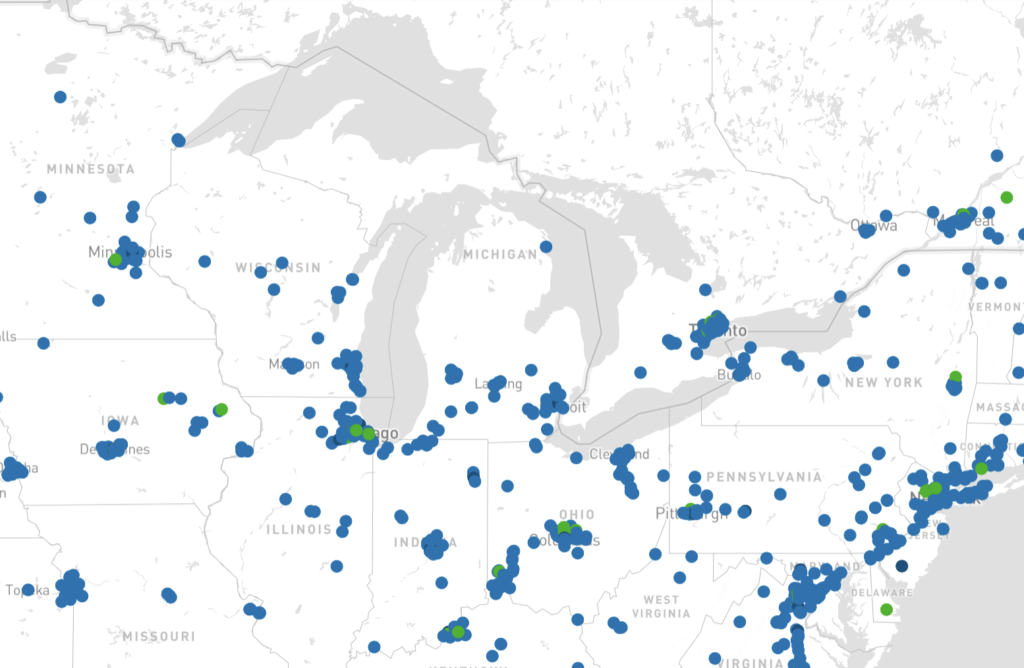
Maps like these allow you to see where data centers are a threat to water sources. Here, this map highlights data centers that could pose a threat to the Great Lakes.
Not all places feel AI’s thirst the same. In water-rich areas, it’s less of an issue. But in dry zones, new data centers put local residents at a greater risk for water scarcity.
Dry regions like Texas and Arizona are clear danger zones where data centers’ water usage clashes with farms, homes, and nature. The Colorado River, lifeline for millions, loses billions of gallons to these sites yearly. One report pegs Phoenix-area centers using 70 billion gallons of water in 2025 alone—enough for 600,000 homes. AI’s growth follows cheap land and power, often where water is already tight.
Other regions, like Northern Virginia, lead the pack as “Data Center Alley.” It’s home to over 100 facilities, drawing water from the Potomac River. But droughts hit hard, and locals worry about shortages for daily needs.
Big data centers guzzle water mainly for cooling. Globally, they use billions of gallons each day. For example, a single large data center in the US can use enough water to fill a swimming pool every few days. This isn’t just about one or two companies; it’s a worldwide issue. Cooling AI servers accounts for most water use in these centers. The more data centers expand, the more water is needed, often in regions already facing water shortages.
Regulatory Lag and Infrastructure Gaps
Laws haven’t caught up to AI’s speed. Many towns zone for offices, not mega-centers that sip like factories. Water plans from the 1990s don’t cover this boom. Utilities scramble, too. Pipes built for steady homes can’t handle sudden surges. In Loudoun County, Virginia, approvals rushed ahead of updates. This leaves gaps: no rules for recycling or limits on pulls.
The slow pace hurts. AI firms build within months, while cities plan for years. The results are strains on natural resources. In response, farmers and cities are fighting back. Water rights laws favor old users, leaving tech firms to negotiate or drill deeper. AI adds fuel to fires like the ongoing Colorado basin talks. Without change, a lack of water looms.
Governments and industry leaders should set clear rules for water use. Restrictions or caps could be introduced to prevent over-consumption. Companies can also commit to sustainability goals, such as lowering water use or adopting green cooling tech. Industry standards create pressure for responsible water management and push innovation.
Industry Response and Emerging Solutions for Water Neutrality
Some tech leaders see the problem and are responding with initiatives to cut water use. Closed-loop systems recycle coolant in pipes, losing little to evaporation, and can slash water use. Liquid immersion dips servers in oil-like fluids that soak up heat without water. Trade-offs exist. Retrofitting old buildings costs millions, and not all climates suit every method. Still, these technologies show promise. As AI scales, they’ll become standard to ease the burden.
Companies are also pledging to replace every drop of water. Microsoft’s “water positive” goal means restoring more than they use by 2030. They fund wetland projects in Virginia to recharge rivers.
Incentivizing Your Local Government to Save Water
Governments can nudge better habits. Tiered rates charge big users more, pushing cuts. Arizona tests this, making data centers pay extra over limits. Permits could demand water reports upfront. States like California already require it for new builds. Below are tools you can use to express your concerns, incentivize your government to set stronger regulations about AI and data centers’ water use, and save water in the long run:
Brennan Center For Justice: This website is a great source to track and learn about AI-related bills introduced by Congress. Its aim is to raise public awareness about proposed AI legislation with solutions to address concerns. Read their recent letter to Congress to regulate AI data centers.
Scenic.Org: This is a leading organization for scenic conservation across the United States. They are also an advocate for empowering states with the ability to limit where AI data centers can be built—or protect neighborhoods, farmland, or scenic landscapes. However, the current spending bill opposes this. Use this form to write to your Senator and express your concern and support for enabling states to oppose data centers.
Climate Action Against Disinformation: As a global organization, CAAD fights back against disinformation and fights for information integrity for climate action. Read their letter to New York Senator Chuck Schumer, urging tech companies to be transparent and report the use of natural resources and their impact on local communities. You can also use the letter as a template to your Senator.
Nature Forward: This heritage environmental advocacy organization is taking a strong stance against data centers by educating the public and offering strong advocacy solutions that you can easily become a part of.
“Properly addressing the spread of data centers and their impact on our state is long overdue. Data centers absorb untenable amounts of water, take up hundreds of acres of arable land… in some cases, these facilities use more water than entire towns.
Senator RaShaun Kemp
AI is a powerful tool for transforming the world, but it does come with environmental costs—especially water use. If we ignore this issue, we risk worsening water scarcity, harming ecosystems, and speeding up climate change. To build a sustainable future, industry leaders, policymakers, and consumers must collaborate. Innovation, smarter practices, and responsible management are our best tools. We must act now to reduce AI’s water footprint and protect our precious water resources.