

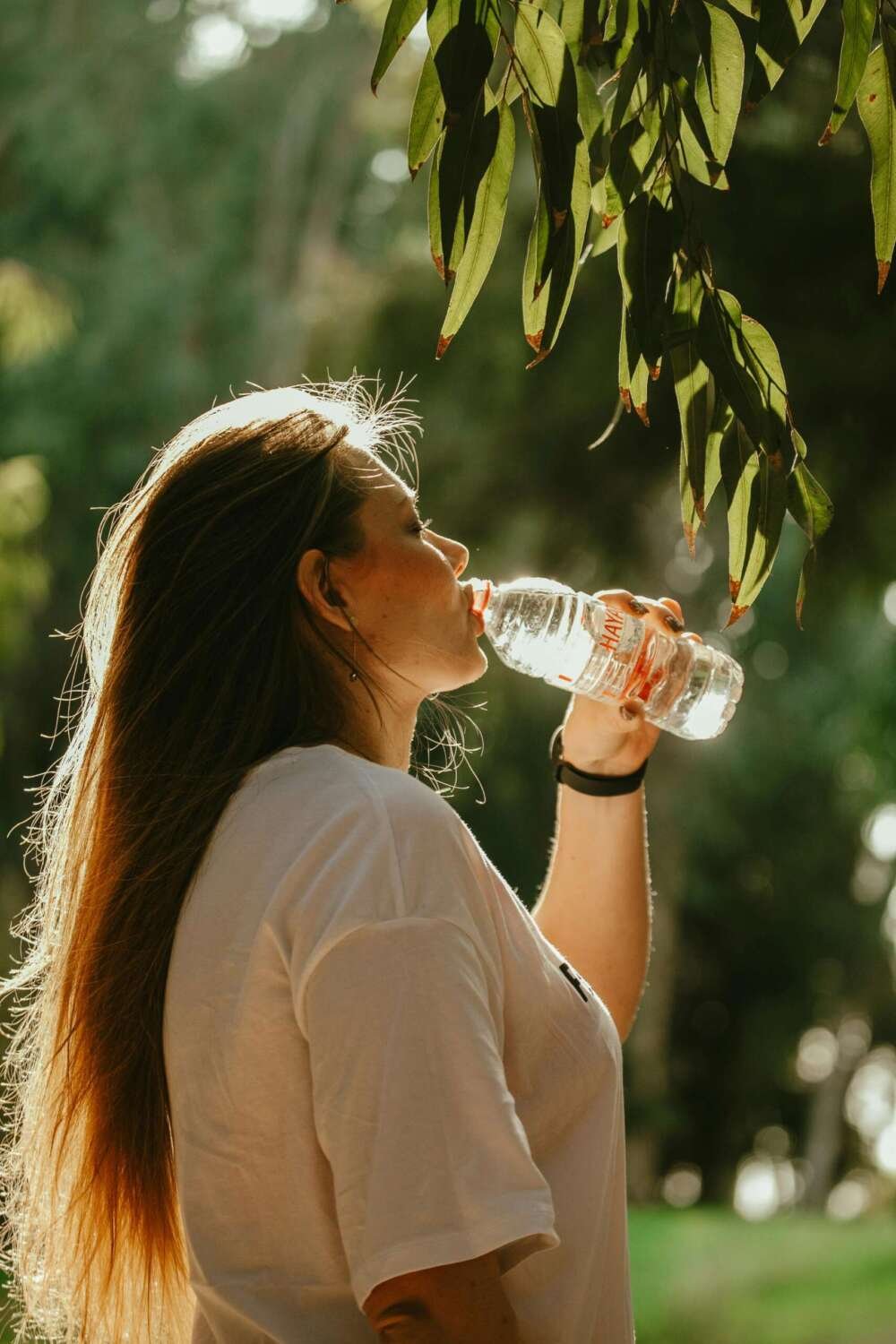
Share This Article
From the obvious- avoid plastic bottles- to little-known tips for your home, experts share how to avoid microplastics in drinking water.
| All products featured on The Wellness Feed are independently selected by our editors. However, when you buy something through our retail links, we may earn an affiliate commission.|
Thanks to documentaries and headlines heralding the rise of microplastics, most of us are familiar with the term and its potential impacts on the environment and our health. And considering that studies show that up to 83% of the world’s tap water is contaminated with microplastics, many of us are looking for ways to prevent, filter, and avoid consuming these tiny plastic particles linked to cancer, reproductive problems, and even DNA damage.
Lately, though, it feels that whenever a topic makes the rounds at publications, or dare I say it, is trending, hundreds of social media posts pop up with people offering their own opinions. And, these aren’t always based on facts. So, I’ve been reaching out to experts – environmental scientists, doctors, and water filtration specialists- to learn, debunk the myths, and find out exactly how we can avoid microplastics in our drinking water and everyday lives.
In 2023, two water filtration specialists spoke with The Wellness Feed about how to best filter forever chemicals and microplastics from our drinking water. In 2025, prevention specialist Dr. Shanina Knighton, PhD, RN, CIC, spoke to me about how to do a microplastic detox. This year, I’m learning about how to avoid microplastics in drinking water from Jason Iuculano, the Founder of ZeroToxins, and Environmental Scientist and Sustainability Consultant Dr. Jennifer Brandon– a topic I’m eager to learn the answers to and share with you.
What are Microplastics?
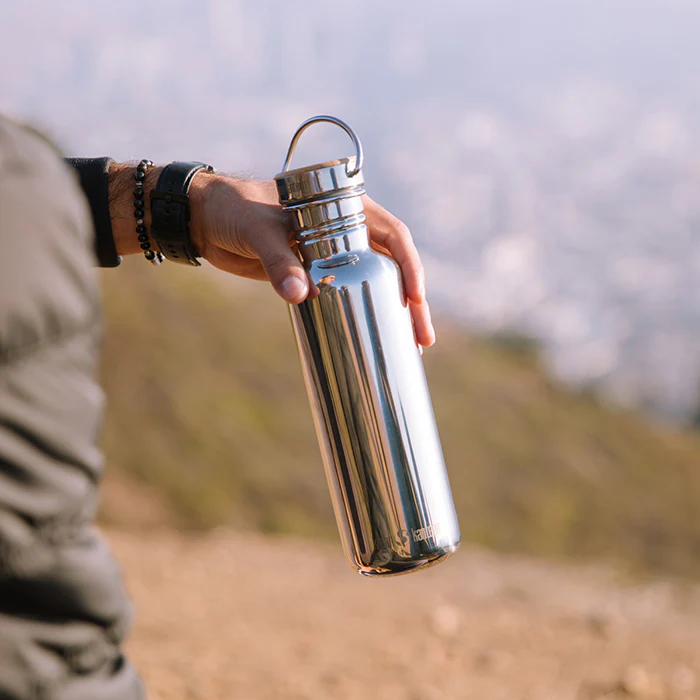
Klean Kanteen 27oz Reflect with Bamboo Cap $32.95 is made from 90% recycled stainless steel. BPA free, Lead free, and single-use plastic free.
“Microplastics are plastics smaller than 5 mm. They come from larger plastics breaking down over time, but also from things like our clothes shedding microfibers, and that washing out from our washing machines, out into our wastewater, into our rivers and oceans,” Dr. Brandon explains. Jason also adds to this list. “Things like plastic grocery bags, straws, single-use water bottles, and synthetic clothing… The list is endless,” he states.
From our clothing to packaging, and even everyday materials found in various rooms of our home (mattresses, lampshades, cooking utensils, etc), one could say that plastic has become the “fabric of our lives.” This is because plastic is cheap to make, malleable, and durable. Yet, its durability is one of the things that poses a problem, with some studies suggesting that some types of plastic can take 100 to 1,000 years to decompose, while breaking apart into microplastics.
How do Microplastics end up in our drinking water?
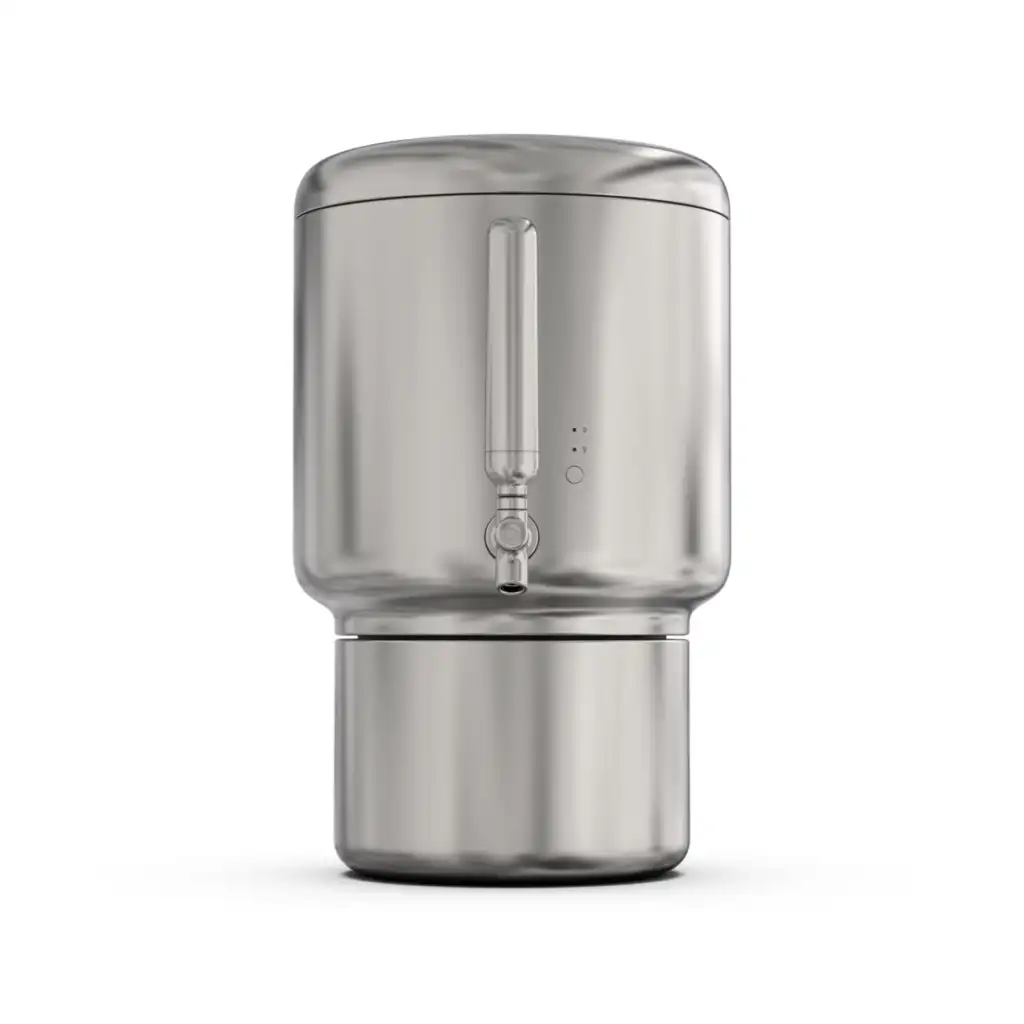
Rorra Countertop System $449 is a 2.5-gallon stainless steel water filtration system tested by the NSF®️ to remove lead, forever chemicals, microplastics, and 50+ other contaminants.
The EPA estimates that over 460 million tons of plastic are produced annually. To put it bluntly, that’s a lot of plastic that breaks down into microplastics. When we wash plastic clothing (polyester, spandex, nylon, etc.), microplastics break off in our washing machines and eventually our oceans, rivers, and lakes. According to Dr. Brandon, this is one of the ways we end up ingesting microplastics. “They end up in our drinking water because they’re in our source water, like our rivers and lakes,” she states.
Jason highlights another issue that drives microplastics accumulating in our drinking water- “single-use plastic bottle water and beverage consumption.” In fact, new imaging techniques have allowed Columbia University researchers to assess that on average, a liter of bottled water contains about 240,000 pieces of micro and nanoplastic (pieces less than 1um in size).
How concerned should we be about Microplastics?
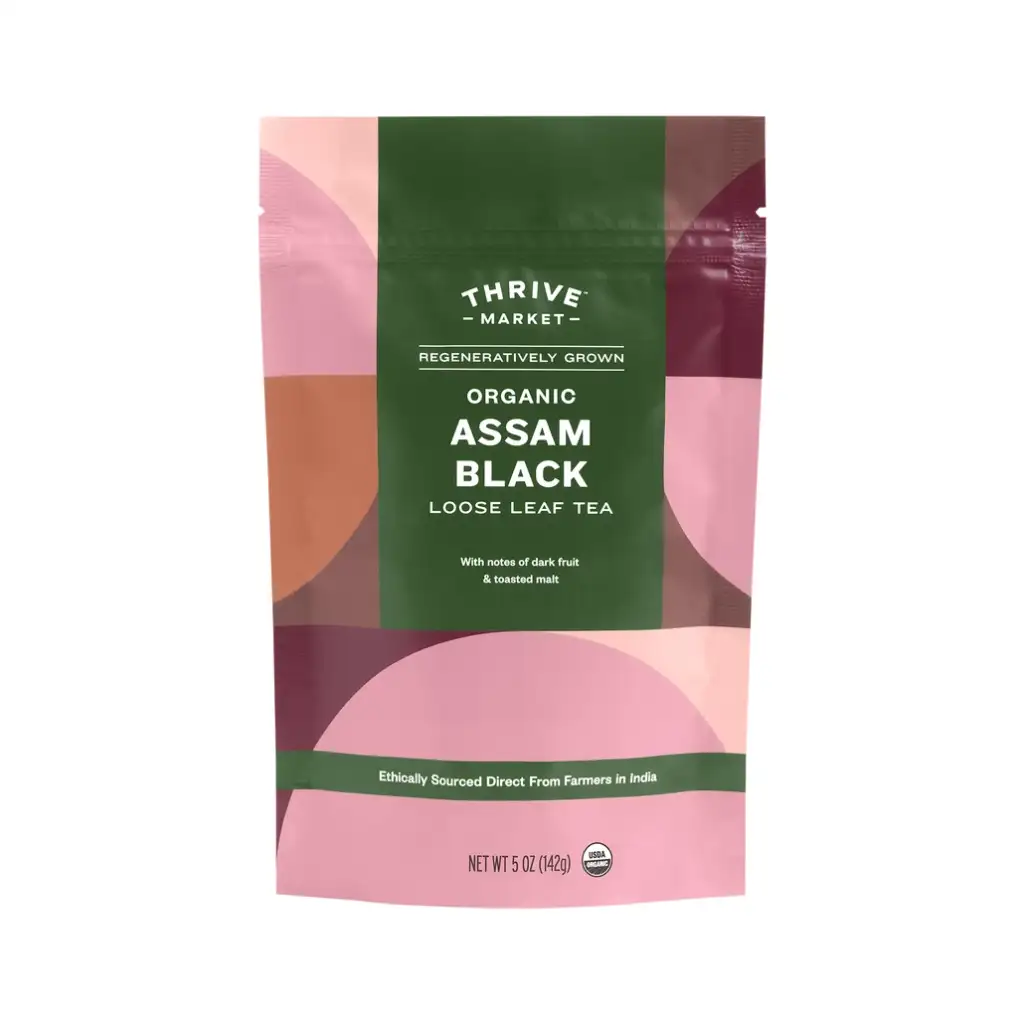
Thrive Market, Regeneratively Grown Organic Assam Black Loose Leaf Tea $13.99 features organic black tea leaves packaged loose and plastic-free.
For every few studies published in scientific journals detailing the harmful impact of microplastics, there appear to be a detractor or two. Yet, Dr. Brandon and Jason are two experts who both agree. We should be very concerned about microplastics. “No foreign substances should be accumulating in our bodies, especially ones laden with so many toxic chemicals,” Dr. Brandon states. And, according to Jason, these foreign substances are everywhere. “Microplastic particles have been detected in a range of human tissues and fluids, including blood, breast milk, lungs, and the placenta. And, by nature we were not meant to accumulate environmental, conventional plastics in our body.”
“That being said, there’s still a lot of research still to be done about exactly what health effects are directly caused by microplastics, and parsing out correlation vs causation is difficult,” Dr. Brandon explains.
What are the long-term effects on our health?

Williams Sonoma Cutting & Carving Boards, Set of 3, Acacia $99 are made from Acacia, which is ultra-durable; made with FSC®-certified wood from responsibly managed forests, and are finished with food-grade mineral oil and beeswax.
Unfortunately, much like the projections for the length of time it takes for plastic to fully decompose, we’re not entirely sure about the long-term effects of microplastics either. “The field of microplastics research is really only 25 years old, and the field of microplastics health effects research is even newer than that, so long-term studies haven’t been done,” Dr. Brandon explains.
While the long-term impacts aren’t exactly known, there are studies that show evidence of microplastics impacting our health. “Most notably, there was a study done that found that patients who had micro and nanoplastics detected in carotid artery plaque were associated with a significantly higher risk of heart attack, stroke, or death over roughly three years of follow-up,” Jason states.
Microplastics are everywhere! What active steps can we take to reduce our exposure?
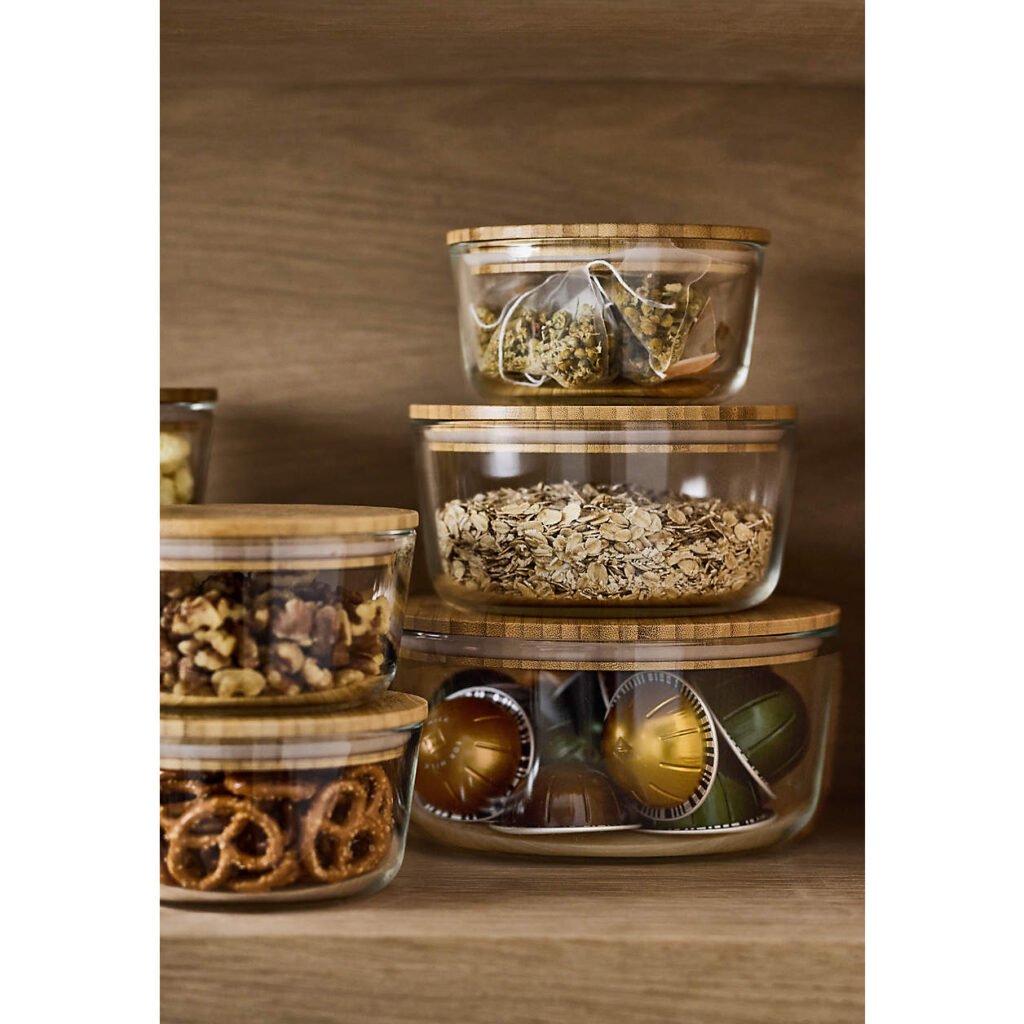
20-Piece Round Glass Containers with Bamboo Lids Set $79.95 are made from Borosilicate glass containers and bamboo wood lids with silicone gaskets.
From the air we breathe to foods like salt, honey, and the water we drink, microplastics are everywhere. “However, there are ways to reduce exposure,” Jason explains. And according to Dr. Brandon, these begin with simply saying “no” to certain items to reduce your exposure to microplastics in your drinking water and food:
- Stop using plastic water bottles or other single-use bottles for drinks like sports drinks.
- Say no to plastic microwavable containers and use glass or steel instead.
- Do not use plastic tea bags and coffee pods. Try loose-leaf teas and coffee instead.
Jason also suggests other key steps you can take to reduce your exposure by minimizing, reducing, and replacing everyday items with their plastic-free counterparts.
- Use stainless steel (i.e., EcoVessel, Klean Kanteen) or glass water bottles.
- Use glass storage containers for food, especially for any hot, fatty, or oily food.
- Use wood cutting boards and wood or metal cooking utensils.
- Limit takeout or to-go food containers, as almost all have a plastic liner. If it’s hot food, that increases the leaching into the food. If it’s cold, like a salad, there is very little risk of contamination.
- Reduce synthetic clothing. Every time you wash synthetic (plastic) clothing, it sheds micro particles into the laundry water. When you clean your dryer vent, most of the lint dust is plastic particles.
Should we also avoid to-go coffee cups?
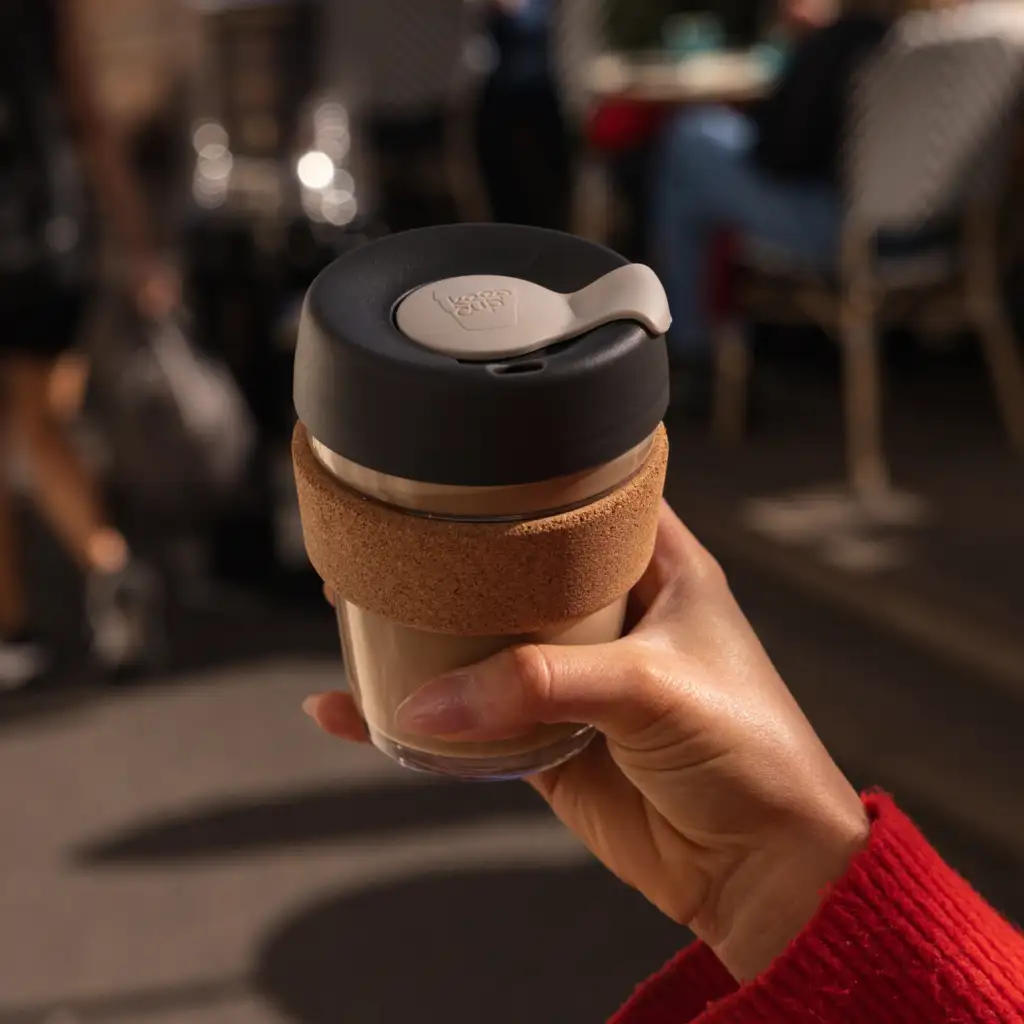
Keep Cup Brew Cork Reusable Coffee Cup $31. Carry your brew from home or ask your Barista to put your go-to cappuccino, latte, or coffee in this tempered glass container.
Today, the world lives on coffee, and that amounts to 200 to 300 billion disposable to-go cups used annually. While the outside is often made from paper, the inside is typically lined with plastic (to make it leakproof), which can be another form of microplastic exposure. Yet, when we talk about plastic food and beverage containers to avoid, coffee cups are not always part of the conversation. But both Dr. Brandon and Jason agree- they should be avoided. “Hot coffee in a plastic to-go cup is leaching thousands of microplastics into every cup of coffee. Use a reusable water bottle and reusable coffee cup to minimize exposure,” Dr. Brandon suggests.
“Continuous exposure to products like water bottles, food packaging, and cookware can keep levels elevated even if these plastics and forever chemicals are slowly clearing from the body,” Jason explains. “The key is to keep your daily inputs from plastics as low as possible so that your cumulative load on your body is kept at bay.”
How can we remove microplastics from our drinking water at home?
Some experts suggest boiling water is an effective method to remove microplastics from drinking water. However, both Dr. Brandon and Jason caution against relying on this as a reliable method. Plastics’ melting point is well above boiling. So if anything, you’re just transporting them into the air,” Dr. Brandon states. “In order to remove microplastics and nanoplastics, you need an NSF-certified reverse osmosis filter,” Jason explains. “Two excellent RO systems for home use are Cloud and AquaTru,” he suggests.
“I have a Rorra water filter in my kitchen, for instance- it’s NSF certified to remove microplastics. You need one that is proven to remove them because not all filters remove them,” Dr. Brandon states.
How can we advocate for microplastic regulation?
States like New Jersey are actively studying, monitoring, and implementing bans on plastic items to reduce microplastic exposure. Yet, as a state whose water resources extend into other states, such as Delaware, monitoring microplastics isn’t a single-state issue. It’s part of the reason why their Governor, Phil Murphy, petitioned the EPA to provide nationwide monitoring of microplastics in drinking water. Yet, to date, only 6 governors have signed the petition.
Regulating microplastics in our drinking water is one way for our government to minimize the risk and protect our health. Whether or not your governor signed the petition, Dr. Brandon suggests contacting your state legislators or joining an environmental organization. “You can write to your local representatives. You can also go on nonprofit websites, like Surfrider, Oceana, or Plastic Pollution Coalition, to see what bills or regulations they are campaigning for. They often have prewritten letters and petitions you can sign as well.”
“Contact your local congressman and express your concern,” Jason suggests. “Also, check out ToxicFreeFuture. This is a nonprofit focused on advocating for a cleaner future, and plastics are one of their main focal points.”
How do you minimize your exposure to microplastics in your everyday life?
Reducing your exposure to microplastics doesn’t happen overnight. It begins with small conscious changes that add up over time. “Chip away at replacing items that contribute to your cumulative toxic load,” Jason suggests. “I’ve changed a lot of my kitchen items, as I said above,” Dr. Brandon explains. “I carry a reusable water bottle everywhere. I’m trying to slowly get rid of my synthetic clothes and buy only new cotton or wool clothes.”
Jason also suggests starting slow. “Tackle the low-hanging fruit first, which are the items you are not buying every day, such as:
- Tupperware – replace with glass
- Plastic cutting boards – replace with solid wood
- Kitchen utensils (i.e., spatulas) – swap to wood or metal
- Cups – replace with glass
- Plastic water bottles – replace with stainless steel or glass
- Clothing – replace with natural fabrics like cotton, linen, wool, silk, and hemp
Over time, you’ll notice that you’re using fewer and fewer plastic items and minimizing your risk of exposure. And, when it comes to your health, that’s what’s important. It’s just as Dr. Brandon says, “All those little things make a difference!”
