

Share This Article
Start the new year with a greener kitchen with these quick plastic-free swaps.
| All products featured on The Wellness Feed are independently selected by our editors for its environmental and ethical impact. However, when you buy something through our retail links, we may earn an affiliate commission. |
Reset. Restart. Make Resolutions. These are the three Rs of every new year. If you’re looking for simple resolutions to help reset and improve your life, discovering plastic-free swaps for a greener kitchen is one way to do so, that is surprisingly easy to put into practice.
Over the last five years, The Wellness Feed has researched, tested, and written about an impressive lineup of plastic-free alternatives for the kitchen and beyond- solid cleaners, bamboo kitchen utensils, and reusable linens. As always, we share them in guides like these to help you do your own mini research and tests to find the perfect products for you and your lifestyle.
Plastic pollution is a pervasive global issue. While a large responsibility rests on governments and industries, even the smallest of changes we make as individuals can make a tangible difference in the fight against plastic waste. Thankfully, many swaps are surprisingly simple, making it an easy-to-follow-through resolution to have a greener kitchen this year.
Reusable Food Storage: Ditch the Cling Film
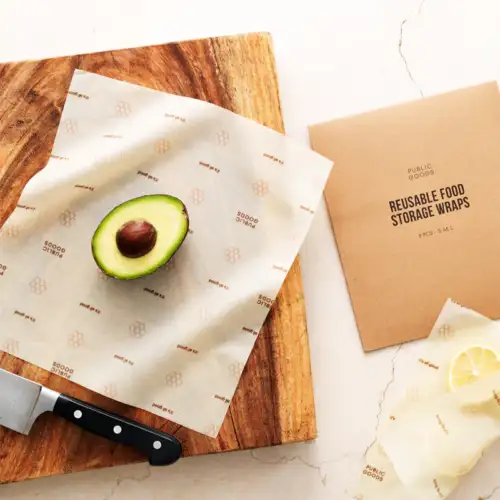
Reusable Food Storage Wraps are made from cotton and beeswax. $17.50
Single-use plastic wrap, also known as cling film, pollutes our landfills. It is made from plastics like PVC or PE that can take hundreds of years to break down while releasing harmful chemicals into the soil and water. As a plastic-free alternative, choose reusable food covers, like beeswax wraps, as a natural way to cover food.
To keep beeswax wraps fresh, hand wash them with cool water and mild soap. Let them air dry fully before storing. Avoid hot water, as it can melt the wax coating. Proper care helps these wraps last a long time.
Upgrade From Plastic: Sleek Glass and Bamboo Long-Term Storage
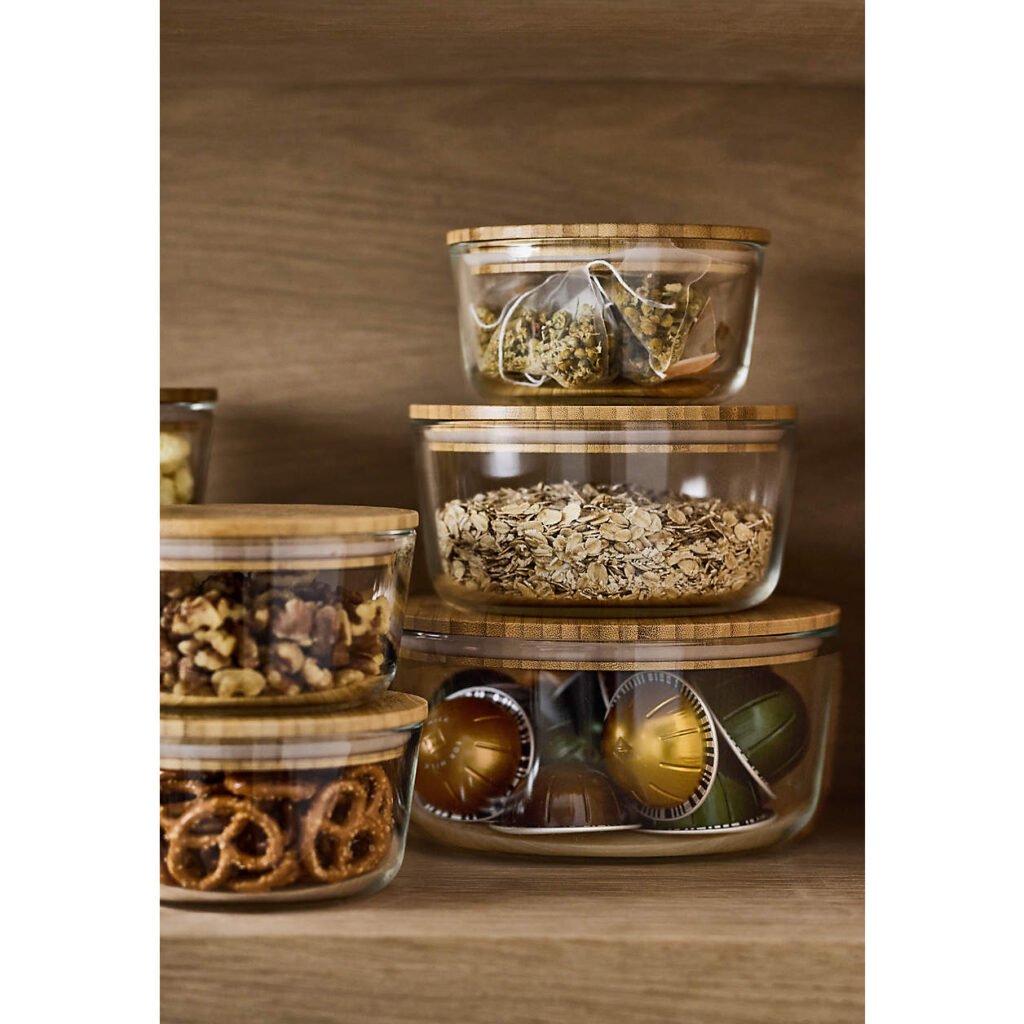
20-Piece Round Glass Containers with Bamboo Lids Set are dishwasher safe, oven safe (up to 450). $79.95
The new year is a good time to upgrade your kitchen. Swap out old plastic storage containers for a new set made from glass and bamboo. Aesthetically, these containers do a good job of keeping your pantry and cupboards uniform and organized.
Non-toxic, these materials are also recyclable and biodegradable. Not that you’ll need to upgrade anytime soon. These materials are made to be used for a long time. Choose a set that is easy to clean, can go into the dishwasher, and is made from sturdy glass that won’t crack if accidentally dropped.
Package-Free Produce: Reduce Packaging Waste

Thrive Market, Reusable Produce Bags are made from 100% certified organic cotton. Set of 6. $14.99
Skip the plastic produce bag when choosing your fresh fruits and vegetables at the store. Invest in produce bags to bring with you when shopping. These cotton bags are perforated to aerate your produce and allows it to stay crispy until you bring it home. Plus, they’re reusable and are a simple way to avoid using unnecessary plastic bags.
Many natural grocery stores feature extensive bulk sections. Your local farmers’ market also offers package-free produce. These are great places to support local produce and cut down on waste. Just remember your own bags!
Reusable Shopping Bags: Conquer the Grocery Aisle
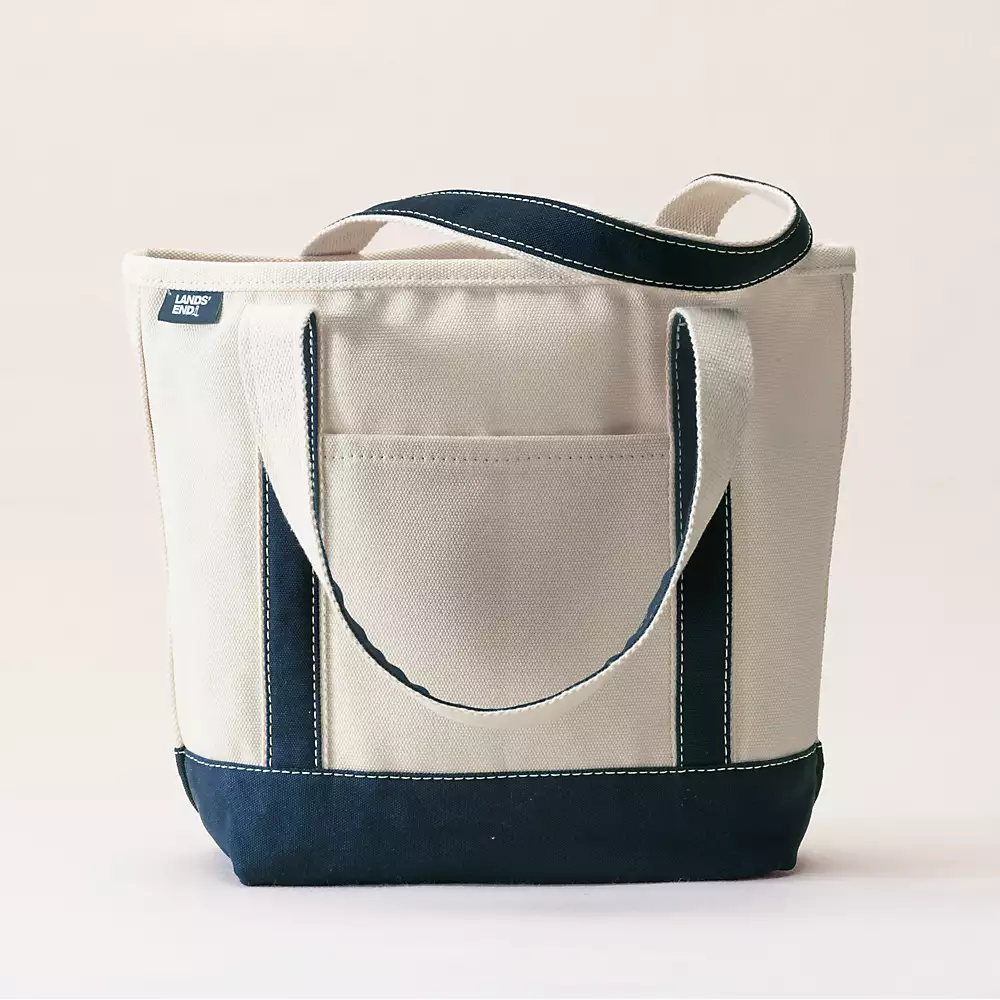
Lands’ End Medium 5 Pocket Open-Top Canvas Tote Bag is the classic tote that can hold up to 250 lbs. Made from 100% cotton canvas. $39.95
While you’re out shopping, don’t forget to bring your own shopping tote to carry all of your cotton produce bags and food items. There are classics, like the Lands End canvas tote, that have been tested for durability and can be used from the grocery store to the beach.
On average, 5 trillion plastic bags are used yearly, and most of these go unrecycled. They wind up in our oceans, landfills, and are incinerated. All options expose our environments to microplastics and toxins that can negatively impact our health. Just using a reusable cotton tote to the supermarket 4 times can reduce the need for 60 plastic bags.
Natural Cleaning Solutions: Say “Yes” to Refillable Bottles

Blueland’s Set of Eco-Friendly Cleaners includes 4 Reusable Forever Bottles and 4 plastic-free refill tablets that are shipped to you in compostable paper. $46
By all measures, putting a dent in the 440 million tons of plastic produced (and more often than not used only once) yearly is an astronomical feat. Yet, reducing our plastic use, especially if the resolution is to have a greener kitchen, is much more feasible. One area often overlooked is the dozens of plastic bottles housed under our kitchen sinks- cleaners.
To reduce the number of plastic cleaning bottles you buy, opt for a refillable service. Companies like Blueland will set you up with bottles you can reuse and compact cleaning tablets you can mix with water at home to create your cleaners. All packaging is compostable, and you’ll greatly reduce your consumption and waste of plastic bottles.
Solid Cleaning Bars: Zero-Waste Cleaning
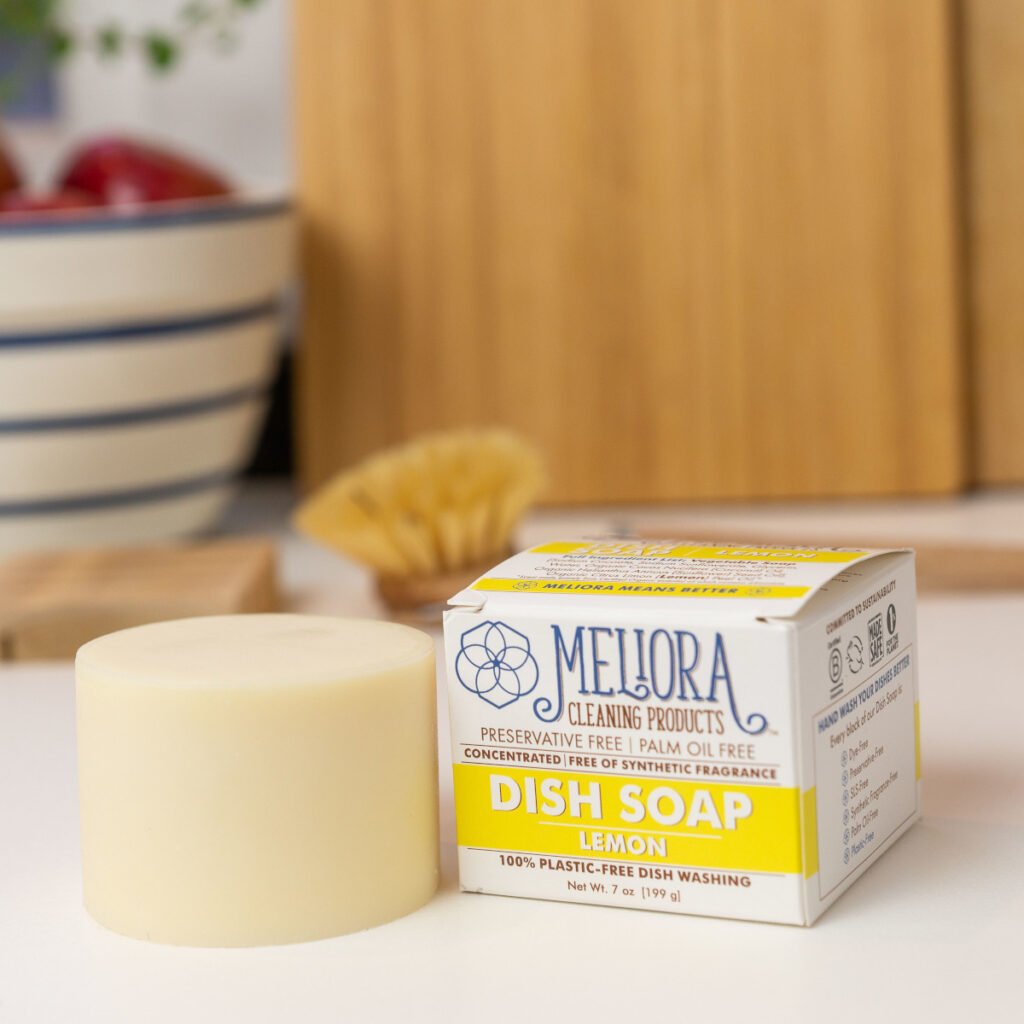
Meliora Cleaning Products, Dish Soap Bar in Lemon is made from seed oils, coconut, and lemon peel. It’s free of dyes, preservatives, and palm oil. Packaged in recyclable plastic. $8.99
Take a step further into your plastic-free journey and skip the plastic bottle altogether. Try solid cleaners as a plastic-free option to clean your home. These cleaning products are packaged 100% plastic-free. Just be sure to recycle or compost the paper box it comes in to minimize waste.
To use a cleaning bar, wet your sponge and rub the bar until it lathers. Store your bar on a soap dish that drains. This helps it dry between uses and last longer.
Cotton Sponges : A Biodegradable Alternative
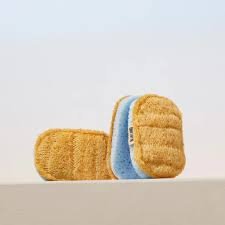
Blueland Sponges are 100% plastic-free. Made from cotton and cellulose. Made without parabens, VOCs, or Phthalates.
Pack of 3/ $14
Sponges aren’t one of the first items that come to mind when we think of plastic. Yet, most of the cleaning cloths and sponges lining shelves are made from just that: a whole lotta plastic. When it comes to sponges, one concern is that as you wet them to clean and scrub your home, you’re releasing microplastics into the environment. And, once thrown away, they further break down into microplastics that contaminate water and soil resources.
Natural materials are an alternative to plastic. Try cotton cloths, walnut sponges, or ones made from a combination of cellulose and cotton with a dual coarse and smooth side for polishing your kitchen. Switching to these materials is another way to reduce plastic waste and support products made from biodegradable and compostable materials.
Bamboo or Wood Utensils: Avoid Chemicals When Cooking
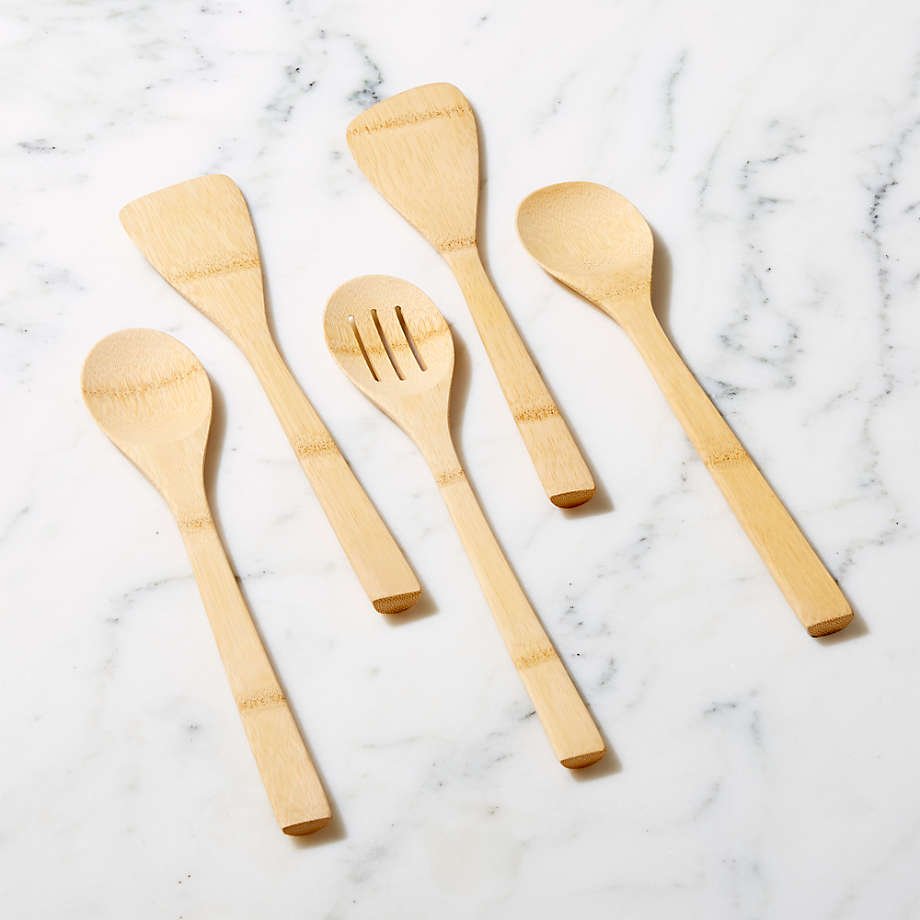
Crate & Barrel 5-piece Bamboo Utensil Set is made from FSC Certified Bamboo. $29.95
It’s probably time to update your black plastic kitchen utensils. Recent studies suggest these items are made with toxins and chemicals that can leach into food. Natural materials like bamboo are nontoxic alternatives that don’t pose the same toxin risk as plastic.
Bamboo isn’t simply a more sustainable alternative to plastic. It’s a better material for cooking in the kitchen. Thanks to its ability to withstand high temperatures, bamboo is more durable than its plastic counterpart. Bamboo utensils last for years. And, when you throw it away after use, it’ll decompose naturally.
Wood Cutting Boards: A Sleek Upgrade
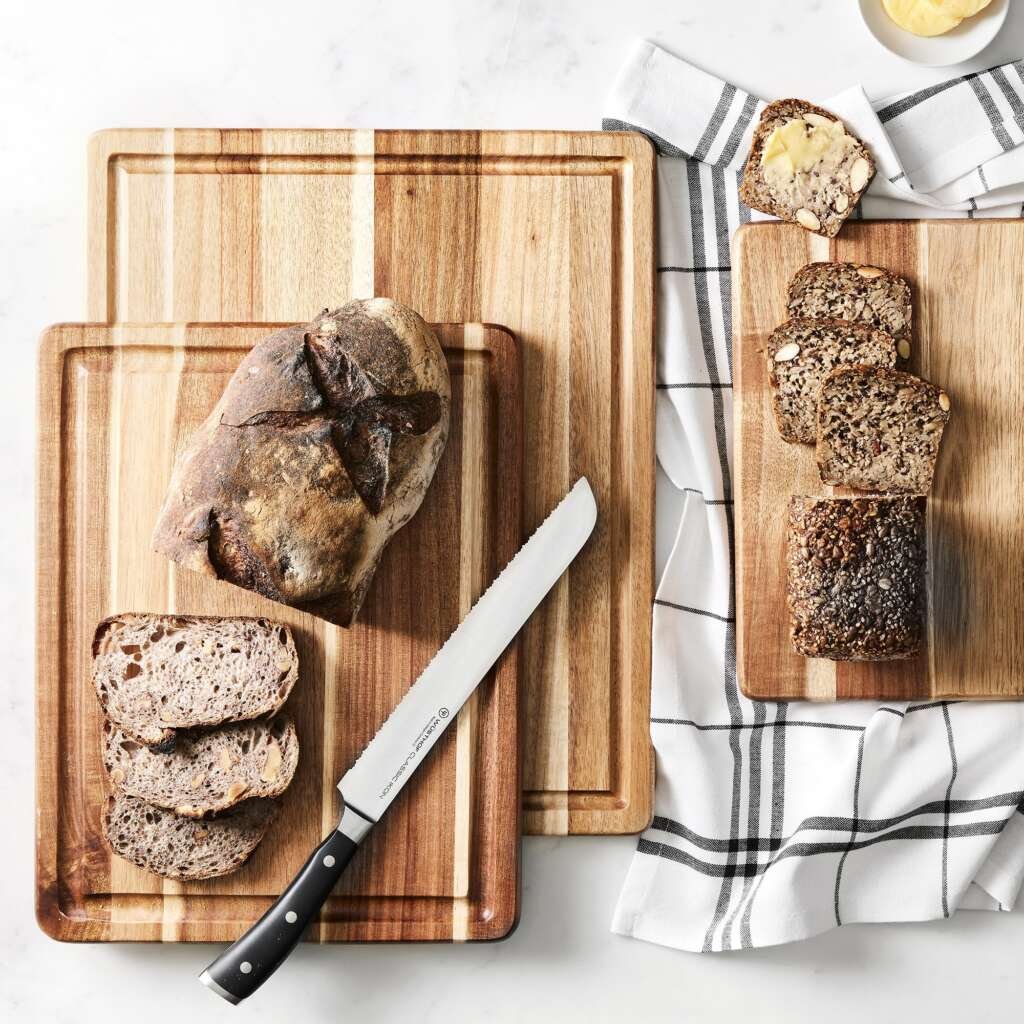
Williams Sonoma Cutting & Carving Boards are made from FSC-certified Acacia wood. Finished with food-grade mineral oil and beeswax. Set of 3, $99
Toxins and microplastics are a common concern in the kitchen for a good reason. The plastic items we use near our food can also become a source of microplastic contamination. One overlooked item is cutting boards. Flimsy plastic cutting boards have become popular for their light weight and ease of cleaning. But, as more research comes to light about microplastics, they are also a concern for possible contamination.
Upgrading to a wood cutting board is also about prepping your kitchen with tools that are more durable and better for cooking. Condition with a natural oil (per the board’s instructions) and enjoy the plastic-free switch for years to come.
Plastic-Free Measuring Tools: Less Microplastic Risk
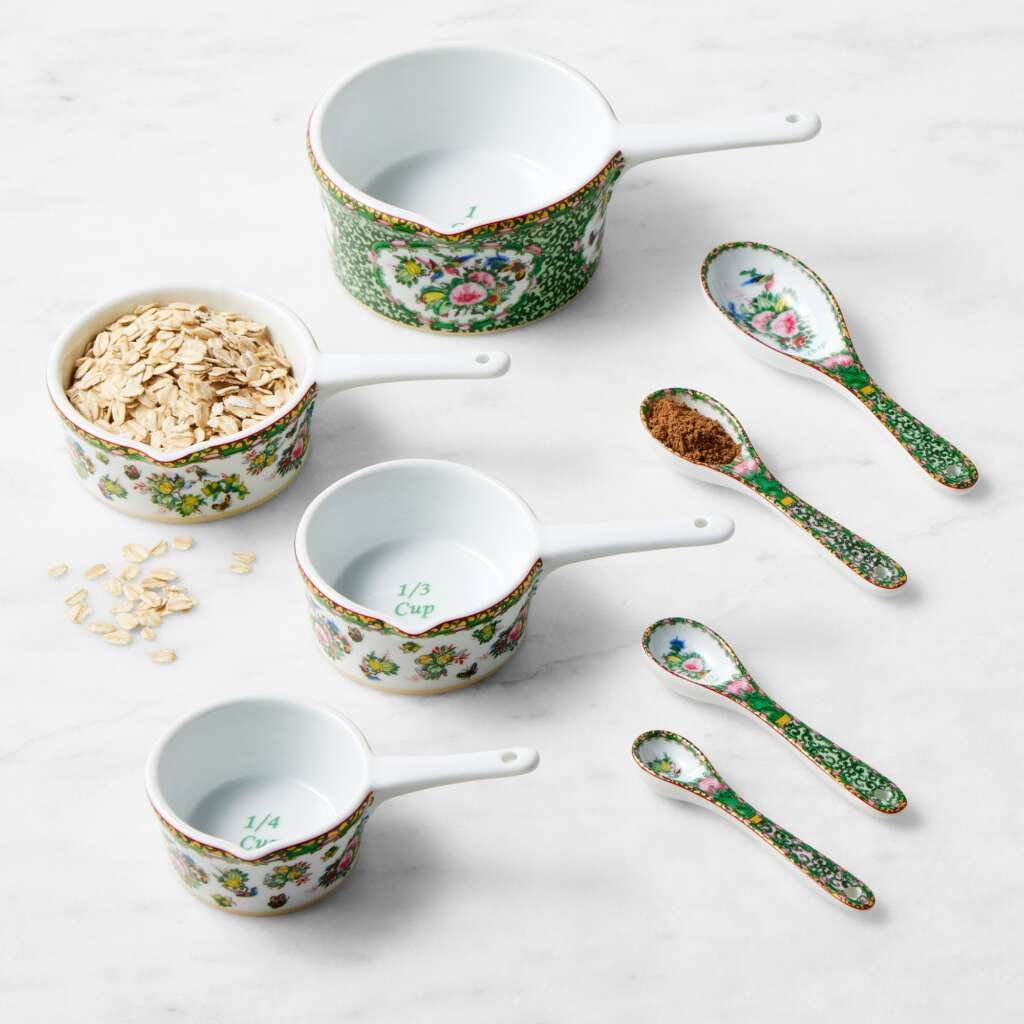
Famille Rose Measuring Cup Set is made of durable, clear-glazed porcelain. Heat resistant (up to 425) and dishwasher safe. $59.95
As you continue to upgrade the tools in your kitchen, take note of the measuring cups and spoons you’re using. Another, often overlooked area, these utensils are also another source of microplastic exposure. For a greener kitchen, look for measuring tools made from porcelain, stainless steel, or glass. These are also durable, microwave safe, and will still get the job done compared to plastic materials.
Your upgrade doesn’t have to be as aesthetically appealing as the porcelain set shared above. A basic stainless steel set will last for years and work (and look) just as well.
Linen & Cotton Napkins: Making The Switch From Polyester

Anthropologie Nifty Jacquard Napkins are made from 100% cotton. Set of 6 $48
Do you have polyester materials in your home? Then, it’s likely plastic. Read the labels of your linens- tablecloth, napkins, placemats, etc.- to ensure that you’re using natural materials like cotton and linen. If not, take a step towards a greener kitchen by upgrading with cotton napkins or placemats.
Polyester is a plastic-based material and another source of exposure to microplastics. Having cotton materials in your home is a simple upgrade to avoid contributing to plastic pollution.
Go Metal for Lunch: Enjoy a Plastic-Free Meal

Eco Lunchbox Stainless Steel Container is a 3-piece bento box made from 100% food-grade stainless steel. $40
If one of your New Year’s resolutions is to eat healthier lunches prepared at home, now is the time to treat yourself to a shiny new lunchbox that isn’t made from plastic.
Similar to other plastic items, food containers can leach chemicals into your food. This is especially true when heated. Glass and stainless steel containers are considered a safer alternative for this reason. They are also much more durable. They won’t stain or hold odors like plastic can, and these containers last for many years.
Embracing plastic-free swaps is a powerful way to help our planet. Make conscious choices in your daily routines. From the kitchen to your on-the-go habits, you can greatly reduce your plastic footprint. Start small. Be consistent. Remember that every plastic-free choice, no matter how tiny, helps make a positive change for our environment.