


Share This Article
Entrepreneur and supply chain and operations leader, Nyleve Henry, shares her insight about how governments can promote green fashion brands, improve public health, and our economy.
Oft-overused phrases like sustainable and green tend to lose their meaning, especially as they become diluted by their antitheses like greenwashing, which are so apparent across industries that governments have had to step in. From the Netherlands to Missouri, fast fashion giants like H&M have come under fire for misleading greenwashing claims. And, in 2024, California signed into law a first-of-its-kind bill, SB 707, a textile recycling bill that incentivizes brands to address their waste streams beforehand. It’s these kinds of preemptive actions that Nyleve Henry sees as essential to business innovation and consumer protections. In fact, the entrepreneur spoke about it in her TEDx talk, where she highlighted how green fashion brands and circular business practices will be the win-win we need for a healthy economy and planet. And, governments will play a role in pushing us towards a truly sustainable future while safeguarding the public from greenwashing.
As the co-founder of Looks for Lease, a boutique rental platform for emerging designers, Nyleve has built a career championing circularity, green fashion brands, and offering businesses new solutions to reduce their waste. The California native has more than a decade as a supply chain and operations leader, where she has seen firsthand the barriers to circular infrastructure and how legislation accelerates change in industries. So, when it comes to understanding how bills can incentivize the creation of green fashion brands, improve public health, and improve our economy, she’s the perfect leading voice to hear from.
What is “Green Capitalism”?
Green capitalism is about building an economy that prioritizes clean air, clean water, healthy soil, and the well-being of people alongside economic growth. Rather than treating environmental health as separate from business, it recognizes that a thriving economy depends on thriving ecosystems and healthy communities.
In practice, green capitalism means creating circular supply chains where products are designed to be reused, repaired, leased, recycled, or regenerated instead of ending up in landfills. Circularity is the backbone of an economy that values both human health and long-term prosperity.
This represents a fundamental paradigm shift. When people have access to healthy environments, safe products, and economic opportunities, they have the capacity to participate more meaningfully in the economy. America was built on capitalism, but climate change is the greatest existential threat facing humanity. Continuing to grow an economy that pollutes our air, water, and soil is ultimately bad business.
Green capitalism is about scaling clean energy, regenerative agriculture, circular manufacturing, and recognizing clean air and water as fundamental human rights. It’s a model where economic success and environmental responsibility reinforce one another—creating a true win-win for people, businesses, and the planet.
How are bills like SB707 necessary for green capitalism and beneficial to businesses?
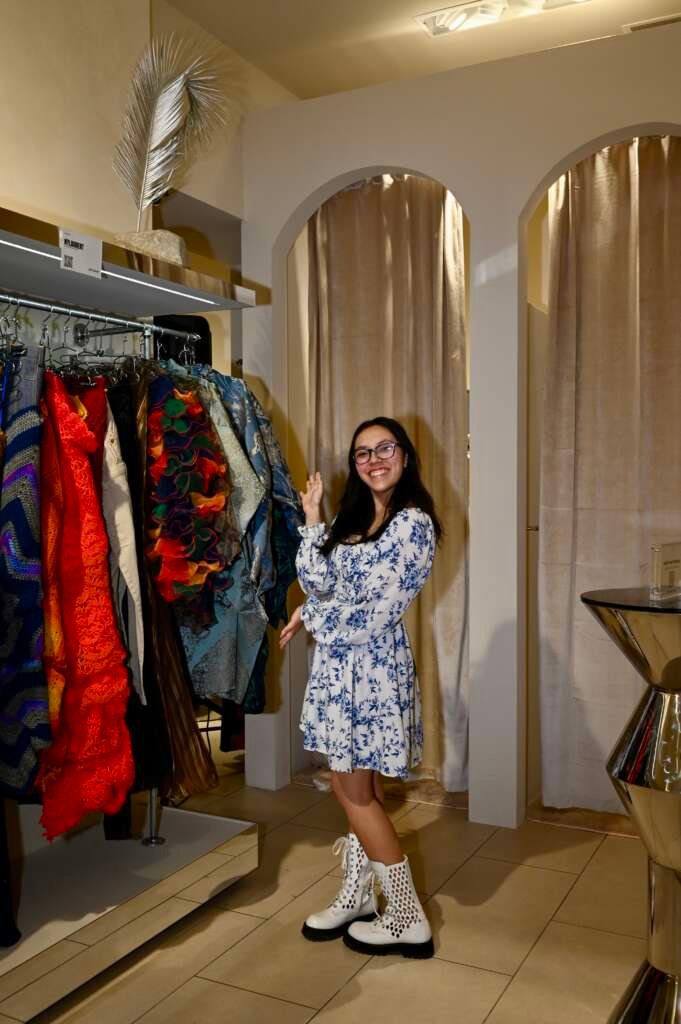
A shopper at Looks for Lease, the boutique fashion retail concept, co-founded by Nyleve Henry to divert textiles from landfills.
Policies like SB707 (the Responsible Textile Act of 2024) are essential because they help reduce waste while creating incentives for businesses to adopt cleaner, more circular operating models. Historically, major economic shifts, from workplace safety to emissions standards, have required legislation to accelerate innovation and create a level playing field.
Every environmental challenge presents an opportunity for innovation. If the solution doesn’t yet exist at scale, entrepreneurs and businesses have the opportunity to build it.
At Looks For Lease, we’re working with policymakers to ensure that “Circular Distribution” is included in the legislation so that compliance isn’t simply viewed as another business expense. Instead, it can become a new secondary revenue stream for fashion retailers through leasing, resale, repair, and redistribution.
Circular economies have enormous potential to divert millions of pounds of textile waste from landfills, reduce pollution, create new jobs, and unlock new revenue opportunities. When legislation encourages innovation rather than simply imposing penalties, businesses become part of the solution instead of seeing sustainability as a burden.
How do these bills benefit consumers?
These bills benefit consumers because they directly address one of the largest sources of pollution affecting our air, water, and soil. By encouraging textile reuse, recycling, and responsible production, they help reduce the environmental damage caused by discarded clothing while promoting healthier products.
The fashion industry is responsible for a significant share of global greenhouse gas emissions, and overproduction continues to generate enormous amounts of unnecessary waste. Policies like SB707 encourage brands to extend the life of garments rather than constantly producing new ones.
This also has important public health implications. Consumers are increasingly exposed to harmful chemicals found in clothing and textiles, yet many have little awareness or choice. These policies begin to shift the industry toward safer materials, more transparent supply chains, and a more responsible economy that protects both people and the environment over the long term.
What alarms you most about sustainable fashion and public health?
One of the most alarming facts is the widespread presence of PFAS, often called “forever chemicals,” which are commonly used to make clothing water- and stain-resistant. These chemicals accumulate in the human body, have been linked to immune system suppression and other serious health concerns, and have been detected in the blood of the vast majority of Americans.
Another major concern is the presence of toxic metals, including lead, in inexpensive dyes and textile prints. Lead exposure is especially dangerous for children because it can permanently affect brain development.
These aren’t just environmental issues, they’re public health issues. What we wear touches our skin every day, yet consumers often have little transparency about the chemicals used to manufacture their clothing. Sustainable fashion isn’t simply about protecting the planet; it’s about protecting human health.
What does a sustainable lifestyle look like for you?
For me, a sustainable lifestyle means having the freedom to choose products that don’t compromise my health or the health of future generations. Consumers shouldn’t have to worry that the clothes they wear, the food they eat, or the water they drink contain harmful chemicals.
Today, plastics and toxic substances have become deeply embedded in our clothing, food systems, homes, and waterways, making them incredibly difficult to avoid. That isn’t sustainable.
A conscious lifestyle is about creating systems where the healthiest choice is also the easiest and most accessible choice. Everyone deserves access to clean products, clean environments, and businesses that prioritize human well-being over short-term profits.
What do you see as the next big change or movement in the fashion industry?
The fashion industry has always evolved alongside consumer demand, and I believe the next major shift will be toward circular consumption. As more people become aware of the health and environmental impacts of fast fashion, they’ll increasingly seek alternatives that align with their values and well-being.
Consumers have far more influence than they often realize. Every purchasing decision sends a signal to the market, and businesses ultimately follow demand. While companies spend billions shaping consumer behavior through marketing, consumers also have the power to reshape industries by choosing healthier, more sustainable options.
There won’t be one single solution. The future will require innovation across design, manufacturing, policy, technology, and consumer behavior.
At Looks For Lease, we’re building one piece of that future by making fashion circular through leasing. Instead of continually producing more garments, we maximize the life of existing ones, giving consumers access to great fashion while reducing waste, lowering emissions, and decreasing the demand for unnecessary production. That’s what a truly circular economy looks like: creating more value with fewer resources while improving outcomes for both people and the planet.
