

Share This Article
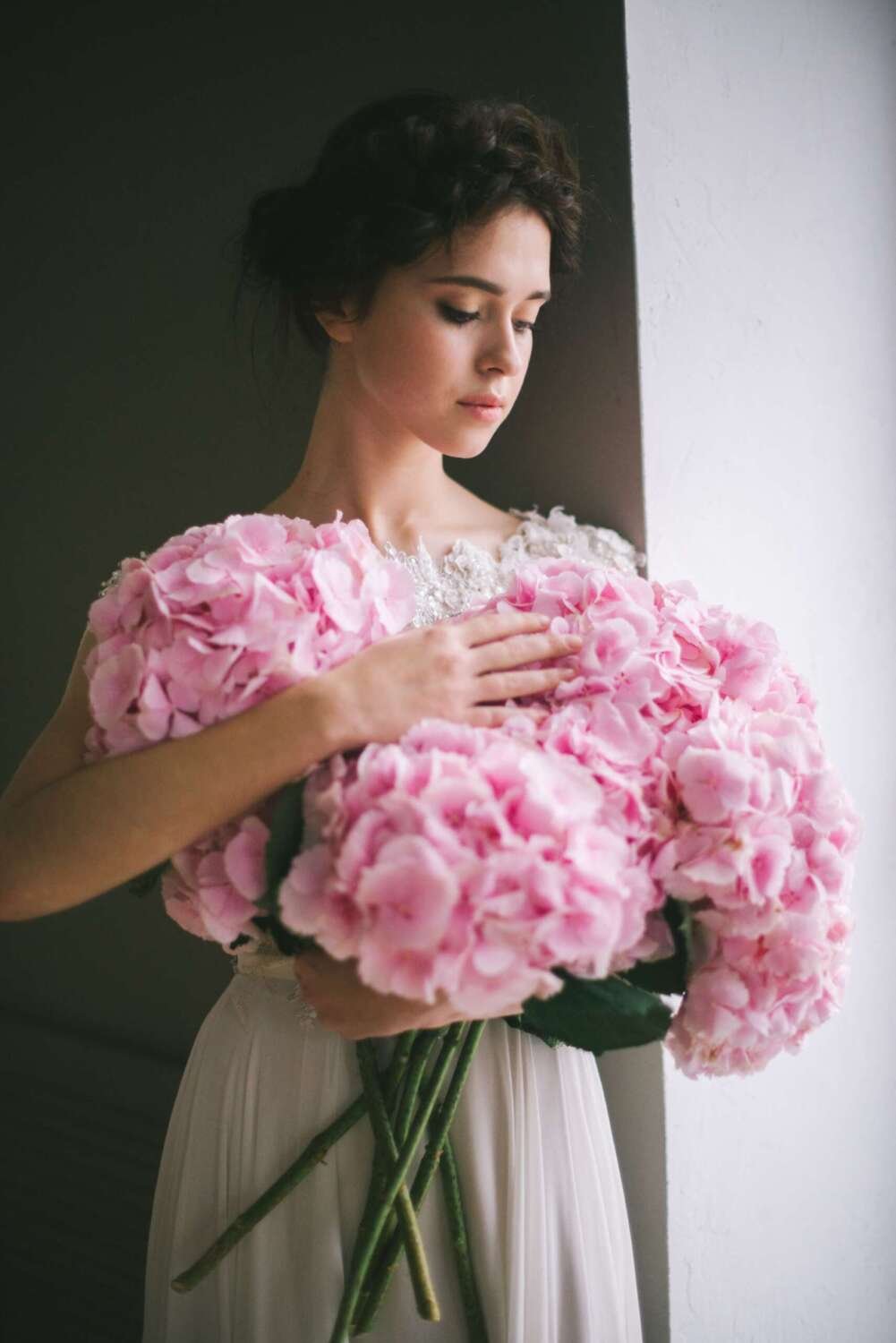
Towards the end of summer, hydrangeas start to lose their blooms. Learn how to dry hydrangeas to sustainably preserve their beauty for a flowal arrangement you’ll have for months.
Hydrangeas are one of my favorite flowers and a variety beloved for home décor and floral arrangements. I’m lucky enough to receive fresh bouquets straight from my mom’s garden every June. Her lush garden is alive with several varieties of these big, showy blooms that add a touch of charm to my home. Like many, she is a local gardener who loves to grow and cut hydrangeas to enjoy their beauty. As someone in love with these big, bold flowers, I try to preserve their beauty in my home by drying them. Drying hydrangeas is a simple way to keep their stunning look for months (or even next year if you’re lucky).
Dried flowers can be a sustainable way to add a fresh appeal to your home without relying on flower farms. Often managed without regard to the natural environment, cut flowers are often grown on large acreages in ways that deplete the soil of nutrients, overuse water, and use a host of harmful pesticides and chemicals. As an alternative, growing your own flowers or supporting local, seasonal nurseries can ensure that you’re supporting a flower industry that values biodiversity, preserving resources, and avoiding chemicals. Drying is a sustainable way to enjoy the beauty of flowers for months. And, when their vibrant color begins to wilt into a sad brown, you can compost them.
Types of Hydrangeas Suitable for Drying
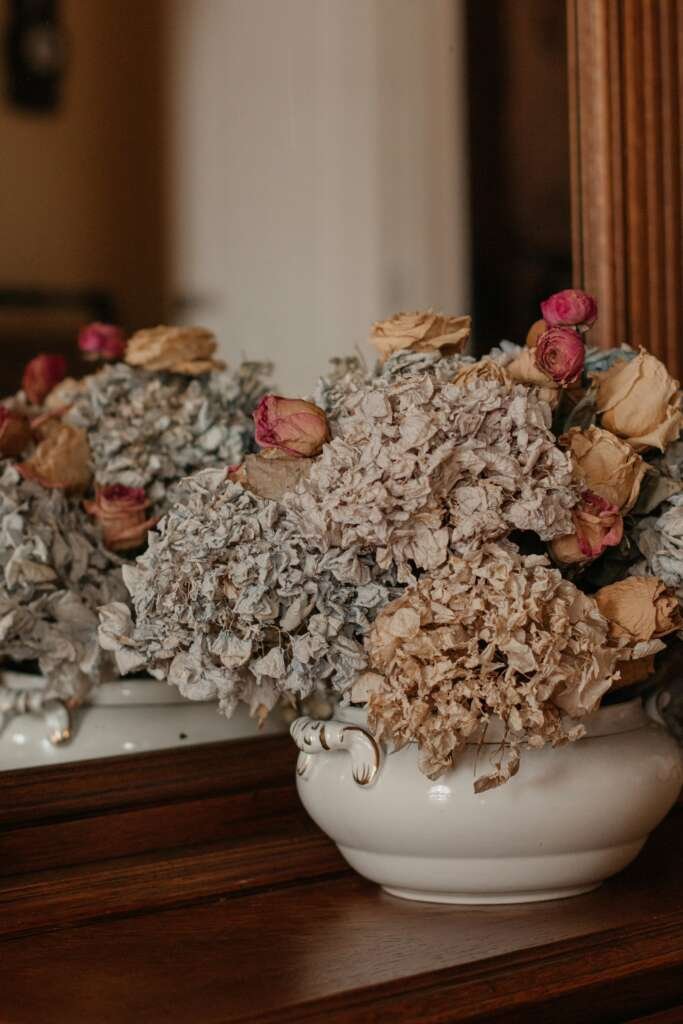
Dried hydrangeas create a rustic floral display you’ll have for months. This can save the need to constantly buy new flowers. Afterwards, simply compost the wilted blooms.
Not all hydrangeas are good for drying, but a few types work especially well. Bigleaf hydrangeas, also called mopheads, are ideal choices. Their large, rounded blooms turn beautiful pastel colors when dried. Oakleaf hydrangeas have more elongated flowers and hold their shape well once dried. Panicle hydrangeas, like the double-flowered Limelight, are known for their cone-shaped clusters that also hold their shapes once dries.
When choosing hydrangeas for drying, focus on those with firm, mature blooms that haven’t started to fade. This will give you the best chance for vibrant color and sturdy stems.
Did you notice how hydrangeas come in different shades- blue, pink, purple? These colors often change as the blooms mature or dry. Blue hydrangeas typically stay blue if the soil is acidic, but can turn pale or fade when dried. Pink hydrangeas usually fade to white or beige when drying. Soil acidity can influence the initial color, but drying methods also play a role. For example, air drying may cause colors to fade slightly, while silica gel drying preserves more of the original hue. If you want specific shades, be careful about how you harvest and dry them.
How To Prepare Hydrangeas for Drying
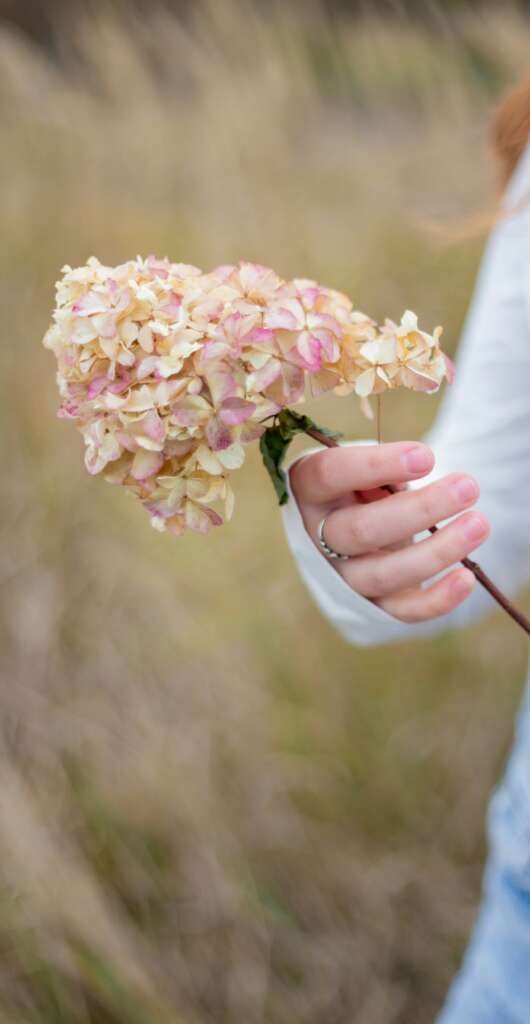
Start with a full bloom, cut in the morning to ensure you’ll have a sturdy bloom that’ll last for months.
Pick The Best Time to Harvest
Timing is everything when harvesting hydrangeas. The best moment is when the blooms are at their peak- full, firm, and just past the opening stage. Wait too long, and petals may start to fade or fall off. The optimal time depends on your local climate and the type of hydrangea, but generally, early morning is ideal. Plants hold more moisture overnight, so flowers are fresher and less stressed in the morning. Picking at this stage gives you blooms that dry well and keep their color longer.
How To Cut and Handle Hydrangeas
Use sharp scissors or garden shears to snip the stems. Cut the stems about 12 inches long, right above a node. Handle the blooms gently to avoid bruising or breaking petals. It’s best to make a clean cut and avoid crushing the stems. After harvesting, place hydrangeas in a bucket of water right away if you’re not drying immediately. This keeps them fresh and prevents damage. Proper handling makes a difference in how well your flowers dry and how long they stay beautiful.
Methods for Drying Hydrangeas
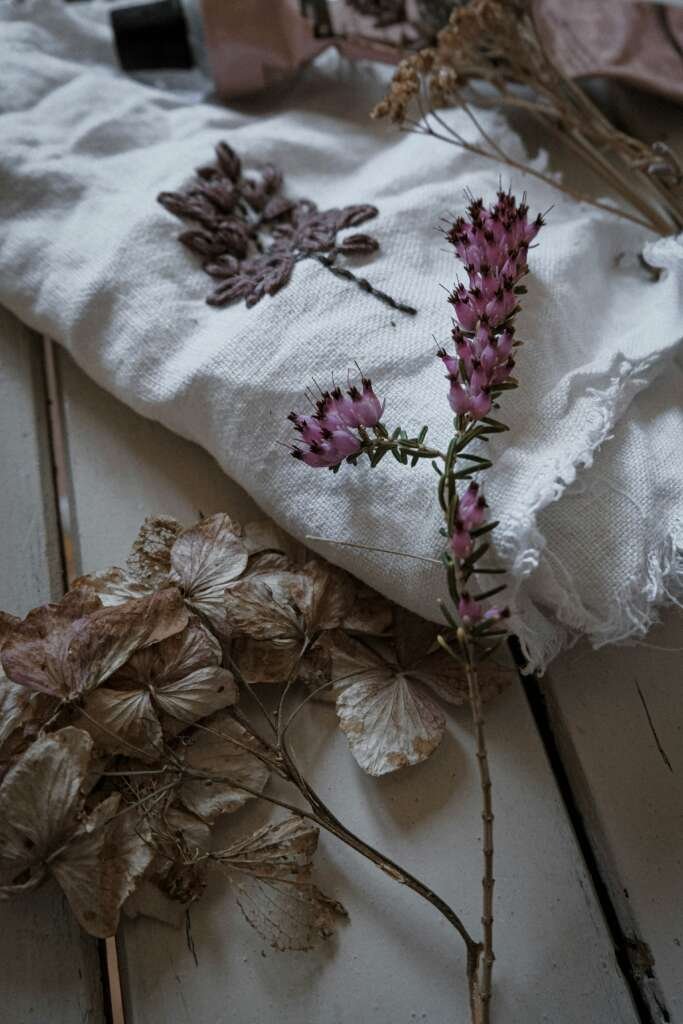
Pressing hydrangeas is one method that’s best for crafts and picture frames.
Air Drying
Air drying is the simplest and most sustainable method and works well for most hydrangeas. Gather a bunch of stems and tie them together with twine or rubber bands. Hang them upside down in a dark, cool, dry space, like a closet or attic. Make sure air can circulate freely around the blooms. Leave the hydrangeas hanging for about 2-3 weeks. When they feel stiff and look matte, they’re ready. This method keeps the shape natural but may cause some color fading.
Silica Gel Drying
If you want to preserve the color and shape better, silica gel is your friend. You’ll buy this gel as sachets of tiny ‘beads’ that you’ll then heat and use. Then you’ll pour a layer of the gel into a container and place the flowers upside down, slowly filling the container with more gel. Seal the container and leave the blooms there for several days or up to a week. The silica absorbs moisture quickly and keeps the flower shape intact. This method is excellent for capturing vibrant colors but requires special material and care. But, it should be noted that it might require watching a few experts on YouTube first before tackling this method yourself.
Pressing Hydrangeas
Pressing works best when you want to use flattened dried hydrangeas in crafts, like framing or card making. Place the blooms between sheets of parchment paper inside a heavy book or a flower press. Store it in a dry, warm place for 2-3 weeks. Pressed flowers tend to lose their size and shape but are perfect for flat surface projects. They can also be easily glued onto decorated items or framed for art pieces.
Microwave Drying
If you don’t have time to wait, this one’s for you. Microwave drying is the fastest method. Place hydrangeas in a microwave-safe container with silica gel or between paper towels. Microwave in short bursts of 30 seconds, checking for dryness each time. Usually, this method will take 1-3 minutes. But be cautious; overheating can damage the petals.
Post-Drying Care and Preservation
Once dried, hydrangeas are prone to breakage and fading. Clear hairspray can be used to preserve their shape and color, but it’s not particularly the most sustainable option. A simpler tip is to keep dried hydrangeas away from direct sunlight, which can fade their color. Store them in a dust-free, dry area and avoid high humidity to prevent mold growth.
Troubleshooting Common Issues
- Mold and mildew: Keep drying space cool and dry. Avoid humid environments.
- Color fading: Use silica gel drying for better color retention or spray with an acrylic fixative after drying.
- Broken petals or stems: Handle gently and store in sturdy containers to prevent damage.
- Uneven drying: Ensure good air circulation, and check blooms periodically during drying.
Drying hydrangeas transforms fresh, fleeting blooms into timeless decorations. Proper timing, the right drying method, and gentle handling make all the difference. With practice, you’ll create beautiful, long-lasting floral displays that remind you of spring’s beauty all year round. Whether you choose air drying, silica gel, or pressing, each technique offers a unique charm. Start experimenting today and turn your hydrangeas into enduring art. A little patience goes a long way toward blooming everlasting beauty in your home.
